THE ADVENTURE COLLECTIVE® · Independent discovery and booking for outdoor travel

A private day trip from Split that stitches Ottoman-era Mostar, the karst spring and Dervish tekke at Blagaj, and medieval Počitelj into one culturally rich excursion. Expect clear rivers, stone streets, and a full day of guided exploration with door-to-door transport.
A private day trip from Split that stitches Ottoman-era Mostar, the karst spring and Dervish tekke at Blagaj, and medieval Počitelj into one culturally rich excursion. Expect clear rivers, stone streets, and a full day of guided exploration with door-to-door transport.
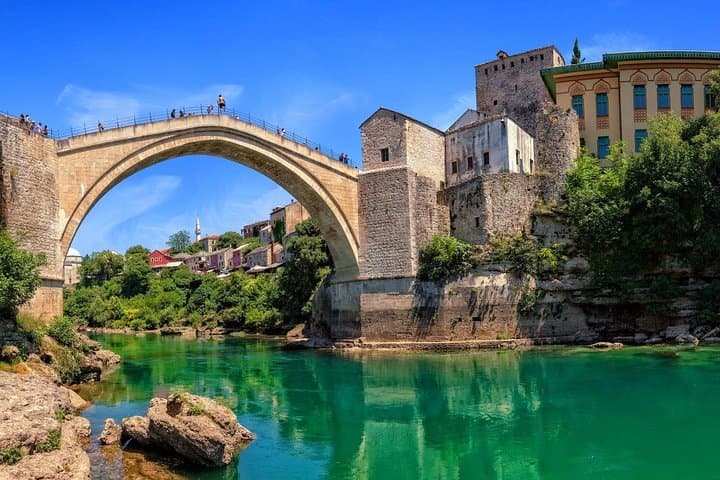
You arrive with the road still warm from Dalmatia; the Neretva valley opens like a page, cliffs trimming the river into emerald bands and the stone bridge of Mostar sitting in the sun as if it were waiting for a story.
Verified experiences and guided adventures in the surrounding area.
Operated by Four Seasons Travel · Mostar, Herzegovina-Neretva Canton
You arrive with the road still warm from Dalmatia; the Neretva valley opens like a page, cliffs trimming the river into emerald bands and the stone bridge of Mostar sitting in the sun as if it were waiting for a story.
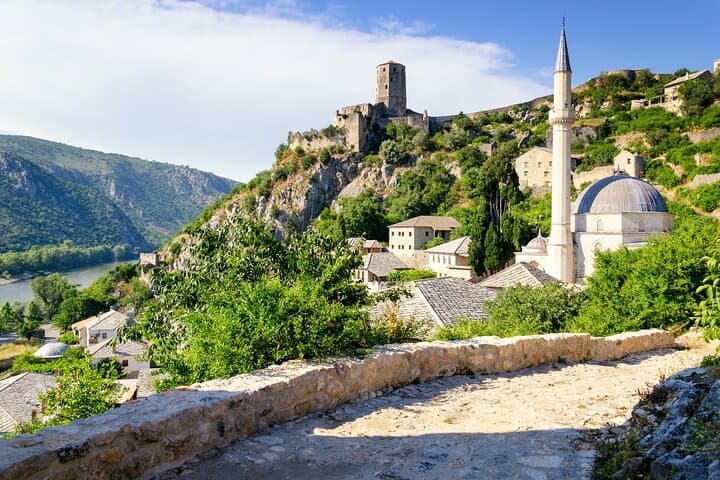
The day moves deliberately: a private drive from Split through karst fields, a walking tour in Mostar that puts Ottoman-era stonework and the 16th-century Stari Most at the center, then downstream to Blagaj where the Buna spring bursts from the cliff beneath a Dervish monastery. Finish with Počitelj, a compact medieval village clinging to a ridge above the river.
Geology here is karst—limestone dissolved into caves and springs—so you’ll notice vertical cliffs, sudden clear waterways, and the cold, blue-green hue of the Neretva and Buna. Culturally, Mostar is where Ottoman, Austro-Hungarian, and Mediterranean influences cross; the restored bridge and the quiet tekke tell a history of trade, faith, and conflict. Locals still gather for coffee by the Buna, fishermen mend lines, and small restaurants serve slow-cooked cevapi and Bosnian coffee.
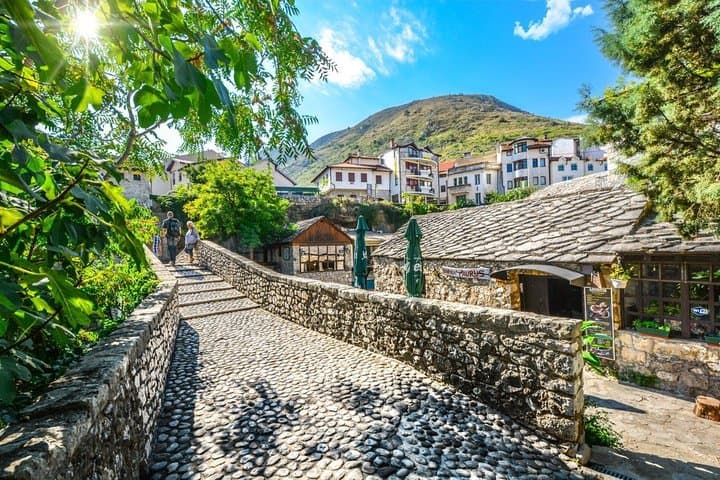
Practical guidance: this is a long, 8–10 hour private day with short, uneven walks—stone streets and stairs are the norm. Carry a passport for the border-crossing, comfortable shoes for cobbles, and layers for shade by the river and wind on exposed ridgelines. Bring local currency for cafes, plan restroom stops before leaving Split, and allow time to linger at viewpoints — the bridge, the spring, and the ramparts reward slow attention.
easy.
8–10 hours.
Suitable for most fitness levels; involves short walks on uneven stone streets and some stairs
The tour runs approximately 8–10 hours (departing morning from Split) with a 2-hour drive each way; exact return time depends on traffic and how long you linger at stops.
Lunch is organized at a traditional Bosnian restaurant in Mostar but other meals or drinks outside the scheduled lunch are at your own expense.
The tour is family-friendly, but Mostar’s old town and Počitelj have cobbled streets and steps—strollers can be difficult on some sections.
There may be opportunities to watch or photograph local divers, but jumping is informal and timing is unpredictable; don’t rely on a guaranteed show.
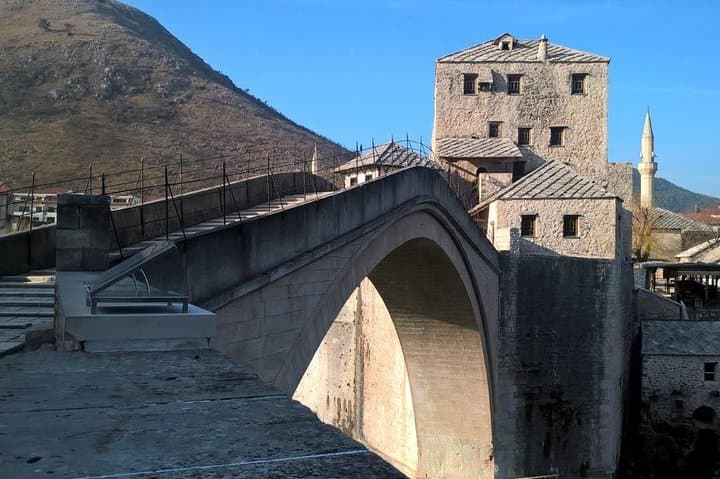
Mostar grew under Ottoman rule; the 16th-century Stari Most, engineered by a pupil of Sinan, symbolized connectivity until its destruction in 1993 and deliberate reconstruction completed in 2004.
The Buna spring and river ecosystems are sensitive to pollution—travelers should avoid single-use plastics and support local businesses that employ sustainable water use.
Four Seasons Travel operates guided outdoor trips and adventures with an emphasis on safety, stewardship, and memorable experiences.
You arrive with the road still warm from Dalmatia; the Neretva valley opens like a page, cliffs trimming the river into emerald bands and the stone bridge of Mostar sitting in the sun as if it were waiting for a story.
You arrive with the road still warm from Dalmatia; the Neretva valley opens like a page, cliffs trimming the river into emerald bands and the stone bridge of Mostar sitting in the sun as if it were waiting for a story.
The day moves deliberately: a private drive from Split through karst fields, a walking tour in Mostar that puts Ottoman-era stonework and the 16th-century Stari Most at the center, then downstream to Blagaj where the Buna spring bursts from the cliff beneath a Dervish monastery. Finish with Počitelj, a compact medieval village clinging to a ridge above the river.
Geology here is karst—limestone dissolved into caves and springs—so you’ll notice vertical cliffs, sudden clear waterways, and the cold, blue-green hue of the Neretva and Buna. Culturally, Mostar is where Ottoman, Austro-Hungarian, and Mediterranean influences cross; the restored bridge and the quiet tekke tell a history of trade, faith, and conflict. Locals still gather for coffee by the Buna, fishermen mend lines, and small restaurants serve slow-cooked cevapi and Bosnian coffee.
Practical guidance: this is a long, 8–10 hour private day with short, uneven walks—stone streets and stairs are the norm. Carry a passport for the border-crossing, comfortable shoes for cobbles, and layers for shade by the river and wind on exposed ridgelines. Bring local currency for cafes, plan restroom stops before leaving Split, and allow time to linger at viewpoints — the bridge, the spring, and the ramparts reward slow attention.