THE ADVENTURE COLLECTIVE® · Independent discovery and booking for outdoor travel

Spend a day exploring Lake Toya’s volcanic shores, ride the Mount Usu ropeway for crater views, and experience Noboribetsu’s steaming Hell Valley. This private tour from Sapporo pairs geology, local food and safe wildlife viewing with door-to-door transport.
Spend a day exploring Lake Toya’s volcanic shores, ride the Mount Usu ropeway for crater views, and experience Noboribetsu’s steaming Hell Valley. This private tour from Sapporo pairs geology, local food and safe wildlife viewing with door-to-door transport.
Morning light breaks over Highway 230 as your private car slips away from Sapporo; by mid-morning the road opens to a broad volcanic lake whose surface catches the sky like a mirror. Lake Toya’s blue is edged by low forest and the stern cone of Mount Usu, smoke-silent between eruptions, while the Silo Observatory gives a clear line across islands and distant peaks.
Verified experiences and guided adventures in the surrounding area.
Operated by Monchan Travel · Toyako, Hokkaido
Morning light breaks over Highway 230 as your private car slips away from Sapporo; by mid-morning the road opens to a broad volcanic lake whose surface catches the sky like a mirror. Lake Toya’s blue is edged by low forest and the stern cone of Mount Usu, smoke-silent between eruptions, while the Silo Observatory gives a clear line across islands and distant peaks.
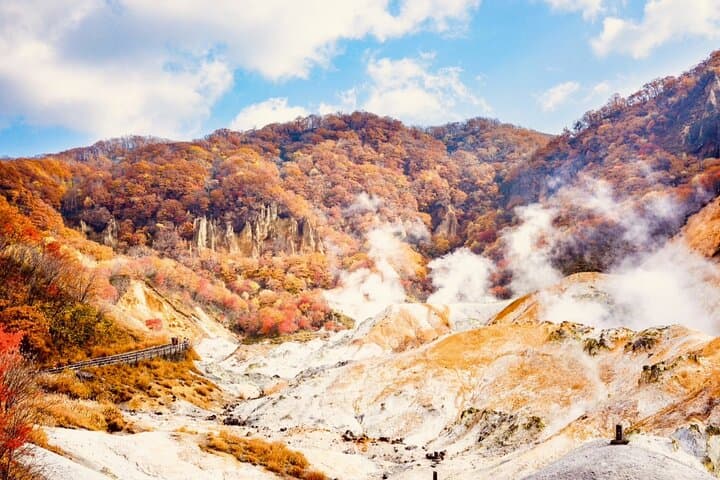
This one-day route threads together Hokkaido’s geology and food culture: dairy-rich gelato from Lake Hill Farm speaks to the island’s agricultural history; Mount Usu and Showa Shinzan are living reminders of 20th-century eruptions that reshaped the landscape; Noboribetsu Jigokudani (Hell Valley) channels geothermal power through steaming fumaroles and mineral-rich rivers that once fed local inns and onsen towns.
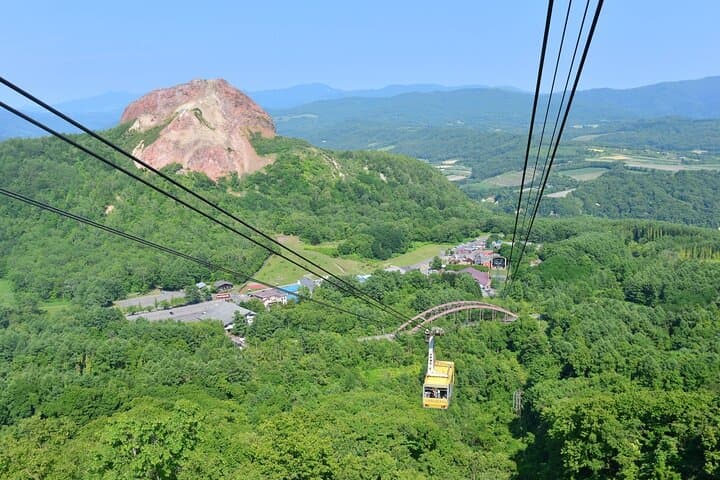
Expect a mix of easy walks, short viewpoints and cultural stops: a half-hour at the Silo Observatory, a relaxed lunch on Toyako Onsen Street, a ropeway ride up Mount Usu for crater views, and a stop at a bear ranch beside Showa Shinzan for safe, up-close bear viewing. The driver doubles as a bilingual guide and handles highway tolls, parking and navigation, so your attention stays on scenery and photos.
Practical edge: many attractions charge separate fees (ropeway, bear feeding) and services run year-round, but weather affects visibility; in winter pack warm, water-resistant layers. Bring cash or an IC card for small vendors, wear comfortable walking shoes for short uneven trails, and allow time for onsen towns if you plan to stay overnight—ending the tour at Toyako or Noboribetsu saves the return drive to Sapporo.
moderate.
9–10 hours.
Suitable for travelers with moderate fitness—mostly seated travel with multiple short walks and some stairs at viewpoints.
The tour runs about 9–10 hours and typically departs from Sapporo Station or central Sapporo hotels at around 8:30 AM.
Ropeway tickets, bear ranch feeding and lunch are not included—bring cash or an IC card for on-site purchases.
Yes—if your accommodation is in Toyako (Lake Toya) or Noboribetsu you can request to finish the tour there instead of returning to Sapporo.
Yes; it’s family-friendly with short walks and vehicle transfers, though those with cardiovascular issues should avoid strenuous sections and consult the operator about mobility needs.
Lake Toya and Showa Shinzan were shaped by volcanic activity in the 20th century; Showa Shinzan itself rose rapidly during a 1943–1945 eruption, now a protected natural monument.
Visitors should stick to trails and designated observation decks to protect fragile geothermal features; local parks balance tourism and habitat protection through controlled access.
Monchan Travel operates guided outdoor trips and adventures with an emphasis on safety, stewardship, and memorable experiences.
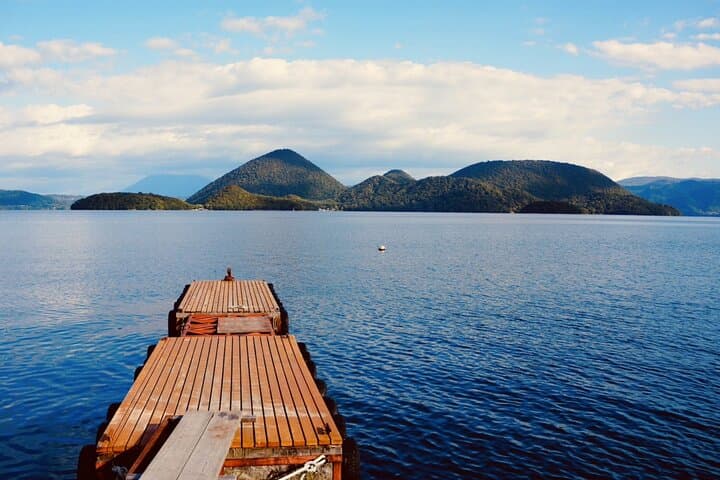

Morning light breaks over Highway 230 as your private car slips away from Sapporo; by mid-morning the road opens to a broad volcanic lake whose surface catches the sky like a mirror. Lake Toya’s blue is edged by low forest and the stern cone of Mount Usu, smoke-silent between eruptions, while the Silo Observatory gives a clear line across islands and distant peaks.
Morning light breaks over Highway 230 as your private car slips away from Sapporo; by mid-morning the road opens to a broad volcanic lake whose surface catches the sky like a mirror. Lake Toya’s blue is edged by low forest and the stern cone of Mount Usu, smoke-silent between eruptions, while the Silo Observatory gives a clear line across islands and distant peaks.
This one-day route threads together Hokkaido’s geology and food culture: dairy-rich gelato from Lake Hill Farm speaks to the island’s agricultural history; Mount Usu and Showa Shinzan are living reminders of 20th-century eruptions that reshaped the landscape; Noboribetsu Jigokudani (Hell Valley) channels geothermal power through steaming fumaroles and mineral-rich rivers that once fed local inns and onsen towns.
Expect a mix of easy walks, short viewpoints and cultural stops: a half-hour at the Silo Observatory, a relaxed lunch on Toyako Onsen Street, a ropeway ride up Mount Usu for crater views, and a stop at a bear ranch beside Showa Shinzan for safe, up-close bear viewing. The driver doubles as a bilingual guide and handles highway tolls, parking and navigation, so your attention stays on scenery and photos.
Practical edge: many attractions charge separate fees (ropeway, bear feeding) and services run year-round, but weather affects visibility; in winter pack warm, water-resistant layers. Bring cash or an IC card for small vendors, wear comfortable walking shoes for short uneven trails, and allow time for onsen towns if you plan to stay overnight—ending the tour at Toyako or Noboribetsu saves the return drive to Sapporo.