THE ADVENTURE COLLECTIVE® · Independent discovery and booking for outdoor travel

Leave Prague for a private day trip to Dresden’s reconstructed Old Town: a guided walking tour of Frauenkirche, Semper Opera and Zwinger, with hours to explore the Elbe riverside and local cafés. Ideal for travelers who want a compact cultural day outside Prague.
Leave Prague for a private day trip to Dresden’s reconstructed Old Town: a guided walking tour of Frauenkirche, Semper Opera and Zwinger, with hours to explore the Elbe riverside and local cafés. Ideal for travelers who want a compact cultural day outside Prague.
You step into a crisp morning in Prague, slide into a private air-conditioned car and watch the Czech countryside unfurl toward the Elbe. The drive to Dresden cuts across 150 km of low hills and farmland—about 2–2.5 hours—until the city’s baroque spires and broad riverbanks appear on the horizon.
Verified experiences and guided adventures in the surrounding area.
Operated by Filipe Perestrelo · Dresden, Saxony
You step into a crisp morning in Prague, slide into a private air-conditioned car and watch the Czech countryside unfurl toward the Elbe. The drive to Dresden cuts across 150 km of low hills and farmland—about 2–2.5 hours—until the city’s baroque spires and broad riverbanks appear on the horizon.
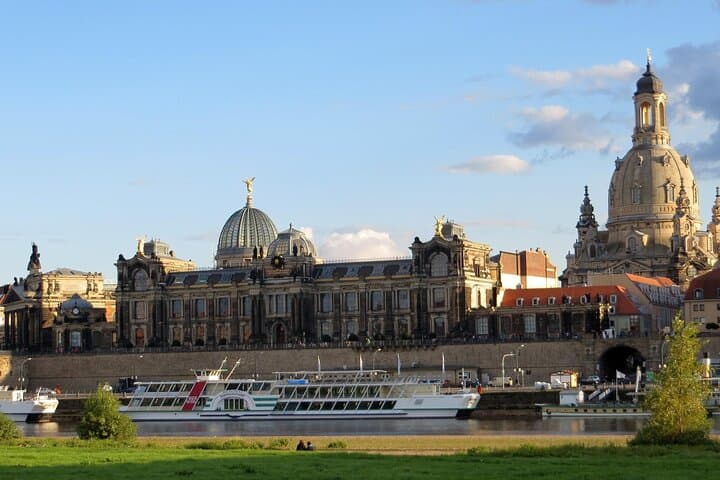
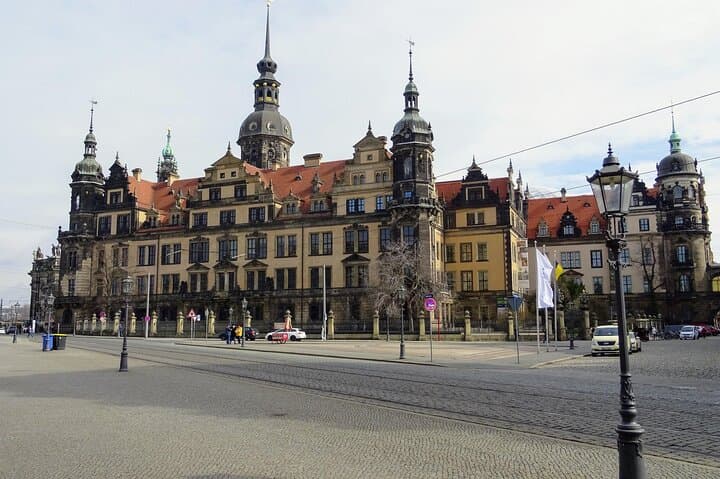
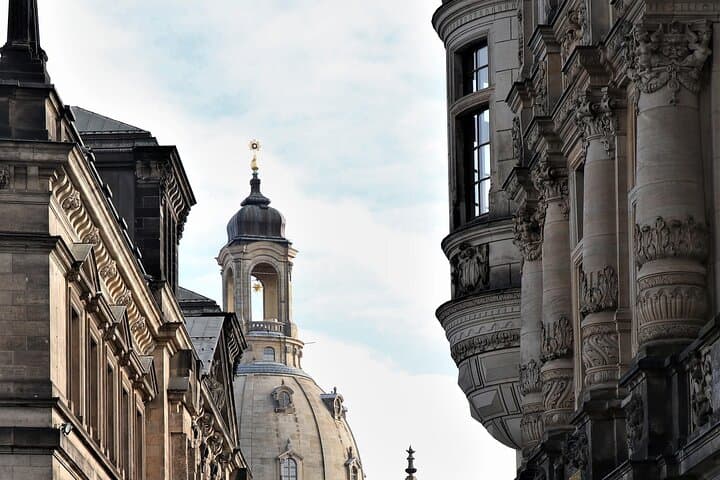
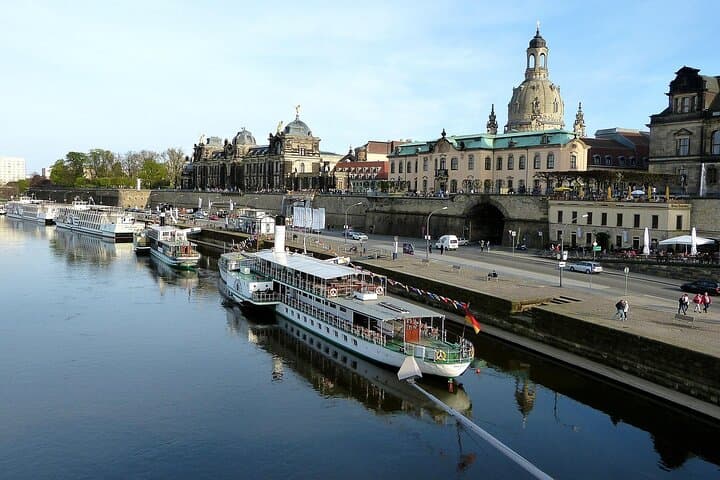
Dresden wears its history openly: the Frauenkirche, rebuilt after the Allied bombing, rises again as a focal point of civic renewal; the Semper Opera and the Zwinger recall Saxony’s 18th-century courtly ambitions. Geologically the valley follows the Elbe’s gentle trough carved through sandstone and loess soils, giving the riverside its wide promenades and layered embankments. Culturally, expect a mix of museum collections, café culture along the Elbe, and Neustadt’s creative quarters across the river.
Your guided walk covers key monuments and a compact storytelling arc—royal patronage, wartime destruction, and civic restoration—then you get roughly 3–4 hours to explore independently, shop, or sit riverside for lunch. If you chose the Bastei option, the itinerary adds a scenic stop in Saxon Switzerland with dramatic sandstone outcrops.
Practical guidance: bring your passport if you’re non-EU, wear comfortable walking shoes for cobblestones, and plan museum visits or opera tickets ahead to avoid lines. Hydrate and carry a compact layer—the river valley can be windy. Aim for an early pickup from Prague to maximize daylight in Dresden and leave margin for cross-border traffic.
easy.
9 hours.
Suitable for travelers in average physical condition; involves 2–4 hours of walking on flat to mildly uneven surfaces.
Yes—if you are a non-EU national, carry your passport when crossing from the Czech Republic into Germany; EU citizens should carry ID.
The drive is roughly 150 km and typically takes 2–2.5 hours each way, depending on traffic and border conditions.
No—museum admissions are not included; you’ll have free time to buy tickets or tour independently during the 3–4 hour self-explore period.
The tour is generally accessible for visitors with limited mobility, but expect some cobblestones and short step sections; contact the operator to confirm specific access needs.
Dresden was a major baroque capital of Saxony and suffered devastating Allied bombing in 1945; many landmarks, including the Frauenkirche, were painstakingly reconstructed after reunification.
Visitors are encouraged to use public transport or walking routes along the Elbe to reduce vehicle congestion; keep to marked paths and avoid littering in historic and riverside areas.
Filipe Perestrelo operates guided outdoor trips and adventures with an emphasis on safety, stewardship, and memorable experiences.
You step into a crisp morning in Prague, slide into a private air-conditioned car and watch the Czech countryside unfurl toward the Elbe. The drive to Dresden cuts across 150 km of low hills and farmland—about 2–2.5 hours—until the city’s baroque spires and broad riverbanks appear on the horizon.
You step into a crisp morning in Prague, slide into a private air-conditioned car and watch the Czech countryside unfurl toward the Elbe. The drive to Dresden cuts across 150 km of low hills and farmland—about 2–2.5 hours—until the city’s baroque spires and broad riverbanks appear on the horizon.
Dresden wears its history openly: the Frauenkirche, rebuilt after the Allied bombing, rises again as a focal point of civic renewal; the Semper Opera and the Zwinger recall Saxony’s 18th-century courtly ambitions. Geologically the valley follows the Elbe’s gentle trough carved through sandstone and loess soils, giving the riverside its wide promenades and layered embankments. Culturally, expect a mix of museum collections, café culture along the Elbe, and Neustadt’s creative quarters across the river.
Your guided walk covers key monuments and a compact storytelling arc—royal patronage, wartime destruction, and civic restoration—then you get roughly 3–4 hours to explore independently, shop, or sit riverside for lunch. If you chose the Bastei option, the itinerary adds a scenic stop in Saxon Switzerland with dramatic sandstone outcrops.
Practical guidance: bring your passport if you’re non-EU, wear comfortable walking shoes for cobblestones, and plan museum visits or opera tickets ahead to avoid lines. Hydrate and carry a compact layer—the river valley can be windy. Aim for an early pickup from Prague to maximize daylight in Dresden and leave margin for cross-border traffic.