THE ADVENTURE COLLECTIVE® · Independent discovery and booking for outdoor travel

A full-day private drive from Marrakech delivers ocean air, argan groves with goats, and Essaouira’s compact UNESCO-listed medina—ideal for travelers who want seaside history, markets, and fresh seafood without organizing transport.
A full-day private drive from Marrakech delivers ocean air, argan groves with goats, and Essaouira’s compact UNESCO-listed medina—ideal for travelers who want seaside history, markets, and fresh seafood without organizing transport.
A low, salt-swept wind meets the bus on the outskirts of Marrakech and holds your attention for the whole drive: it thumbnails the plains, nudges the argan trees, and carries the sea smell before the coast appears. The road to Essaouira slices across semi-arid plateaus, where goats clamber in argan branches and the Atlantic horizon suddenly opens into a broad sandy bay.
Verified experiences and guided adventures in the surrounding area.
Operated by Sky And Sea Land · Essaouira, Marrakech-Safi
A low, salt-swept wind meets the bus on the outskirts of Marrakech and holds your attention for the whole drive: it thumbnails the plains, nudges the argan trees, and carries the sea smell before the coast appears. The road to Essaouira slices across semi-arid plateaus, where goats clamber in argan branches and the Atlantic horizon suddenly opens into a broad sandy bay.
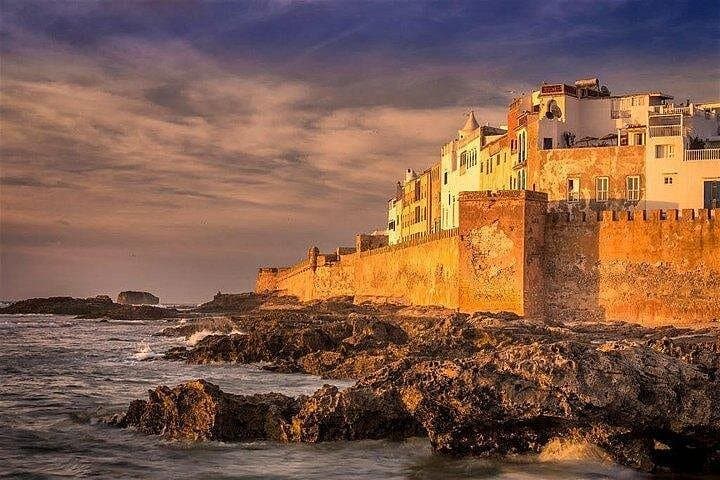
Essaouira’s medina—fortified in the 18th century when it was known as Mogador—wears its history in stone: ramparts, cannon-lined terraces, and a compact grid of lanes that funnel sailors, merchants and musicians to the port. Geology is obvious here; a granite headland forms a protective cove and the west winds shape the sand and the surf. Culturally, Essaouira is as much about Gnawa rhythms and fishing life as it is about crafts: wind-chised woodwork, local argan cooperatives, and fish markets where the catch is filleted in minutes.
Practical guidance: expect a roughly 3‑hour drive each way (eight to twelve hours total door-to-door), with stops at an argan cooperative en route. Bring sturdy shoes for cobbles, sun protection for exposed ramparts and beach, and small bills for markets and tipping. Plan to eat at the port for the freshest seafood or take mint tea in Moulay el Hassan square to watch the tide and the city move.
Timing matters—arriving mid-morning gives you cooler light and calmer markets; late afternoon returns often mean smoother traffic. Respect local customs, carry water, and let the wind push you along the quay as you explore a medina shaped by sea and salt.
easy.
8–12 hours.
Light fitness required: comfortable sitting for a 3‑hour drive each way and walking on uneven surfaces for a few hours.
Expect about three hours each way on good roads; total round trip including sightseeing makes for an 8–12 hour day.
Meals are generally not included—your itinerary usually covers bottled water and transport; plan to pay for lunch and market purchases separately.
Some main squares and promenade areas are accessible, but many alleyways and ramps are narrow or cobbled—check with the operator about specific accessibility needs.
The medina itself is open, but some museums or specific sites may charge small admission fees; the trip often includes medina access but confirm details on booking.
Essaouira (formerly Mogador) developed as an 18th-century fortified port important to Atlantic trade; its medina is recognized for historic coastal urban planning.
Argan trees are protected and local cooperatives often support sustainable harvesting; travelers are encouraged to buy directly from women-run cooperatives and avoid disturbing wildlife.
Sky And Sea Land operates guided outdoor trips and adventures with an emphasis on safety, stewardship, and memorable experiences.

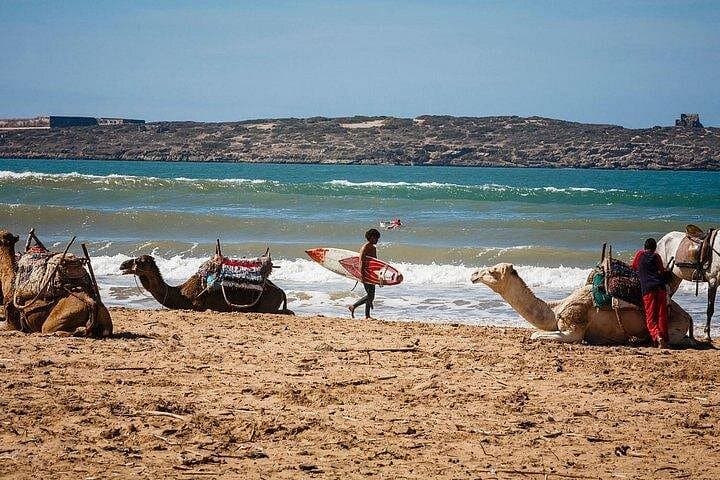
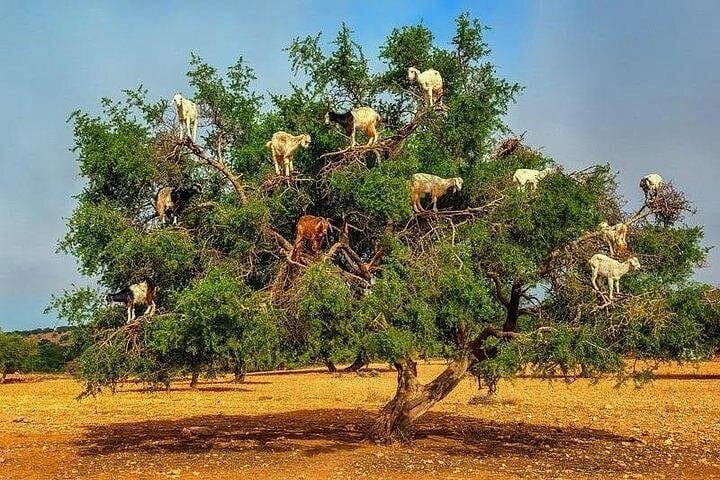
A low, salt-swept wind meets the bus on the outskirts of Marrakech and holds your attention for the whole drive: it thumbnails the plains, nudges the argan trees, and carries the sea smell before the coast appears. The road to Essaouira slices across semi-arid plateaus, where goats clamber in argan branches and the Atlantic horizon suddenly opens into a broad sandy bay.
A low, salt-swept wind meets the bus on the outskirts of Marrakech and holds your attention for the whole drive: it thumbnails the plains, nudges the argan trees, and carries the sea smell before the coast appears. The road to Essaouira slices across semi-arid plateaus, where goats clamber in argan branches and the Atlantic horizon suddenly opens into a broad sandy bay.
Essaouira’s medina—fortified in the 18th century when it was known as Mogador—wears its history in stone: ramparts, cannon-lined terraces, and a compact grid of lanes that funnel sailors, merchants and musicians to the port. Geology is obvious here; a granite headland forms a protective cove and the west winds shape the sand and the surf. Culturally, Essaouira is as much about Gnawa rhythms and fishing life as it is about crafts: wind-chised woodwork, local argan cooperatives, and fish markets where the catch is filleted in minutes.
Practical guidance: expect a roughly 3‑hour drive each way (eight to twelve hours total door-to-door), with stops at an argan cooperative en route. Bring sturdy shoes for cobbles, sun protection for exposed ramparts and beach, and small bills for markets and tipping. Plan to eat at the port for the freshest seafood or take mint tea in Moulay el Hassan square to watch the tide and the city move.
Timing matters—arriving mid-morning gives you cooler light and calmer markets; late afternoon returns often mean smoother traffic. Respect local customs, carry water, and let the wind push you along the quay as you explore a medina shaped by sea and salt.