THE ADVENTURE COLLECTIVE® · Independent discovery and booking for outdoor travel

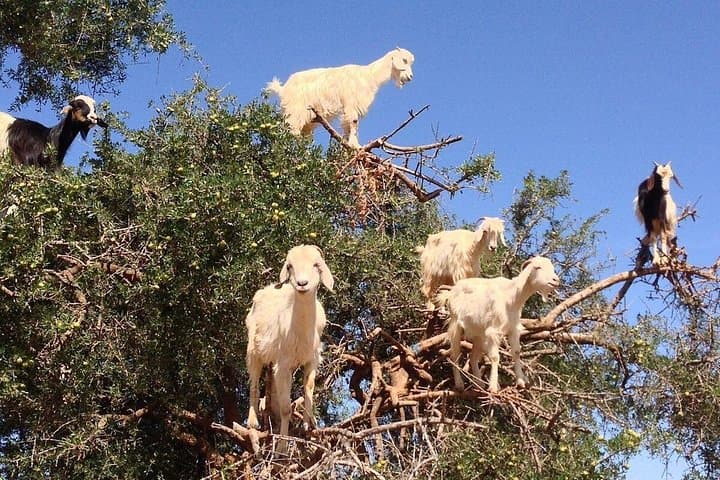
Trade Marrakech’s red-city bustle for Essaouira’s Atlantic wind and fortified medina on a private day trip. Swim on broad sand, walk cannon-lined ramparts, visit Argan cooperatives, and watch goats in the trees.
Trade Marrakech’s red-city bustle for Essaouira’s Atlantic wind and fortified medina on a private day trip. Swim on broad sand, walk cannon-lined ramparts, visit Argan cooperatives, and watch goats in the trees.
The road eases out of Marrakech as car horns and riads fade; the Atlas foothills give way to wide scrub and then the Atlantic haze appears, cool and briny. By midmorning the whitewashed houses and blue shutters of Essaouira slip into view, wind shaping the surf and flags snapping from the ramparts.
Verified experiences and guided adventures in the surrounding area.
Operated by Exotic Lines Travels · Essaouira, Marrakech-Safi
The road eases out of Marrakech as car horns and riads fade; the Atlas foothills give way to wide scrub and then the Atlantic haze appears, cool and briny. By midmorning the whitewashed houses and blue shutters of Essaouira slip into view, wind shaping the surf and flags snapping from the ramparts.
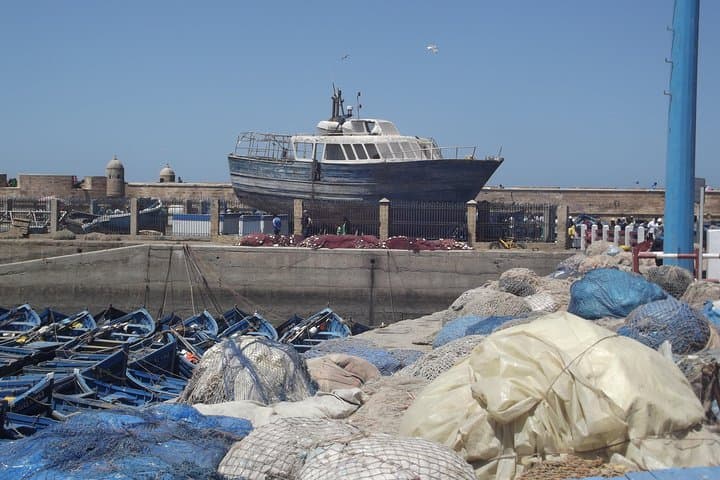
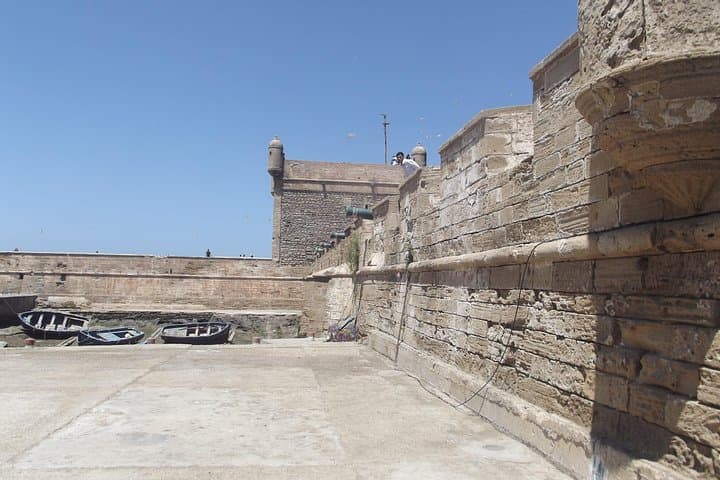
Essaouira’s medina is a working coastal fortress: Portuguese and later Moroccan fortifications, cannon-lined skala walls, and a grid of low houses that earned UNESCO recognition for its intact urban fabric. Geologically the town sits on coastal plains of sand and clay, with beaches of fine Atlantic sand and offshore currents that have shaped a lively fishing port and broad tidal flats. Culture here is maritime and artisanal — woodworkers, fishmongers, and Argan cooperatives run by Berber women who harvest and press oil from endemic trees that host an unusual sight: goats that climb to nibble the fruit.
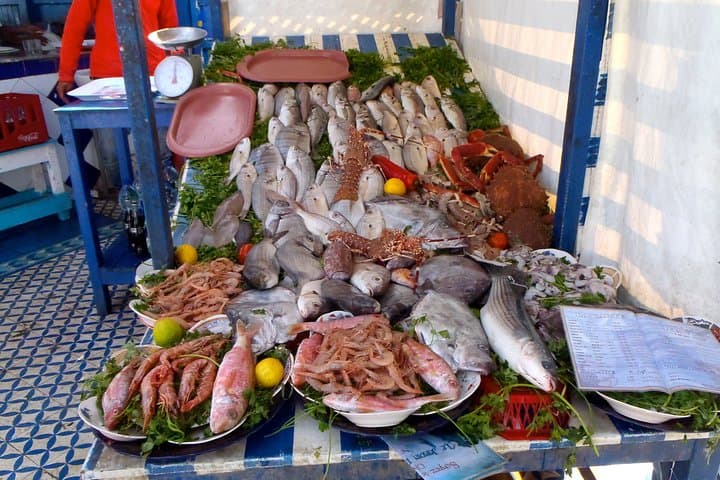
On a private day trip you can split time between a seaside swim, a slow walk through the medina’s alleys, and short excursions to ramparts like Skala du Port and quieter viewpoints near Cap Sim. Expect fresh seafood at outdoor stalls, market bargaining, and photo stops at Bab Marrjana and the clock tower.
Practical guidance: leave Marrakech early to avoid midday traffic; bring sun protection, a towel, and cash for small purchases. Footwear should handle sand and cobbles; the wind can be strong—bring a light jacket. If you’d like a short camel or horse ride on the beach, plan extra time and confirm availability with your guide.
easy.
6–12 hours.
Suitable for most fitness levels — mostly walking on flat medina streets and beach sand; minimal elevation and no technical exertion.
The trip is roughly 2.5 to 3 hours each way depending on traffic and stops along the route.
Yes — Taghart and the main town beach have wide sandy stretches suitable for swimming, but currents can be strong so swim cautiously.
The medina is open to the public with no formal entrance fee; some museums or attractions may charge a small admission independently.
Yes — the tour notes stroller access and infant seats are available; beaches and flat medina streets work well for families.
Essaouira evolved as a fortified trading port with Portuguese 16th‑century fortifications later adapted by Moroccan rulers, preserving its low-rise grid and ramparts recognized by UNESCO.
Argan forests are protected and local cooperatives support sustainable harvesting; visitors are encouraged to buy certified oil and respect harvesting sites.
Exotic Lines Travels operates guided outdoor trips and adventures with an emphasis on safety, stewardship, and memorable experiences.
The road eases out of Marrakech as car horns and riads fade; the Atlas foothills give way to wide scrub and then the Atlantic haze appears, cool and briny. By midmorning the whitewashed houses and blue shutters of Essaouira slip into view, wind shaping the surf and flags snapping from the ramparts.
The road eases out of Marrakech as car horns and riads fade; the Atlas foothills give way to wide scrub and then the Atlantic haze appears, cool and briny. By midmorning the whitewashed houses and blue shutters of Essaouira slip into view, wind shaping the surf and flags snapping from the ramparts.
Essaouira’s medina is a working coastal fortress: Portuguese and later Moroccan fortifications, cannon-lined skala walls, and a grid of low houses that earned UNESCO recognition for its intact urban fabric. Geologically the town sits on coastal plains of sand and clay, with beaches of fine Atlantic sand and offshore currents that have shaped a lively fishing port and broad tidal flats. Culture here is maritime and artisanal — woodworkers, fishmongers, and Argan cooperatives run by Berber women who harvest and press oil from endemic trees that host an unusual sight: goats that climb to nibble the fruit.
On a private day trip you can split time between a seaside swim, a slow walk through the medina’s alleys, and short excursions to ramparts like Skala du Port and quieter viewpoints near Cap Sim. Expect fresh seafood at outdoor stalls, market bargaining, and photo stops at Bab Marrjana and the clock tower.
Practical guidance: leave Marrakech early to avoid midday traffic; bring sun protection, a towel, and cash for small purchases. Footwear should handle sand and cobbles; the wind can be strong—bring a light jacket. If you’d like a short camel or horse ride on the beach, plan extra time and confirm availability with your guide.