THE ADVENTURE COLLECTIVE® · Independent discovery and booking for outdoor travel

Spend a full day from Luxor exploring Abydos’s Seti I temple and the Ptolemaic splendor of Dendera with a private Egyptologist guide. Expect long drives along the Nile, level temple walks, and close-up views of richly carved reliefs.
Spend a full day from Luxor exploring Abydos’s Seti I temple and the Ptolemaic splendor of Dendera with a private Egyptologist guide. Expect long drives along the Nile, level temple walks, and close-up views of richly carved reliefs.
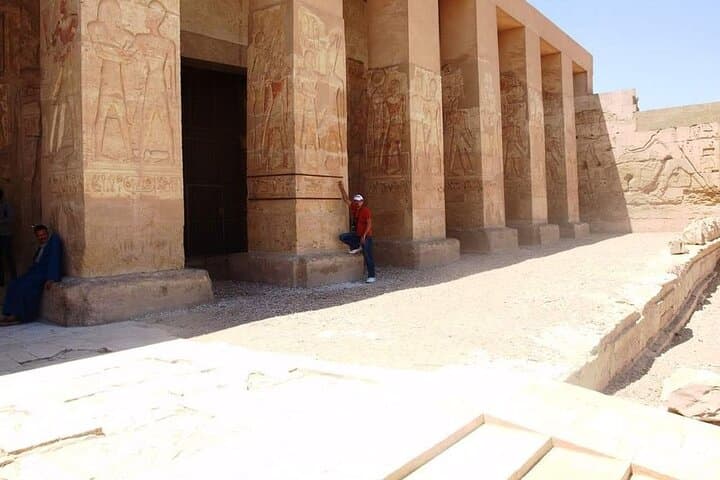
You step into the early light of Luxor and the air already hints of the desert ahead—warm, dry, carrying the faint scent of river mud and baking sun. Your private minibus hums north, the Nile nudging the cultivated ribbon of green while stone outcrops and mud-brick villages slide past. By midmorning the façades of Abydos rise from the plain: weathered limestone slabs carved with rows of kings that seem to argue across millennia.
Verified experiences and guided adventures in the surrounding area.
Operated by Tour great · Luxor, Luxor Governorate
You step into the early light of Luxor and the air already hints of the desert ahead—warm, dry, carrying the faint scent of river mud and baking sun. Your private minibus hums north, the Nile nudging the cultivated ribbon of green while stone outcrops and mud-brick villages slide past. By midmorning the façades of Abydos rise from the plain: weathered limestone slabs carved with rows of kings that seem to argue across millennia.
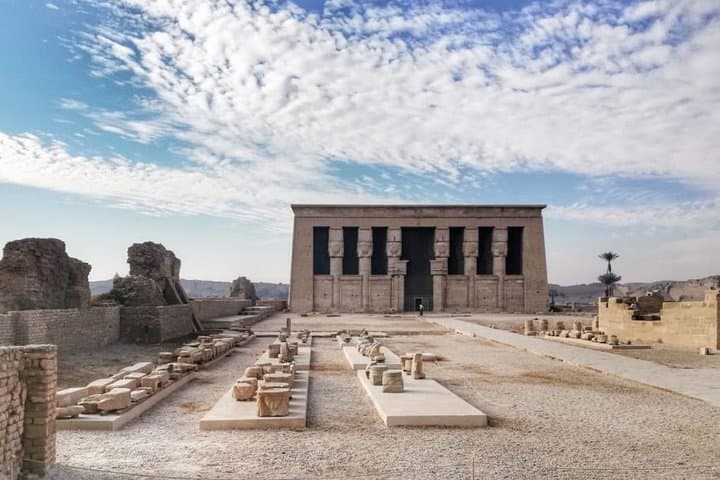
Abydos and Dendera bookend different chapters of Egyptian religion and rule. Abydos (home to Seti I’s temple) preserves deeply incised reliefs and the famous king list; its layout and three-level limestone construction reflect New Kingdom ritual priorities. Dendera, dedicated to Hathor and largely rebuilt in the late Ptolemaic period, offers cleaner, later-period columns, painted ceilings and a striking zodiac relief once removed to Paris. Geologically the sites sit on the Nile’s eastern floodplain where alluvial soil meets desert limestone—temples of stone anchored to ancient bedrock.
Local life threads between the sites: farmers irrigating by hand, roadside stalls selling tea and flatbread, guides rehearsing stories in Arabic that translate into layered histories. Practicalities matter: expect several hours of paved driving each way, mostly level walking across temple courtyards with occasional steps into chapels, and strong sun that demands shade and water.
Bring sun protection and modest attire for religious sites, carry cash for entrance fees and tips, and plan for a full day—pickup around 07:00 and return by evening. A patient pace pays off: linger at reliefs, listen to your Egyptologist, and let the carved faces guide your curiosity.
easy.
10–12 hours.
Suitable for travelers in average physical condition; requires walking on flat temple grounds and climbing a few short steps.
Admission is typically not included—bring cash to pay entry fees on site or confirm with the operator before booking.
Expect roughly 1.5–3 hours of driving each way depending on traffic and the exact itinerary; the tour is a full-day excursion.
Yes—this private tour includes hotel pickup and drop-off in Luxor as part of the inclusions.
Yes—the tour is listed as physically easy and notes stroller accessibility and infant seats are available, but consider the long drives and sun exposure for young children.
Abydos was a major cult site for Osiris and contains Seti I’s temple with a rare king list; Dendera’s complex reflects a long religious continuity centered on Hathor into the Ptolemaic era.
Both sites are sensitive to visitor wear; follow marked paths, avoid touching reliefs, and support local conservation by using licensed guides and avoiding single-use plastics where possible.
Tour great operates guided outdoor trips and adventures with an emphasis on safety, stewardship, and memorable experiences.
You step into the early light of Luxor and the air already hints of the desert ahead—warm, dry, carrying the faint scent of river mud and baking sun. Your private minibus hums north, the Nile nudging the cultivated ribbon of green while stone outcrops and mud-brick villages slide past. By midmorning the façades of Abydos rise from the plain: weathered limestone slabs carved with rows of kings that seem to argue across millennia.
You step into the early light of Luxor and the air already hints of the desert ahead—warm, dry, carrying the faint scent of river mud and baking sun. Your private minibus hums north, the Nile nudging the cultivated ribbon of green while stone outcrops and mud-brick villages slide past. By midmorning the façades of Abydos rise from the plain: weathered limestone slabs carved with rows of kings that seem to argue across millennia.
Abydos and Dendera bookend different chapters of Egyptian religion and rule. Abydos (home to Seti I’s temple) preserves deeply incised reliefs and the famous king list; its layout and three-level limestone construction reflect New Kingdom ritual priorities. Dendera, dedicated to Hathor and largely rebuilt in the late Ptolemaic period, offers cleaner, later-period columns, painted ceilings and a striking zodiac relief once removed to Paris. Geologically the sites sit on the Nile’s eastern floodplain where alluvial soil meets desert limestone—temples of stone anchored to ancient bedrock.
Local life threads between the sites: farmers irrigating by hand, roadside stalls selling tea and flatbread, guides rehearsing stories in Arabic that translate into layered histories. Practicalities matter: expect several hours of paved driving each way, mostly level walking across temple courtyards with occasional steps into chapels, and strong sun that demands shade and water.
Bring sun protection and modest attire for religious sites, carry cash for entrance fees and tips, and plan for a full day—pickup around 07:00 and return by evening. A patient pace pays off: linger at reliefs, listen to your Egyptologist, and let the carved faces guide your curiosity.