THE ADVENTURE COLLECTIVE® · Independent discovery and booking for outdoor travel

Travel from Luxor to Aswan in a single day by private car, visiting the Temple of Horus at Edfu, the double sanctuary at Kom Ombo, Philae Island, and the Aswan High Dam. Expect long drives, short walks, and a deep dive into Ptolemaic and Pharaonic history.
Travel from Luxor to Aswan in a single day by private car, visiting the Temple of Horus at Edfu, the double sanctuary at Kom Ombo, Philae Island, and the Aswan High Dam. Expect long drives, short walks, and a deep dive into Ptolemaic and Pharaonic history.
You start before dawn in Luxor, windows of an air-conditioned private car framing the Nile as it slips past small villages and sugarcane fields. The road moves south and the river keeps pace—sometimes a bright band of water, sometimes a mirror of mud—pushing the landscape forward.
Verified experiences and guided adventures in the surrounding area.
Operated by Book Egypt Trips · Aswan, Aswan Governorate
You start before dawn in Luxor, windows of an air-conditioned private car framing the Nile as it slips past small villages and sugarcane fields. The road moves south and the river keeps pace—sometimes a bright band of water, sometimes a mirror of mud—pushing the landscape forward.
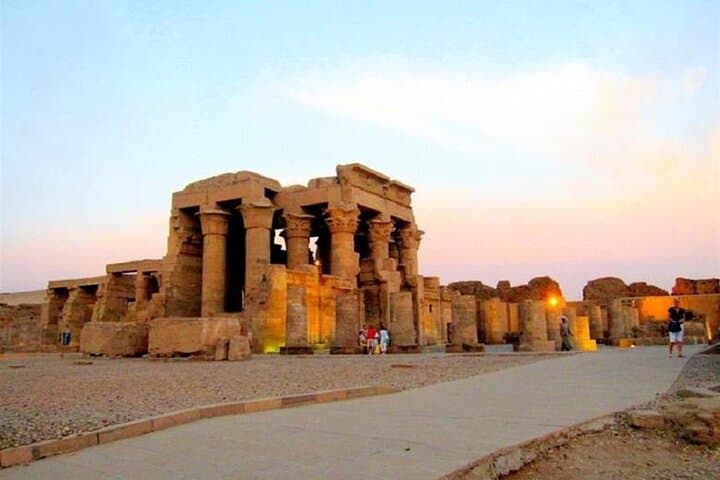
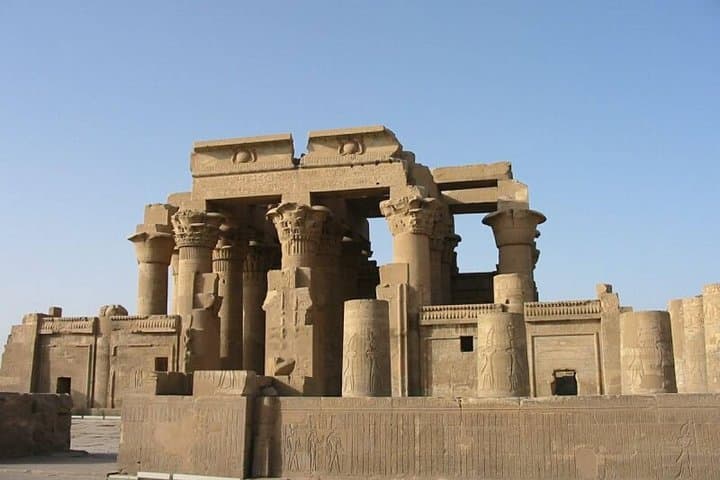
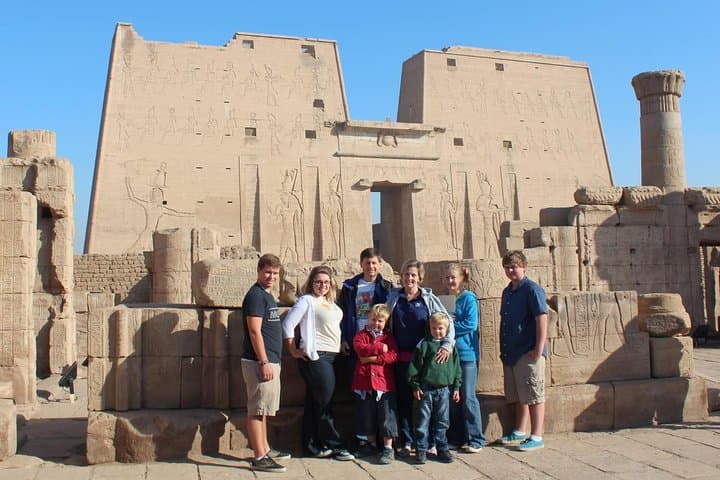
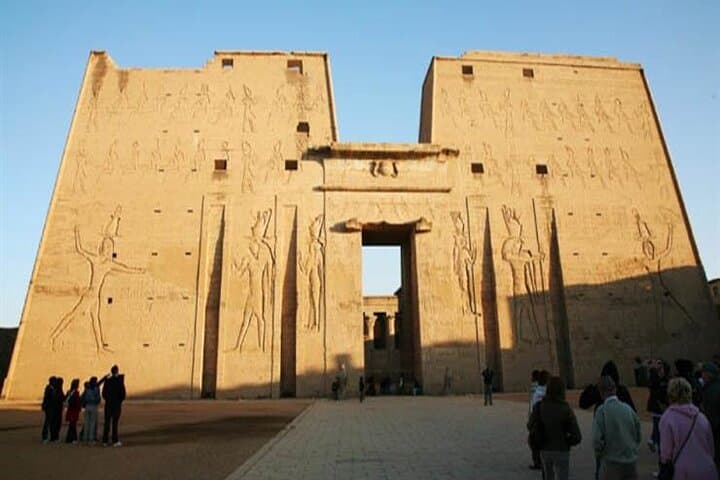
This is a route carved by history: Ptolemaic stone, Roman additions and Pharaonic myths. At Edfu you step into the Temple of Horus, one of Egypt’s most complete cult temples, its sandstone walls still carrying the rituals and battle stories between Horus and Seth. Kom Ombo follows with its mirror-image halls to two gods, a rare double-temple plan born of Ptolemaic pragmatism. In Aswan, Philae’s island temple—relocated stone by stone after the High Dam flooded the first cataract—offers a late-classical finish, and the High Dam itself speaks to 20th-century engineering and the creation of Lake Nasser.
Geologically the Nile valley here is a narrow strip of alluvial richness backed by granite outcrops; the light changes fast, making reliefs appear to breathe. Culturally expect Arabic and Nubian influences, roadside vendors, and small cafes where tea is an invitation.
Practical notes: the full itinerary is a long day—roughly 12–13 hours including drives and stops—so plan for steady but mostly easy walking on paved and stone temple grounds. Wear sturdy walking shoes, sun protection, bring a refillable water bottle, and carry your passport for museum or boat tickets. Timing matters: mid-morning and late afternoon light are best for photography and crowds thin after lunch. The tour balances comfort and history—an efficient way to see southern Egypt’s highlights in a single, focused day.
easy.
12–13 hours.
Suitable for most travelers in average health; long day in vehicle with multiple short walks on uneven stone and steps.
Admission is typically not included by default; check your booking details and have local currency for tickets if needed.
Driving time without stops is roughly 3–4 hours one way; the full tour schedules stops at Edfu and Kom Ombo and runs about 12–13 hours total.
Yes—this tour is suitable for all ages, but infants are required to sit on an adult’s lap during transport; prepare for a long day.
Temple sites have uneven stone, steps and limited accessibility; travelers with mobility concerns should contact the operator in advance to assess specific needs.
The temples on this route reflect layers of Egyptian history from Pharaonic cult centers through Ptolemaic redesigns to Roman additions; Philae was moved to save it from flooding after the High Dam.
Tourism impacts fragile stone reliefs—avoid touching carvings, follow marked paths, and support local guides and businesses to encourage sustainable visitation.
Book Egypt Trips operates guided outdoor trips and adventures with an emphasis on safety, stewardship, and memorable experiences.
You start before dawn in Luxor, windows of an air-conditioned private car framing the Nile as it slips past small villages and sugarcane fields. The road moves south and the river keeps pace—sometimes a bright band of water, sometimes a mirror of mud—pushing the landscape forward.
You start before dawn in Luxor, windows of an air-conditioned private car framing the Nile as it slips past small villages and sugarcane fields. The road moves south and the river keeps pace—sometimes a bright band of water, sometimes a mirror of mud—pushing the landscape forward.
This is a route carved by history: Ptolemaic stone, Roman additions and Pharaonic myths. At Edfu you step into the Temple of Horus, one of Egypt’s most complete cult temples, its sandstone walls still carrying the rituals and battle stories between Horus and Seth. Kom Ombo follows with its mirror-image halls to two gods, a rare double-temple plan born of Ptolemaic pragmatism. In Aswan, Philae’s island temple—relocated stone by stone after the High Dam flooded the first cataract—offers a late-classical finish, and the High Dam itself speaks to 20th-century engineering and the creation of Lake Nasser.
Geologically the Nile valley here is a narrow strip of alluvial richness backed by granite outcrops; the light changes fast, making reliefs appear to breathe. Culturally expect Arabic and Nubian influences, roadside vendors, and small cafes where tea is an invitation.
Practical notes: the full itinerary is a long day—roughly 12–13 hours including drives and stops—so plan for steady but mostly easy walking on paved and stone temple grounds. Wear sturdy walking shoes, sun protection, bring a refillable water bottle, and carry your passport for museum or boat tickets. Timing matters: mid-morning and late afternoon light are best for photography and crowds thin after lunch. The tour balances comfort and history—an efficient way to see southern Egypt’s highlights in a single, focused day.