THE ADVENTURE COLLECTIVE® · Independent discovery and booking for outdoor travel

Escape Marrakech for a private day in the High Atlas: guided walks through Imlil’s orchards, a family-style Berber lunch, and visits to artisan cooperatives. Practical route notes, elevation and gear tips help you plan a full-day cultural hike that benefits local communities.
Escape Marrakech for a private day in the High Atlas: guided walks through Imlil’s orchards, a family-style Berber lunch, and visits to artisan cooperatives. Practical route notes, elevation and gear tips help you plan a full-day cultural hike that benefits local communities.
At 9:00 a.m. a comfortable minivan slips out of Marrakech and the city’s heat gives way to rising air and narrower, stone-walled valleys. Olive groves and terraced orchards pass by the window, and the High Atlas pinches the horizon until Imlil appears: a cluster of slate-roofed houses, narrow lanes, and the distant bulk of Jebel Toubkal.
Verified experiences and guided adventures in the surrounding area.
Operated by Tours Excursions Journeys · Imlil, Marrakech-Safi
At 9:00 a.m. a comfortable minivan slips out of Marrakech and the city’s heat gives way to rising air and narrower, stone-walled valleys. Olive groves and terraced orchards pass by the window, and the High Atlas pinches the horizon until Imlil appears: a cluster of slate-roofed houses, narrow lanes, and the distant bulk of Jebel Toubkal.
Geology here is plain in the slopes — folded sedimentary beds and volcanic intrusions carved by seasonal watercourses — and those channels support generations of terraced farming. The people are Amazigh (commonly called Berber), and villages like Imlil have long been mountain hubs for shepherding, weaving and trade; local cooperatives keep traditional craft techniques alive.
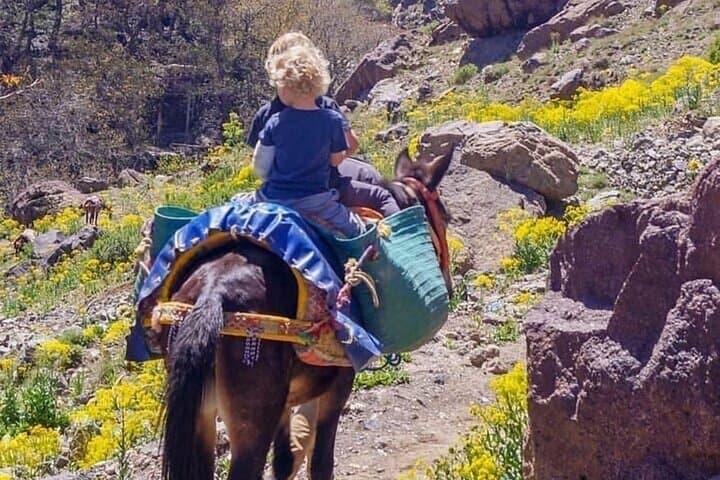
On the guided walk you’ll move along mule tracks and packed-earth footpaths through orchards and irrigated plots. Your guide explains irrigation channels, points out fruit trees and introduces artisans in a cooperative where rugs, pottery and silverwork are made. Nature plays an active role: wind pushes cloud down the ridge, and raptors circle the thermals above.
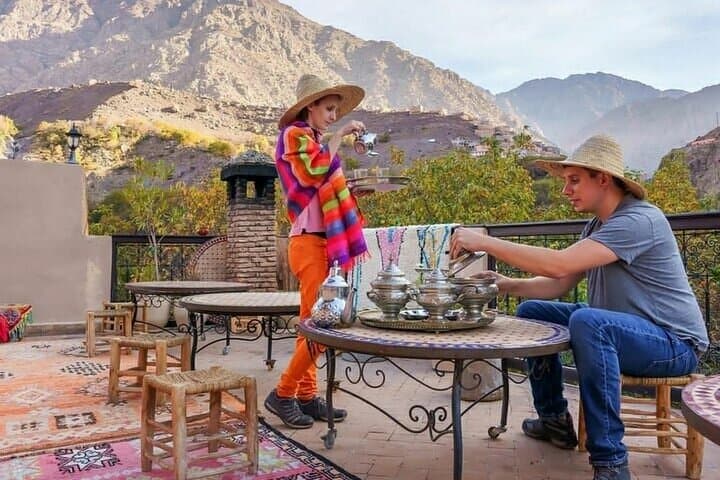
Practical guidance: the excursion is a full day (about 7–9 hours) with pickup and drop-off in Marrakech. Imlil sits near 1,700–1,800 m elevation; trails are non-technical but include rocky sections—sturdy shoes are recommended. Expect a family-style Berber lunch and opportunities to buy handicrafts; bring small bills. Carry 1.5–2 L of water, layers for cool mornings and sun protection for midday. In winter, higher paths may be snowy; in summer, start early to avoid heat in Marrakech.
Ask your guide about a short detour to Aremd for quieter views, and always ask permission before photographing people — your purchases and respect directly support local livelihoods.
moderate.
7–9 hours.
Suitable for people in regular walking fitness; involves 2–4 hours of undulating walking on dirt trails with short rocky sections.
Expect about 7–9 hours from hotel pickup in Marrakech to drop-off; driving to Imlil takes roughly 1–1.5 hours each way depending on traffic.
Yes—routes are non-technical and walkable for most ages, but mobility issues or very young children may find some uneven sections challenging; discuss needs when booking.
Guides on this tour are bilingual/multilingual (English, French, Spanish are typically available). Confirm language needs when booking.
Yes—cooperatives sell woven carpets, pottery and jewelry; buying directly supports local families and cooperatives, so bring cash and check prices before purchase.
The High Atlas is home to Amazigh communities with centuries-old practices of terrace agriculture, irrigation and artisanal weaving; Imlil has long been a mountain gateway for shepherds and climbers heading to Toubkal.
Tourist purchases and cooperative visits directly support local livelihoods; stick to paths, minimize water use, and avoid single-use plastics to reduce environmental impact.
Tours Excursions Journeys operates guided outdoor trips and adventures with an emphasis on safety, stewardship, and memorable experiences.
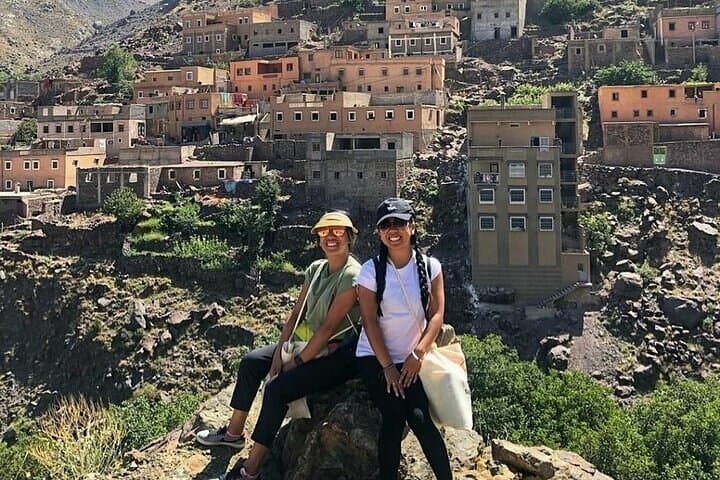
At 9:00 a.m. a comfortable minivan slips out of Marrakech and the city’s heat gives way to rising air and narrower, stone-walled valleys. Olive groves and terraced orchards pass by the window, and the High Atlas pinches the horizon until Imlil appears: a cluster of slate-roofed houses, narrow lanes, and the distant bulk of Jebel Toubkal.
At 9:00 a.m. a comfortable minivan slips out of Marrakech and the city’s heat gives way to rising air and narrower, stone-walled valleys. Olive groves and terraced orchards pass by the window, and the High Atlas pinches the horizon until Imlil appears: a cluster of slate-roofed houses, narrow lanes, and the distant bulk of Jebel Toubkal.
Geology here is plain in the slopes — folded sedimentary beds and volcanic intrusions carved by seasonal watercourses — and those channels support generations of terraced farming. The people are Amazigh (commonly called Berber), and villages like Imlil have long been mountain hubs for shepherding, weaving and trade; local cooperatives keep traditional craft techniques alive.
On the guided walk you’ll move along mule tracks and packed-earth footpaths through orchards and irrigated plots. Your guide explains irrigation channels, points out fruit trees and introduces artisans in a cooperative where rugs, pottery and silverwork are made. Nature plays an active role: wind pushes cloud down the ridge, and raptors circle the thermals above.
Practical guidance: the excursion is a full day (about 7–9 hours) with pickup and drop-off in Marrakech. Imlil sits near 1,700–1,800 m elevation; trails are non-technical but include rocky sections—sturdy shoes are recommended. Expect a family-style Berber lunch and opportunities to buy handicrafts; bring small bills. Carry 1.5–2 L of water, layers for cool mornings and sun protection for midday. In winter, higher paths may be snowy; in summer, start early to avoid heat in Marrakech.
Ask your guide about a short detour to Aremd for quieter views, and always ask permission before photographing people — your purchases and respect directly support local livelihoods.