THE ADVENTURE COLLECTIVE® · Independent discovery and booking for outdoor travel

Trade the bustle of Athens for a tailored day across Argolis: the Lion Gate of Mycenae, the waterfront charm of Nafplio, and the extraordinary acoustics at Epidaurus. This private trip combines driving comfort with flexible stops and optional pro photography.
Trade the bustle of Athens for a tailored day across Argolis: the Lion Gate of Mycenae, the waterfront charm of Nafplio, and the extraordinary acoustics at Epidaurus. This private trip combines driving comfort with flexible stops and optional pro photography.
You leave Athens with a low city hum behind, the Aegean glinting on the right as the coach slips toward the Peloponnese. The Corinth Canal appears like a deliberate cut through the land, its vertical walls drawing the sea inward, then the road opens to plains of olive and citrus. Each stop rearranges time: Bronze Age stone at Mycenae, Venetian roofs in Nafplio, and the acoustic clarity of Epidaurus that still surprises the ear.
Verified experiences and guided adventures in the surrounding area.
Operated by Greece Revealed · Nafplio, Peloponnese
You leave Athens with a low city hum behind, the Aegean glinting on the right as the coach slips toward the Peloponnese. The Corinth Canal appears like a deliberate cut through the land, its vertical walls drawing the sea inward, then the road opens to plains of olive and citrus. Each stop rearranges time: Bronze Age stone at Mycenae, Venetian roofs in Nafplio, and the acoustic clarity of Epidaurus that still surprises the ear.
Argolis is layered history and hard limestone: Mycenae was a Bronze Age power whose Lion Gate and cyclopean walls still read like an argument in stone. Nafplio served as Greece’s first capital and carries Venetian fortifications and neoclassical facades. Epidaurus blends cult and clinic—its sanctuary to Asclepius was a center for healing, and the theatre’s design remains a lesson in classical engineering.
On the practical side, expect a long but gentle day: 7–11 hours door-to-door with short, uneven walks, steps at ruins, and time to browse Nafplio’s Old Town. Bring a filled water bottle, sun protection, and shoes with good traction for worn stone and dusty paths. If you want photos beyond smartphone shots, upgrade to the pro package—the driver-photographer option available on select departures makes timing and framing easy. Aim for a morning departure to beat the heat at exposed sites and reserve an afternoon window for a seaside lunch in Nafplio. Keep to marked paths at archaeological sites, and allow pauses—these places reward slow looking.
easy.
7–11 hours.
Suitable for most fitness levels; involves short walks, climbing uneven steps and some standing at viewpoints.
Most private day-trip packages do not include site entrance fees—plan to pay at Mycenae and Epidaurus unless the operator specifies otherwise.
Pickup and drop-off are provided from Athens hotels, the airport, or Piraeus cruise terminals—confirm your exact pickup point when booking.
The tour accommodates infants and small children; some areas have steps and uneven ground, so strollers may be limited at specific ruins.
Expect about 1.5–2 hours each way from central Athens to Nafplio depending on traffic, with shorter transfers between Mycenae, Nafplio, and Epidaurus.
Argolis was the heartland of Mycenaean civilization in the Bronze Age; Nafplio later served as the first capital of modern Greece and carries Venetian and Ottoman layers in its architecture.
Respect marked paths and site rules to protect fragile ruins; choose local tavernas and guides to keep tourism benefits in the community and reduce travel footprints.
Greece Revealed operates guided outdoor trips and adventures with an emphasis on safety, stewardship, and memorable experiences.


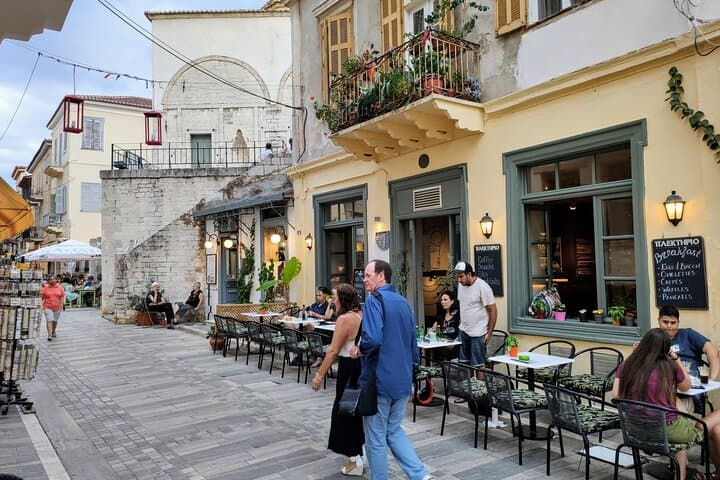
You leave Athens with a low city hum behind, the Aegean glinting on the right as the coach slips toward the Peloponnese. The Corinth Canal appears like a deliberate cut through the land, its vertical walls drawing the sea inward, then the road opens to plains of olive and citrus. Each stop rearranges time: Bronze Age stone at Mycenae, Venetian roofs in Nafplio, and the acoustic clarity of Epidaurus that still surprises the ear.
You leave Athens with a low city hum behind, the Aegean glinting on the right as the coach slips toward the Peloponnese. The Corinth Canal appears like a deliberate cut through the land, its vertical walls drawing the sea inward, then the road opens to plains of olive and citrus. Each stop rearranges time: Bronze Age stone at Mycenae, Venetian roofs in Nafplio, and the acoustic clarity of Epidaurus that still surprises the ear.
Argolis is layered history and hard limestone: Mycenae was a Bronze Age power whose Lion Gate and cyclopean walls still read like an argument in stone. Nafplio served as Greece’s first capital and carries Venetian fortifications and neoclassical facades. Epidaurus blends cult and clinic—its sanctuary to Asclepius was a center for healing, and the theatre’s design remains a lesson in classical engineering.
On the practical side, expect a long but gentle day: 7–11 hours door-to-door with short, uneven walks, steps at ruins, and time to browse Nafplio’s Old Town. Bring a filled water bottle, sun protection, and shoes with good traction for worn stone and dusty paths. If you want photos beyond smartphone shots, upgrade to the pro package—the driver-photographer option available on select departures makes timing and framing easy. Aim for a morning departure to beat the heat at exposed sites and reserve an afternoon window for a seaside lunch in Nafplio. Keep to marked paths at archaeological sites, and allow pauses—these places reward slow looking.