THE ADVENTURE COLLECTIVE® · Independent discovery and booking for outdoor travel

See the Great Pyramid, Khafre and Menkaure and the Great Sphinx on a private half-day tour of the Giza Plateau. This VIP-style visit combines hotel transfer and an Egyptologist-guided overview with flexible time for photos and panoramas.
See the Great Pyramid, Khafre and Menkaure and the Great Sphinx on a private half-day tour of the Giza Plateau. This VIP-style visit combines hotel transfer and an Egyptologist-guided overview with flexible time for photos and panoramas.
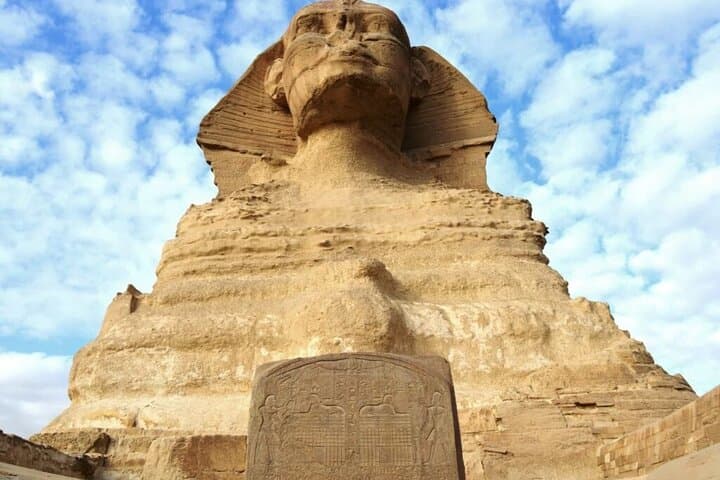
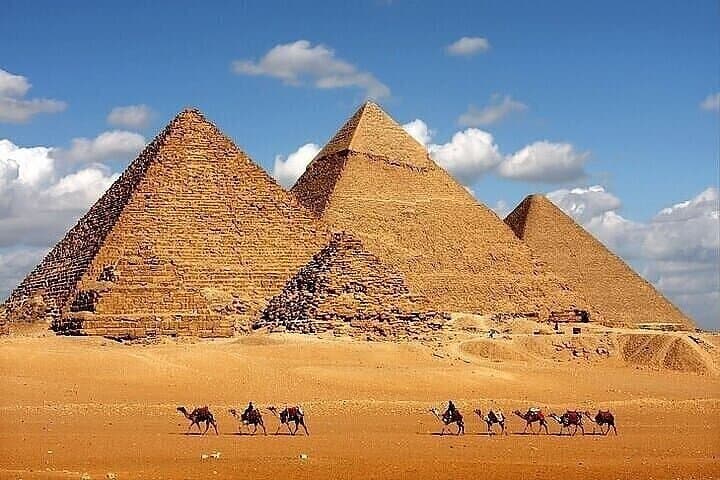
You arrive on the Giza Plateau under a flat, bright sky; dust and sunlight push at the edges of your sunglasses while the three great tombs lift from the sand like deliberate geometry. The plateau’s limestone and wind-polished blocks catch the sun, and the Sphinx’s carved face watches the plain with a patient, almost human weight.
Verified experiences and guided adventures in the surrounding area.
Operated by Travelino Egypt · Giza, Giza Governorate
You arrive on the Giza Plateau under a flat, bright sky; dust and sunlight push at the edges of your sunglasses while the three great tombs lift from the sand like deliberate geometry. The plateau’s limestone and wind-polished blocks catch the sun, and the Sphinx’s carved face watches the plain with a patient, almost human weight.
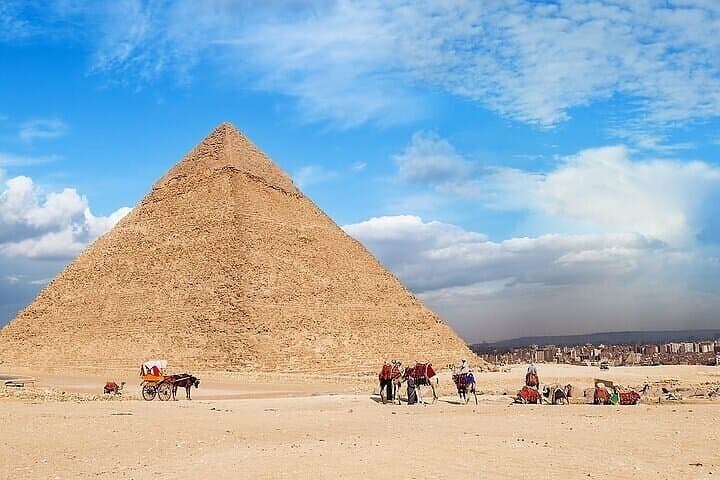
These stone giants date to Egypt’s 4th Dynasty (c. 2613–2494 BC). Khufu’s Great Pyramid once rose to 146.5 meters and was the world’s tallest structure for nearly four millennia; Khafre’s slightly lower pyramid preserves fragments of polished casing near its summit, and Menkaure’s compact granite-faced monument reflects different material choices and logistics from quarries far to the south.
Culturally this is cradle-of-kingdom territory — funerary temples, causeways and worker cemeteries surround the main trio — a working landscape of archaeology and tourism. Geologically the plateau is a band of Eocene limestone sitting above the Nile floodplain, its quarried blocks now reassembled into the monuments you’ll study.
Practicalities: most visitors follow a 3–4 hour private tour that includes hotel pickup, guided context at each pyramid and the Sphinx, and time for panoramic photos. Expect uneven, sandy walking surfaces and strong sun; bring plenty of water, a hat, and comfortable closed shoes. Entry to interior chambers requires separate tickets and limited capacity; camel rides are offered on-site by local operators. Schedule early morning or late afternoon to avoid peak heat and bus crowds. With a guide, the plateau’s layers of construction, reuse and restoration become readable — and the scale becomes, finally, believable.
easy.
3–4 hours.
Moderate mobility; must be able to walk on uneven ground for short stretches and climb low steps
Basic area entry can be included depending on booking options; access to internal chambers requires separate tickets purchased on-site or included only with certain packages.
Interior access is limited, often sold separately, and subject to capacity and preservation rules; check availability in advance and be prepared for low, narrow passages.
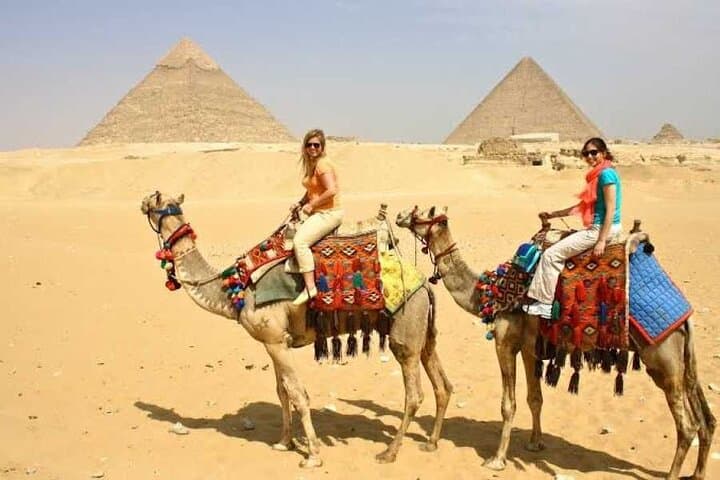
Camel rides are optional and typically offered by local vendors on the plateau; some tour options include a short camel experience for an additional fee.
Early morning (shortly after opening) or late afternoon avoids peak heat and large tour buses and provides the best light for photography.
The Giza complex served as funerary centers for 4th Dynasty kings; the Great Pyramid of Khufu remains the only surviving structure of the ancient Seven Wonders.
Ongoing preservation balances visitor access with erosion and urban encroachment; stick to marked paths and avoid climbing on monuments to limit wear.
Travelino Egypt operates guided outdoor trips and adventures with an emphasis on safety, stewardship, and memorable experiences.
You arrive on the Giza Plateau under a flat, bright sky; dust and sunlight push at the edges of your sunglasses while the three great tombs lift from the sand like deliberate geometry. The plateau’s limestone and wind-polished blocks catch the sun, and the Sphinx’s carved face watches the plain with a patient, almost human weight.
You arrive on the Giza Plateau under a flat, bright sky; dust and sunlight push at the edges of your sunglasses while the three great tombs lift from the sand like deliberate geometry. The plateau’s limestone and wind-polished blocks catch the sun, and the Sphinx’s carved face watches the plain with a patient, almost human weight.
These stone giants date to Egypt’s 4th Dynasty (c. 2613–2494 BC). Khufu’s Great Pyramid once rose to 146.5 meters and was the world’s tallest structure for nearly four millennia; Khafre’s slightly lower pyramid preserves fragments of polished casing near its summit, and Menkaure’s compact granite-faced monument reflects different material choices and logistics from quarries far to the south.
Culturally this is cradle-of-kingdom territory — funerary temples, causeways and worker cemeteries surround the main trio — a working landscape of archaeology and tourism. Geologically the plateau is a band of Eocene limestone sitting above the Nile floodplain, its quarried blocks now reassembled into the monuments you’ll study.
Practicalities: most visitors follow a 3–4 hour private tour that includes hotel pickup, guided context at each pyramid and the Sphinx, and time for panoramic photos. Expect uneven, sandy walking surfaces and strong sun; bring plenty of water, a hat, and comfortable closed shoes. Entry to interior chambers requires separate tickets and limited capacity; camel rides are offered on-site by local operators. Schedule early morning or late afternoon to avoid peak heat and bus crowds. With a guide, the plateau’s layers of construction, reuse and restoration become readable — and the scale becomes, finally, believable.