THE ADVENTURE COLLECTIVE® · Independent discovery and booking for outdoor travel

Leave Dublin behind for a private day along Ireland’s wild west: Bunratty, the lunar Burren, and the vertiginous Cliffs of Moher. This guided tour blends geology, history and local culture with flexible stops and door-to-door pickup.
Leave Dublin behind for a private day along Ireland’s wild west: Bunratty, the lunar Burren, and the vertiginous Cliffs of Moher. This guided tour blends geology, history and local culture with flexible stops and door-to-door pickup.
The coach slips away from Dublin's Georgian streets and the countryside opens—green fields folded into low limestone scars and the sea appearing like a darker horizon. By mid-morning you are at the edge of Ireland’s western spine, where wind and Atlantic swell test the stone and the cliffs answer with vertical drop and long views.
Verified experiences and guided adventures in the surrounding area.
Operated by James · Doolin, County Clare
The coach slips away from Dublin's Georgian streets and the countryside opens—green fields folded into low limestone scars and the sea appearing like a darker horizon. By mid-morning you are at the edge of Ireland’s western spine, where wind and Atlantic swell test the stone and the cliffs answer with vertical drop and long views.
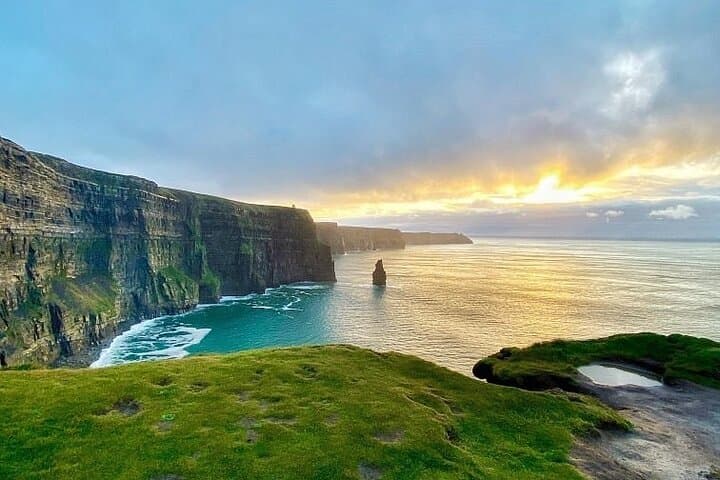
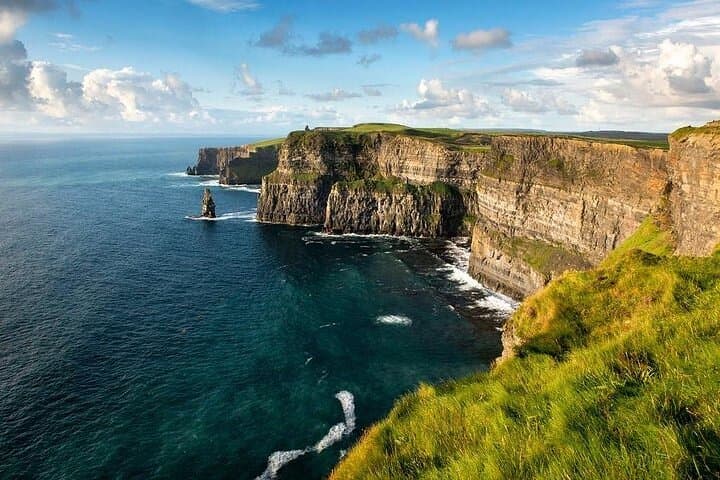
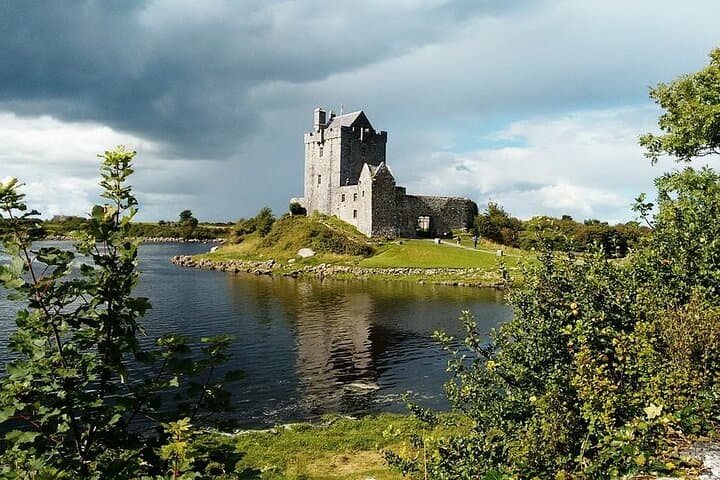
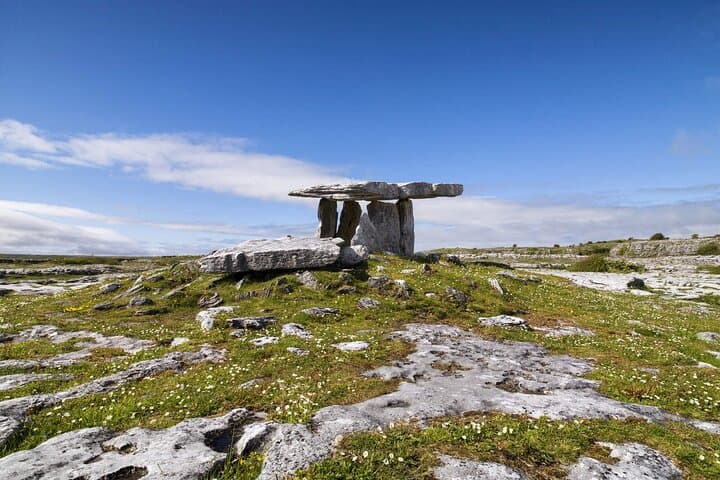
Geology here is plain to see: beds of sandstone and shale laid down 300 million years ago, eroded into the sheer faces that define the Cliffs of Moher. History follows close behind—O'Brien's Tower watches from a promontory built for 19th-century visitors, and nearby castles like Bunratty and Dunguaire mark the medieval politics of Munster. The Burren’s karst limestone offers a sharp contrast: a moon-like pavement that supports rare wildflowers and ancient tombs like Poulnabrone.
On a private tour you move at your pace—photos at Bunratty, a walk along the cliff-top paths, time to stand where seabirds wheel and the Atlantic dares you to look down. Local culture threads through the stops: a pint in Sean’s Bar, stories of fishermen and hill farmers, and the hush of the Burren’s stone fields.
Practical guidance: expect a 10–12 hour round trip from Dublin with several short stops and one longer visit to the Cliffs (admission may be included). Wear a waterproof shell and sturdy shoes; winds are strong and weather changes fast. Bring layers, a refillable water bottle, and a charged phone for photos. Aim for morning light to avoid crowds and follow marked paths—respect fencing and bird-nesting zones to keep the place wild for seasons to come.
easy.
10–12 hours.
Light fitness; must be able to stand and walk short uneven sections for up to an hour
The tour runs about 10–12 hours round trip, including travel time, several short stops and a longer visit at the Cliffs of Moher.
The itinerary lists admission to the Cliffs; confirm at booking — other heritage stops like Bunratty may be photo stops unless specified otherwise.
Yes—this private tour offers flexibility to adjust time at stops within the overall schedule; discuss preferences with your guide.
The coach and many stops are accessible, but cliff-top paths include uneven surfaces and some slopes; contact the operator about specific accessibility needs.
The cliffs formed from Carboniferous sandstones and shales; nearby medieval sites like Bunratty Castle reflect the region’s Gaelic and Norman history.
High visitor numbers can stress fragile cliff-top vegetation and nesting birds—stick to paths, take litter home, and support local conservation efforts that manage trampling and erosion.
James operates guided outdoor trips and adventures with an emphasis on safety, stewardship, and memorable experiences.
The coach slips away from Dublin's Georgian streets and the countryside opens—green fields folded into low limestone scars and the sea appearing like a darker horizon. By mid-morning you are at the edge of Ireland’s western spine, where wind and Atlantic swell test the stone and the cliffs answer with vertical drop and long views.
The coach slips away from Dublin's Georgian streets and the countryside opens—green fields folded into low limestone scars and the sea appearing like a darker horizon. By mid-morning you are at the edge of Ireland’s western spine, where wind and Atlantic swell test the stone and the cliffs answer with vertical drop and long views.
Geology here is plain to see: beds of sandstone and shale laid down 300 million years ago, eroded into the sheer faces that define the Cliffs of Moher. History follows close behind—O'Brien's Tower watches from a promontory built for 19th-century visitors, and nearby castles like Bunratty and Dunguaire mark the medieval politics of Munster. The Burren’s karst limestone offers a sharp contrast: a moon-like pavement that supports rare wildflowers and ancient tombs like Poulnabrone.
On a private tour you move at your pace—photos at Bunratty, a walk along the cliff-top paths, time to stand where seabirds wheel and the Atlantic dares you to look down. Local culture threads through the stops: a pint in Sean’s Bar, stories of fishermen and hill farmers, and the hush of the Burren’s stone fields.
Practical guidance: expect a 10–12 hour round trip from Dublin with several short stops and one longer visit to the Cliffs (admission may be included). Wear a waterproof shell and sturdy shoes; winds are strong and weather changes fast. Bring layers, a refillable water bottle, and a charged phone for photos. Aim for morning light to avoid crowds and follow marked paths—respect fencing and bird-nesting zones to keep the place wild for seasons to come.