THE ADVENTURE COLLECTIVE® · Independent discovery and booking for outdoor travel

Explore Luxor’s West Bank and the Ptolemaic temples at Edfu and Kom Ombo on a full‑day private trip. See Hatshepsut’s terraces, the fortified Habu temple and Kom Ombo’s dual sanctuaries while learning the sites’ layered histories.
Explore Luxor’s West Bank and the Ptolemaic temples at Edfu and Kom Ombo on a full‑day private trip. See Hatshepsut’s terraces, the fortified Habu temple and Kom Ombo’s dual sanctuaries while learning the sites’ layered histories.
Morning light unrolls across the Nile and the West Bank’s sandstone scars glow like pages in a weathered book. You begin on the western mainland of Luxor — walking alleys where the dead were dressed for eternity and the desert wind still seems to rearrange the stories on the tomb walls.
Verified experiences and guided adventures in the surrounding area.
Operated by cheap tours · Luxor, Luxor Governorate
Morning light unrolls across the Nile and the West Bank’s sandstone scars glow like pages in a weathered book. You begin on the western mainland of Luxor — walking alleys where the dead were dressed for eternity and the desert wind still seems to rearrange the stories on the tomb walls.
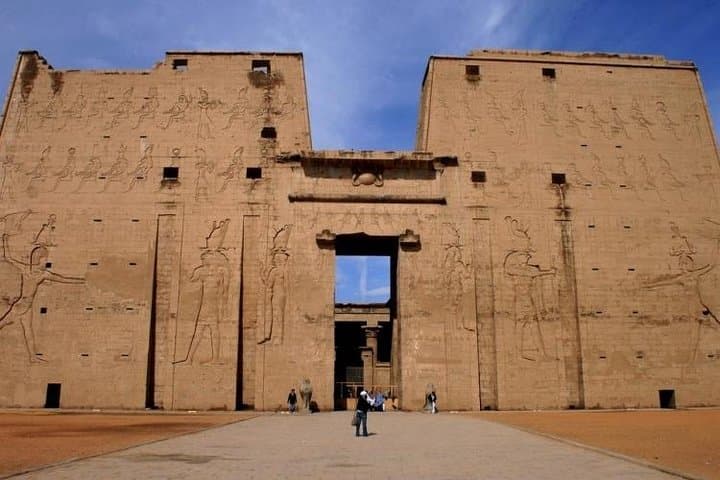
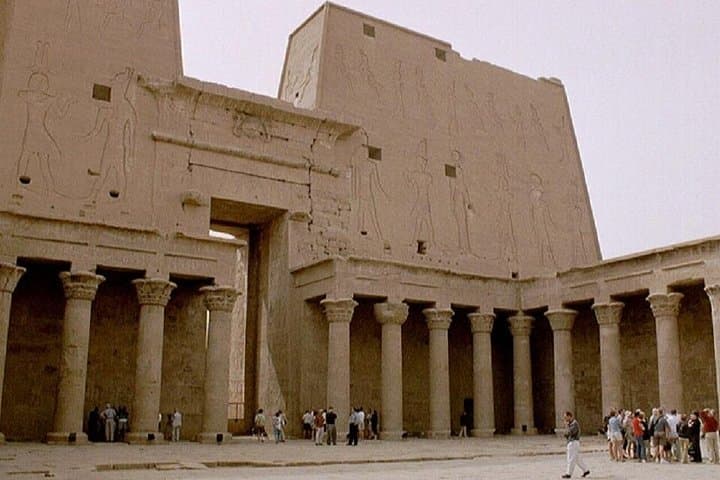
This full‑day route threads major Ptolemaic and New Kingdom sites: the terraced funerary temple of Hatshepsut at Deir el‑Bahari, the fortified Temple of Habu built by Ramesses III, then the monumental Ptolemaic sanctuaries at Edfu and Kom Ombo downstream. Geologically, these structures sit on riverine alluvium and Eocene limestone; erosion and rising groundwater have shaped both ruins and preservation challenges.
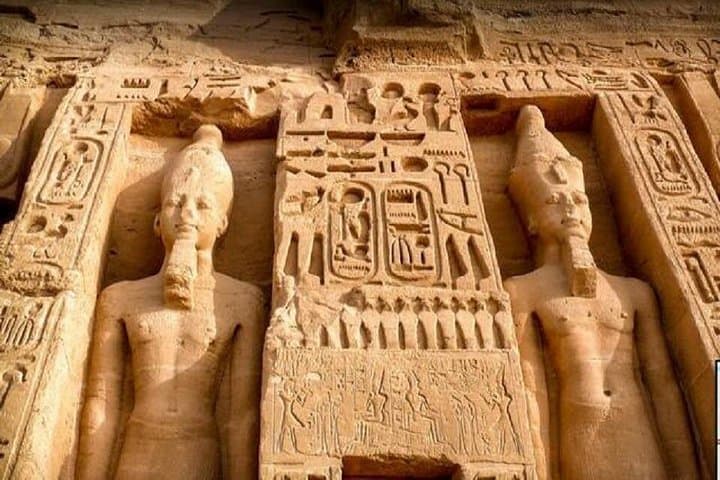
Culturally, the trip traces pharaonic ritual, Roman-era reinterpretation and later Coptic use — layers visible in reliefs, reused blocks and chapel additions. Local guides commonly read hieroglyphic scenes as civic life, warfare and religious observance, putting names and dates to the reliefs.
Practical guidance: expect long, level walking across open, sun‑exposed courtyards and short stair sets in temples; bring a brimmed hat, high SPF sunscreen and a refillable water bottle. Midday heat is intense, so schedule indoor or shaded stops for lunch in Luxor and plan footwear for sand and worn stone. Photography is straightforward in morning and late afternoon light but harsh at noon.
Logistics note: this itinerary commonly runs as a private transfer with a guide, includes meals and train transfer options — confirm entrance‑fee details with your operator before arrival.
moderate.
Approx. 24 hours.
Comfortable walking ability required; able to handle several hours on foot and brief stair sections in hot conditions.
This listing’s admissions are not explicitly stated; confirm with the operator before booking — many tours include guide fees and transport but not all ticket admissions.
Expect several hours of walking distributed over flat temple courtyards and short staircases; pace is moderate with frequent stops.
The operator notes stroller accessibility for infants, but uneven ground at temple sites can limit mobility — request specifics when you book.
Photography rules vary by site; generally still photos are allowed but flash and tripods may be restricted — follow on‑site signage.
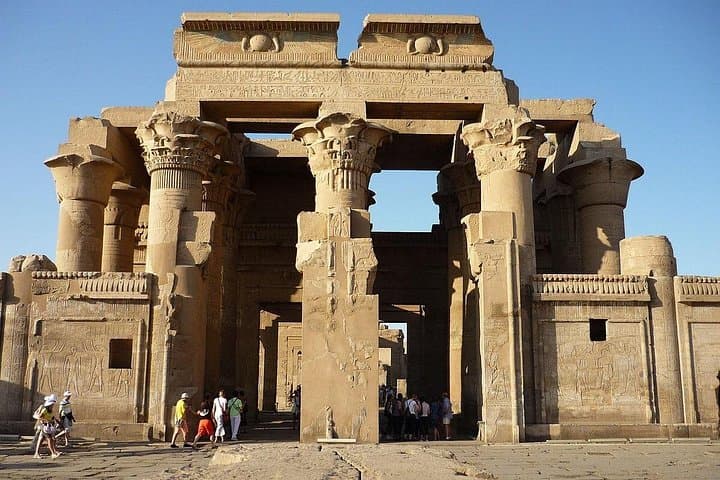
These sites span New Kingdom royal funerary architecture to Ptolemaic temple building; Kom Ombo’s dual sanctuaries reflect syncretic worship of two gods.
Rising groundwater and tourism pressure threaten painted reliefs and lower structures; use marked paths, avoid touching walls and support licensed guides to minimize impact.
cheap tours operates guided outdoor trips and adventures with an emphasis on safety, stewardship, and memorable experiences.
Morning light unrolls across the Nile and the West Bank’s sandstone scars glow like pages in a weathered book. You begin on the western mainland of Luxor — walking alleys where the dead were dressed for eternity and the desert wind still seems to rearrange the stories on the tomb walls.
Morning light unrolls across the Nile and the West Bank’s sandstone scars glow like pages in a weathered book. You begin on the western mainland of Luxor — walking alleys where the dead were dressed for eternity and the desert wind still seems to rearrange the stories on the tomb walls.
This full‑day route threads major Ptolemaic and New Kingdom sites: the terraced funerary temple of Hatshepsut at Deir el‑Bahari, the fortified Temple of Habu built by Ramesses III, then the monumental Ptolemaic sanctuaries at Edfu and Kom Ombo downstream. Geologically, these structures sit on riverine alluvium and Eocene limestone; erosion and rising groundwater have shaped both ruins and preservation challenges.
Culturally, the trip traces pharaonic ritual, Roman-era reinterpretation and later Coptic use — layers visible in reliefs, reused blocks and chapel additions. Local guides commonly read hieroglyphic scenes as civic life, warfare and religious observance, putting names and dates to the reliefs.
Practical guidance: expect long, level walking across open, sun‑exposed courtyards and short stair sets in temples; bring a brimmed hat, high SPF sunscreen and a refillable water bottle. Midday heat is intense, so schedule indoor or shaded stops for lunch in Luxor and plan footwear for sand and worn stone. Photography is straightforward in morning and late afternoon light but harsh at noon.
Logistics note: this itinerary commonly runs as a private transfer with a guide, includes meals and train transfer options — confirm entrance‑fee details with your operator before arrival.