THE ADVENTURE COLLECTIVE® · Independent discovery and booking for outdoor travel

Fly from Cairo to Luxor for a focused, private day tour of the Valley of the Kings, Hatshepsut’s temple, the Colossi of Memnon and the great temples of Luxor and Karnak. A full day of monuments, guided interpretation and door‑to‑door transfers.
Fly from Cairo to Luxor for a focused, private day tour of the Valley of the Kings, Hatshepsut’s temple, the Colossi of Memnon and the great temples of Luxor and Karnak. A full day of monuments, guided interpretation and door‑to‑door transfers.
Morning light slices across the Nile as the plane descends into Luxor, and suddenly the scale of ancient Egypt reasserts itself: towering pylons, clipped desert ridgelines and the quiet cut of tomb entrances in pale limestone.
Verified experiences and guided adventures in the surrounding area.
Operated by Egypt Best Holidays · Luxor, Luxor Governorate
Morning light slices across the Nile as the plane descends into Luxor, and suddenly the scale of ancient Egypt reasserts itself: towering pylons, clipped desert ridgelines and the quiet cut of tomb entrances in pale limestone.
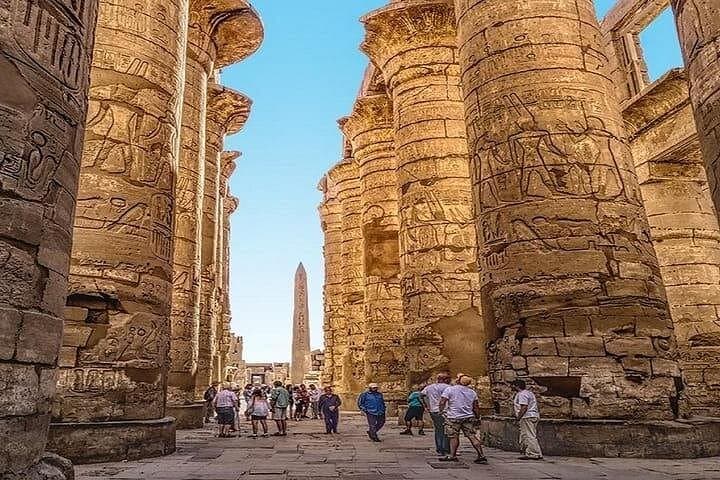
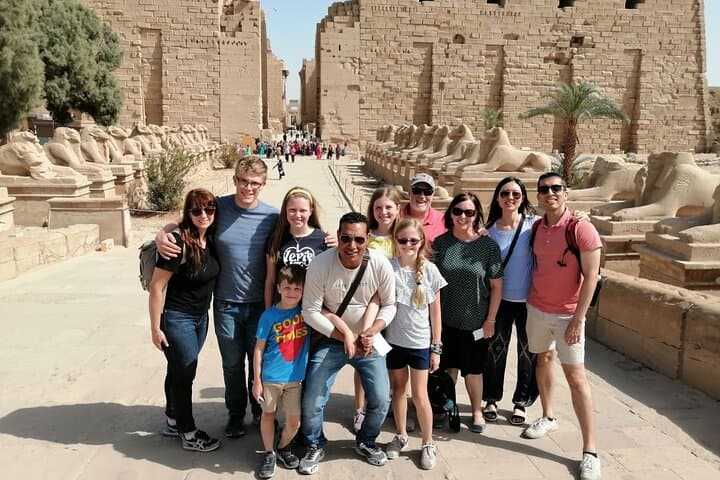
This private day tour steers travelers through Thebes’ two faces — the funerary landscape of the West Bank and the living cult of the East. Geology and history meet at the Valley of the Kings: riverine sediment and chalky cliffs were chosen by New Kingdom pharaohs for guarded tombs; inside, painted chambers and burial shafts narrate millennia of ritual and royal ambition. On the East Bank, Karnak and Luxor Temples record successive rulers with colonnades, obelisks and granite statues that anchor modern Luxor’s street life.
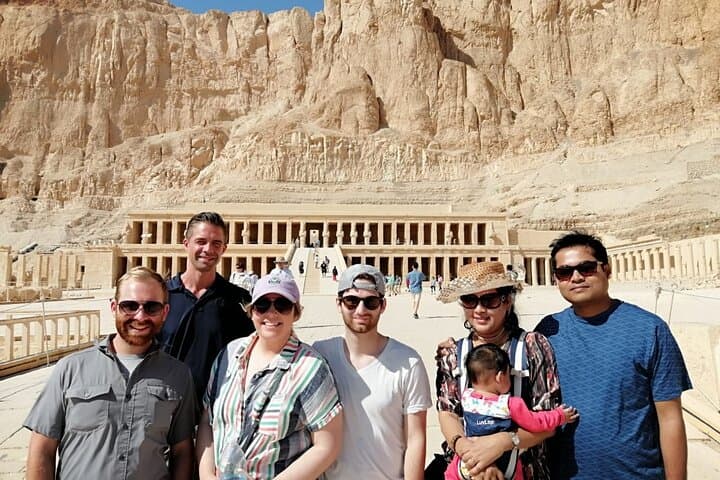
Local guides emphasize social context as much as monuments: Hatshepsut’s mortuary temple challenges gendered rule, while the Colossi of Memnon mark an ancient riverside approach. The town around the sites is active — vendors, mosque calls and feluccas tug at the river’s edge — offering a reminder that these ruins sit within a living landscape.
Practicalities shape the day: expect an 11–12 hour roundtrip from Cairo with domestic flights, airport pickup, and air-conditioned transfers. Surfaces range from paved courtyards to stair-stepped tomb interiors; comfortable footwear, sun protection and a moderate tolerance for crowds make the day far more enjoyable. Photography rules and dress codes are enforced at many sites; carry cash for tips and small purchases. The itinerary compresses Luxor’s essentials into a single intense, accessible day for those willing to trade sleep for ruins.
easy.
11–12 hours.
Suitable for travelers of average fitness who can handle walking on uneven ground and climbing short staircases inside tombs.
Expect about 11–12 hours door to door from Cairo, including domestic flights, transfers and on‑site touring.
Yes — the tour lists main entrance fees and lunch as included in the price.
The tour is marked wheelchair accessible for transfers, but many tombs and temples have steps and uneven ground — check specifics with the provider beforehand.
International travelers need a valid passport; visa requirements depend on nationality — provide passport details at booking and verify Egyptian entry rules before travel.
Luxor sits on the site of ancient Thebes, the religious and political center of Egypt during the New Kingdom when many royal tombs and temples were constructed.
High visitor numbers place strain on fragile painted interiors; follow guide rules, avoid touching reliefs and use water sparingly to help preserve sites.
Egypt Best Holidays operates guided outdoor trips and adventures with an emphasis on safety, stewardship, and memorable experiences.
Morning light slices across the Nile as the plane descends into Luxor, and suddenly the scale of ancient Egypt reasserts itself: towering pylons, clipped desert ridgelines and the quiet cut of tomb entrances in pale limestone.
Morning light slices across the Nile as the plane descends into Luxor, and suddenly the scale of ancient Egypt reasserts itself: towering pylons, clipped desert ridgelines and the quiet cut of tomb entrances in pale limestone.
This private day tour steers travelers through Thebes’ two faces — the funerary landscape of the West Bank and the living cult of the East. Geology and history meet at the Valley of the Kings: riverine sediment and chalky cliffs were chosen by New Kingdom pharaohs for guarded tombs; inside, painted chambers and burial shafts narrate millennia of ritual and royal ambition. On the East Bank, Karnak and Luxor Temples record successive rulers with colonnades, obelisks and granite statues that anchor modern Luxor’s street life.
Local guides emphasize social context as much as monuments: Hatshepsut’s mortuary temple challenges gendered rule, while the Colossi of Memnon mark an ancient riverside approach. The town around the sites is active — vendors, mosque calls and feluccas tug at the river’s edge — offering a reminder that these ruins sit within a living landscape.
Practicalities shape the day: expect an 11–12 hour roundtrip from Cairo with domestic flights, airport pickup, and air-conditioned transfers. Surfaces range from paved courtyards to stair-stepped tomb interiors; comfortable footwear, sun protection and a moderate tolerance for crowds make the day far more enjoyable. Photography rules and dress codes are enforced at many sites; carry cash for tips and small purchases. The itinerary compresses Luxor’s essentials into a single intense, accessible day for those willing to trade sleep for ruins.