THE ADVENTURE COLLECTIVE® · Independent discovery and booking for outdoor travel

Spend a full day tracing the Vltava’s curve into Český Krumlov’s medieval heart. This private tour blends castle visits, riverside walks and local history with practical logistics for a smooth day trip.
Spend a full day tracing the Vltava’s curve into Český Krumlov’s medieval heart. This private tour blends castle visits, riverside walks and local history with practical logistics for a smooth day trip.
You arrive in Český Krumlov along a slow bend of the Vltava, where the river dares you to follow its curve into a medieval street grid. Stone facades lean over cobblestones; castle walls rise in layered stages above the town, their ochre and cream faces catching late-morning light. The place feels lived-in and historic—not a staged postcard.
Verified experiences and guided adventures in the surrounding area.
Operated by Thomas Travel · Český Krumlov, South Bohemian Region
You arrive in Český Krumlov along a slow bend of the Vltava, where the river dares you to follow its curve into a medieval street grid. Stone facades lean over cobblestones; castle walls rise in layered stages above the town, their ochre and cream faces catching late-morning light. The place feels lived-in and historic—not a staged postcard.
Founded in the 13th century, Český Krumlov grew as the seat of the powerful Rožmberk (Rosenberg) and later Schwarzenberg families. Geology here is gentle: rolling Bohemian lowlands carved by the Vltava, with sandstone outcrops and loamy soils that fed the town’s gardens and orchards. The castle complex is one of the largest in Central Europe and contains a rare Baroque theatre—an artifact of court culture preserved behind heavy curtains and painted panels.
Culturally, the town balances local crafts, small cafés, and seasonal festivals that draw visitors without overwhelming the streets. Practicalities for a private day tour: expect a full nine-hour day if traveling from Prague, light walking on uneven cobbles and steps, and opportunities to visit the castle, the baroque theater, and riverside viewpoints. Wear sturdy shoes, carry a compact rain layer—weather shifts quickly—and plan for midday crowds in summer.
A private guide and air-conditioned vehicle make logistics straightforward; confirm which admissions are included before you go. Time your visit for morning light at the castle and late afternoon for quieter riverside photos—the town rewards slow, observant travel.
easy.
9 hours.
Suitable for most fitness levels; expect light to moderate walking on uneven cobbles and stairs.
Yes—hotel pickup and drop-off are listed as included in the tour inclusions; confirm the exact pickup point when booking.
Admission details vary by operator—verify whether castle or theatre tickets are included, as some private tours require separate entrance fees.
Expect light to moderate walking on uneven cobbles, staircases at the castle, and short uphill sections; the tour is suitable for most fitness levels.
Guides are typically available in major languages on request—confirm your preferred language at booking to ensure availability.
The town grew from a 13th-century market settlement and became a fortified seat for the Rožmberk and later Schwarzenberg families; its castle houses one of Europe’s oldest Baroque theatres.
High visitor numbers concentrate on the historic center and riverbanks—stick to marked paths, avoid trampling river vegetation, and follow local guidelines to protect fragile stonework and gardens.
Thomas Travel operates guided outdoor trips and adventures with an emphasis on safety, stewardship, and memorable experiences.
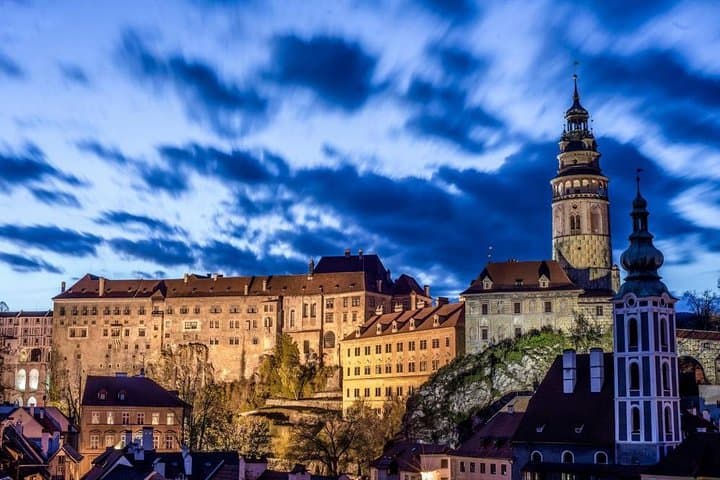
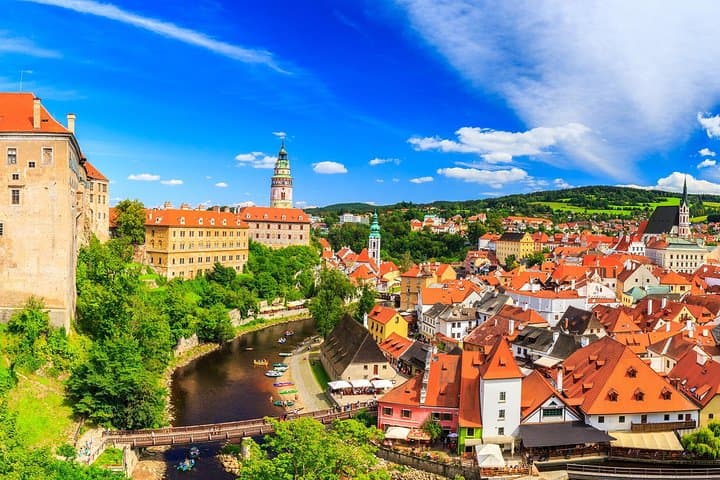
You arrive in Český Krumlov along a slow bend of the Vltava, where the river dares you to follow its curve into a medieval street grid. Stone facades lean over cobblestones; castle walls rise in layered stages above the town, their ochre and cream faces catching late-morning light. The place feels lived-in and historic—not a staged postcard.
You arrive in Český Krumlov along a slow bend of the Vltava, where the river dares you to follow its curve into a medieval street grid. Stone facades lean over cobblestones; castle walls rise in layered stages above the town, their ochre and cream faces catching late-morning light. The place feels lived-in and historic—not a staged postcard.
Founded in the 13th century, Český Krumlov grew as the seat of the powerful Rožmberk (Rosenberg) and later Schwarzenberg families. Geology here is gentle: rolling Bohemian lowlands carved by the Vltava, with sandstone outcrops and loamy soils that fed the town’s gardens and orchards. The castle complex is one of the largest in Central Europe and contains a rare Baroque theatre—an artifact of court culture preserved behind heavy curtains and painted panels.
Culturally, the town balances local crafts, small cafés, and seasonal festivals that draw visitors without overwhelming the streets. Practicalities for a private day tour: expect a full nine-hour day if traveling from Prague, light walking on uneven cobbles and steps, and opportunities to visit the castle, the baroque theater, and riverside viewpoints. Wear sturdy shoes, carry a compact rain layer—weather shifts quickly—and plan for midday crowds in summer.
A private guide and air-conditioned vehicle make logistics straightforward; confirm which admissions are included before you go. Time your visit for morning light at the castle and late afternoon for quieter riverside photos—the town rewards slow, observant travel.