THE ADVENTURE COLLECTIVE® · Independent discovery and booking for outdoor travel

Travel from Athens to the birthplace of the Olympic Games on a private full-day tour that pairs comfortable transport with an audio guide. Explore the stadium, temples, and museum at your own pace while learning the history and practical tips for a long day in the Peloponnese.
Travel from Athens to the birthplace of the Olympic Games on a private full-day tour that pairs comfortable transport with an audio guide. Explore the stadium, temples, and museum at your own pace while learning the history and practical tips for a long day in the Peloponnese.
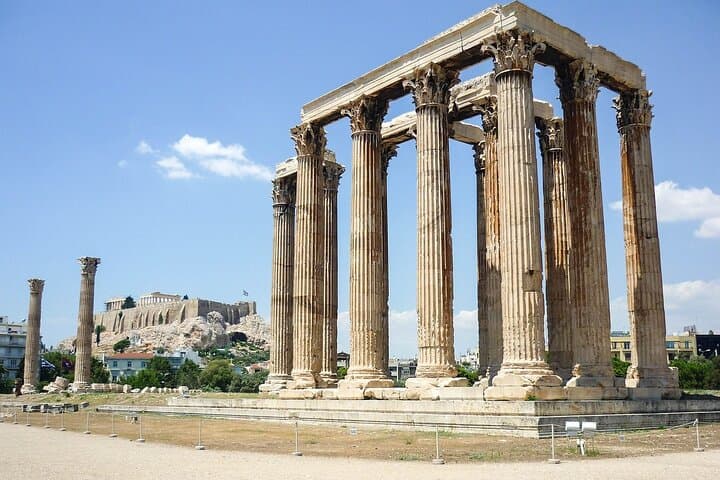
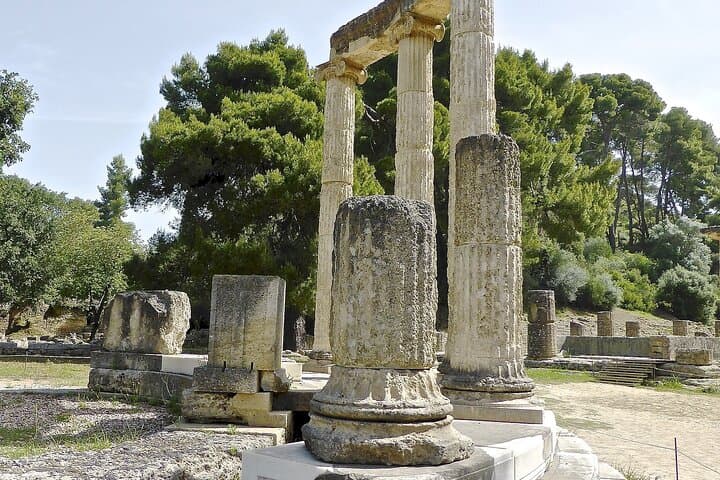
A long ribbon of highway unwinds west from Athens as the morning light finds the Peloponnese plains. By noon the car eases into the shallow valley that holds Ancient Olympia: olive trees bending like patient guardians, a low river that murmurs past reed beds, and the broken silhouettes of Doric columns rising from the ground.
Verified experiences and guided adventures in the surrounding area.
Operated by eTransfer.gr · Olympia, Elis
A long ribbon of highway unwinds west from Athens as the morning light finds the Peloponnese plains. By noon the car eases into the shallow valley that holds Ancient Olympia: olive trees bending like patient guardians, a low river that murmurs past reed beds, and the broken silhouettes of Doric columns rising from the ground.
Olympia was more than sport; it was a religious sanctuary and a meeting place for the Greek world. Geologically the site sits on alluvial soils at the foot of gentle limestone hills of Elis, which sheltered sanctuaries and markets for centuries. The Temple of Zeus once housed Phidias’s colossal statue; the stadium’s long earthen track still explains why athletes trained here and why city-states observed a sacred truce.
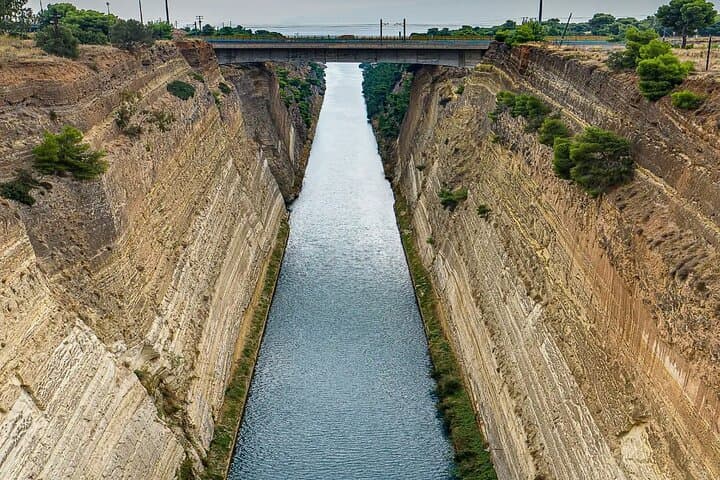
Local life remains quietly tied to that past: village bakeries that still make bread to ancient recipes, and olive presses that turn millennia of trees into a regional product. The private full-day format lets travelers move at their own pace—stopping for panoramic viewpoints like the Corinth Canal overlook on the drive, lingering in excavation zones, and visiting the Archaeological Museum’s fragile marbles.
Practical guidance: expect a 12-hour day with roughly four hours each way by vehicle. Wear sturdy walking shoes for uneven stone and dirt, bring sun protection and refillable water, and plan for midday heat in summer. Tickets for museums are purchased locally; guided audio through your device fills gaps but does not replace access fees. Arrive early to capture cool light in the stadium and to avoid the afternoon coach crowds.
moderate.
12 hours (full day).
Suitable for travelers who can sit comfortably for long drives and walk 2–4 miles on uneven terrain.
No—entrance fees are paid locally; the tour provides private transport and an audio guide but not ticket costs.
Expect about 3.5–4 hours each way by car, depending on traffic and stops such as the Corinth Canal viewpoint.
Yes—infant seats are available and the tour is family-friendly, but plan for long vehicle time and bring snacks and entertainment for young children.
Yes—visitor facilities and a café near the archaeological park and museum offer basic food and toilets; bring snacks for dietary needs.
Olympia hosted the ancient Olympic Games from the 8th century BC and contained monumental temples like the Temple of Zeus, once home to Phidias’s famed statue.
The site is protected by Greece’s archaeological service; visitors should stay on paths, avoid touching sculptures, and support local guides and businesses to promote sustainable tourism.
eTransfer.gr operates guided outdoor trips and adventures with an emphasis on safety, stewardship, and memorable experiences.
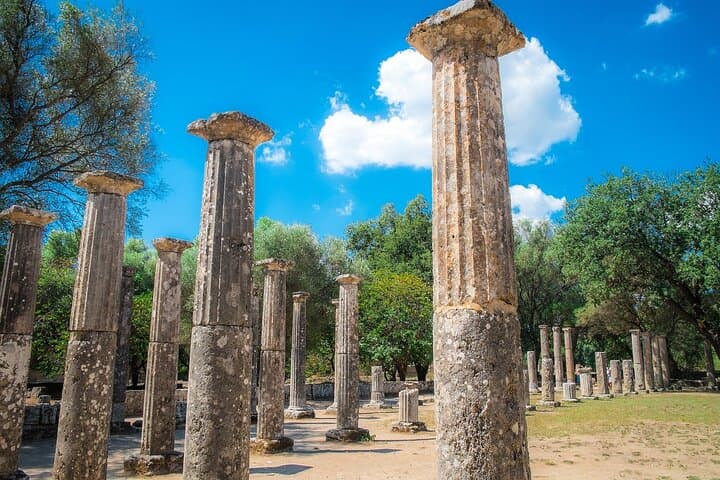
A long ribbon of highway unwinds west from Athens as the morning light finds the Peloponnese plains. By noon the car eases into the shallow valley that holds Ancient Olympia: olive trees bending like patient guardians, a low river that murmurs past reed beds, and the broken silhouettes of Doric columns rising from the ground.
A long ribbon of highway unwinds west from Athens as the morning light finds the Peloponnese plains. By noon the car eases into the shallow valley that holds Ancient Olympia: olive trees bending like patient guardians, a low river that murmurs past reed beds, and the broken silhouettes of Doric columns rising from the ground.
Olympia was more than sport; it was a religious sanctuary and a meeting place for the Greek world. Geologically the site sits on alluvial soils at the foot of gentle limestone hills of Elis, which sheltered sanctuaries and markets for centuries. The Temple of Zeus once housed Phidias’s colossal statue; the stadium’s long earthen track still explains why athletes trained here and why city-states observed a sacred truce.
Local life remains quietly tied to that past: village bakeries that still make bread to ancient recipes, and olive presses that turn millennia of trees into a regional product. The private full-day format lets travelers move at their own pace—stopping for panoramic viewpoints like the Corinth Canal overlook on the drive, lingering in excavation zones, and visiting the Archaeological Museum’s fragile marbles.
Practical guidance: expect a 12-hour day with roughly four hours each way by vehicle. Wear sturdy walking shoes for uneven stone and dirt, bring sun protection and refillable water, and plan for midday heat in summer. Tickets for museums are purchased locally; guided audio through your device fills gaps but does not replace access fees. Arrive early to capture cool light in the stadium and to avoid the afternoon coach crowds.