THE ADVENTURE COLLECTIVE® · Independent discovery and booking for outdoor travel

A private day trip from Aswan that pairs a long desert drive across Lake Nasser with guided visits to the colossal temples of Ramses II and Nefertari. Expect early starts, intense sun, and an unforgettable encounter with ancient Egyptian engineering and conservation.
A private day trip from Aswan that pairs a long desert drive across Lake Nasser with guided visits to the colossal temples of Ramses II and Nefertari. Expect early starts, intense sun, and an unforgettable encounter with ancient Egyptian engineering and conservation.
You leave Aswan before sunrise, the Nile city shrinking in the rearview as the road unspools across the Sahara. Warm light slides over low dunes, and Lake Nasser appears like a blue incision in the ochre; the highway is steady, the vehicle air-conditioned, and the promise of colossal stone silhouettes grows until the first of Ramses II’s seated figures looms on the horizon.
Verified experiences and guided adventures in the surrounding area.
Operated by Discovery Tours · Abu Simbel, Aswan Governorate
You leave Aswan before sunrise, the Nile city shrinking in the rearview as the road unspools across the Sahara. Warm light slides over low dunes, and Lake Nasser appears like a blue incision in the ochre; the highway is steady, the vehicle air-conditioned, and the promise of colossal stone silhouettes grows until the first of Ramses II’s seated figures looms on the horizon.
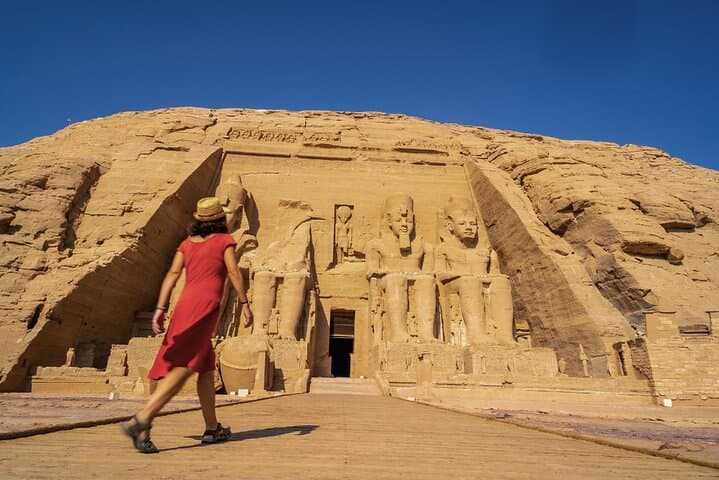
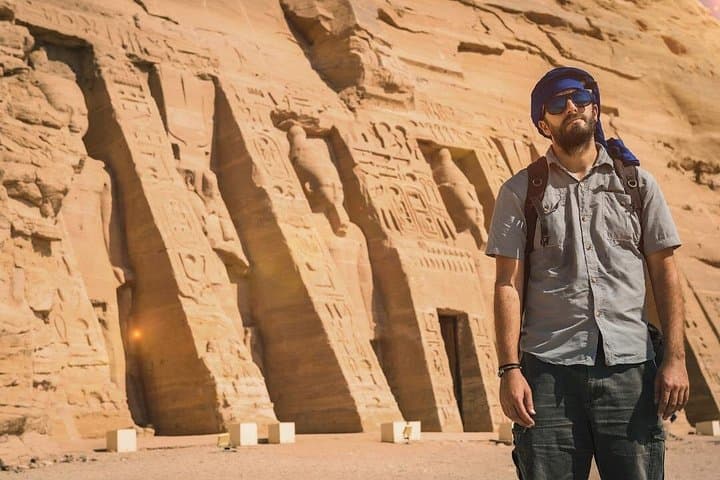
The twin temples at Abu Simbel were carved from the cliff-face in the 13th century BCE; the Great Temple honors Ramses II and aligns with the sun twice a year, while the smaller temple celebrates Queen Nefertari and the goddess Hathor. Geologically, the temples are cut from Nubian sandstone and sit on a plain shaped by ancient riverine and desert processes. In the 1960s, an international relocation effort raised and moved the complex inland to save it from Lake Nasser’s rising waters — a notable feat of conservation engineering and a key chapter in modern Egyptian heritage work.
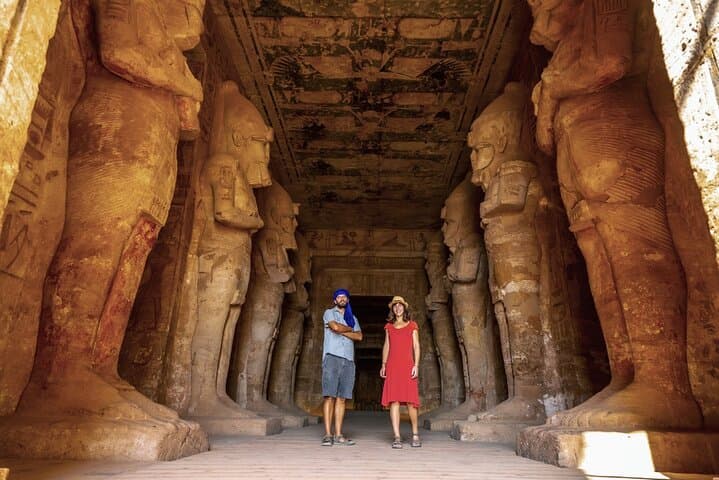
On a private day tour you get guided context, flexible pacing, and a comfortable return to Aswan. Expect short walks across paved approaches, shaded colonnades, and low light inside chambers where hieroglyphs narrate military campaigns and divine rituals.
Practical side: start early to avoid heat and crowds, wear a sunhat and sturdy shoes for sandy surfaces, bring plenty of water and ID for ticket checks. Photography is common but be mindful of restricted interior areas. The whole excursion is a long day — plan for a 10-hour roundtrip with two hours at the Great Temple and time to absorb the lakeside desert on the drive.
easy.
10 hours.
Suitable for most fitness levels; involves short, easy walks and standing while touring temple interiors.
Road transfer is roughly 3 to 4 hours each way (about 280–300 km) depending on stops and traffic, making this a full 10-hour day tour.
Yes — this private tour specifies that entrance fees to the Abu Simbel temples are included as per the itinerary.
The site has paved approaches but uneven surfaces and steps inside the temples; some mobility limitations may make access challenging—check with the operator about specific assistance options.
The interior solar alignment occurs around February 22 and October 22 each year; those dates correspond to seasonal events but general visits can be made year-round.
The twin temples were carved under Ramses II in the 13th century BCE and were relocated in the 1960s to save them from the Aswan High Dam’s reservoir—an international UNESCO-led project.
Ongoing conservation balances visitor access with preserving fragile sandstone surfaces; follow marked paths, avoid touching reliefs, and pack out trash to reduce impact.
Discovery Tours operates guided outdoor trips and adventures with an emphasis on safety, stewardship, and memorable experiences.
You leave Aswan before sunrise, the Nile city shrinking in the rearview as the road unspools across the Sahara. Warm light slides over low dunes, and Lake Nasser appears like a blue incision in the ochre; the highway is steady, the vehicle air-conditioned, and the promise of colossal stone silhouettes grows until the first of Ramses II’s seated figures looms on the horizon.
You leave Aswan before sunrise, the Nile city shrinking in the rearview as the road unspools across the Sahara. Warm light slides over low dunes, and Lake Nasser appears like a blue incision in the ochre; the highway is steady, the vehicle air-conditioned, and the promise of colossal stone silhouettes grows until the first of Ramses II’s seated figures looms on the horizon.
The twin temples at Abu Simbel were carved from the cliff-face in the 13th century BCE; the Great Temple honors Ramses II and aligns with the sun twice a year, while the smaller temple celebrates Queen Nefertari and the goddess Hathor. Geologically, the temples are cut from Nubian sandstone and sit on a plain shaped by ancient riverine and desert processes. In the 1960s, an international relocation effort raised and moved the complex inland to save it from Lake Nasser’s rising waters — a notable feat of conservation engineering and a key chapter in modern Egyptian heritage work.
On a private day tour you get guided context, flexible pacing, and a comfortable return to Aswan. Expect short walks across paved approaches, shaded colonnades, and low light inside chambers where hieroglyphs narrate military campaigns and divine rituals.
Practical side: start early to avoid heat and crowds, wear a sunhat and sturdy shoes for sandy surfaces, bring plenty of water and ID for ticket checks. Photography is common but be mindful of restricted interior areas. The whole excursion is a long day — plan for a 10-hour roundtrip with two hours at the Great Temple and time to absorb the lakeside desert on the drive.