THE ADVENTURE COLLECTIVE® · Independent discovery and booking for outdoor travel

Climb the lion’s stairs at Sigiriya and enter the painted caves of Dambulla on a private day tour from Negombo. This eight‑hour trip pairs ancient engineering and temple art with practical logistics: hotel pickup, water, and a guide to move you efficiently between sites.
Climb the lion’s stairs at Sigiriya and enter the painted caves of Dambulla on a private day tour from Negombo. This eight‑hour trip pairs ancient engineering and temple art with practical logistics: hotel pickup, water, and a guide to move you efficiently between sites.
You step out of the air‑conditioned car into heat that feels like a hand pressing gently against your back. Ahead, Sigiriya rises from the flat plains — a sheer monolith of red rock, roughly 200 meters above the surrounding paddy fields — its remnant lion paws marking the old ceremonial entrance. The climb begins as a rhythm: stone steps, metal staircases that hug the cliff, and occasional landings that open onto fresco panels and the wide sweep of the Central Province.
Verified experiences and guided adventures in the surrounding area.
Operated by Lakpura LLC · Sigiriya, Central Province
You step out of the air‑conditioned car into heat that feels like a hand pressing gently against your back. Ahead, Sigiriya rises from the flat plains — a sheer monolith of red rock, roughly 200 meters above the surrounding paddy fields — its remnant lion paws marking the old ceremonial entrance. The climb begins as a rhythm: stone steps, metal staircases that hug the cliff, and occasional landings that open onto fresco panels and the wide sweep of the Central Province.
This is a day of contrasts. In the morning the guide moves deliberately through Dambulla’s cave temple complex, where dim, painted ceilings curve low over rows of Buddha statues. These rock-cut sanctuaries date to around the 1st century BCE, their murals and gilded images accumulated through centuries of devotion. Later, Sigiriya delivers something closer to an engineered landscape: terraced gardens, moats, and ancient irrigation channels that hint at King Kasyapa’s 5th‑century AD palace planning — waterworks and urban design carved into stone.
Geology and human ambition are on display here. The granite outcrops were quarried by forces of nature and then turned into platforms for kings and monks. Locals still farm the plains below; voices from village markets and the occasional temple bell keep the day tethered to present life.
Practicalities shape the experience. This private, eight‑hour tour from Negombo includes hotel pickup, an English‑speaking chauffeur‑guide, and bottled water, but entrance fees to the monuments are paid locally. Expect an active day: Sigiriya’s ascent uses steep metal staircases and several hundred steps; people with spinal injuries, heart conditions, or pregnancy should avoid the climb. Bring sturdy shoes, sun protection, and at least 2 liters of water per person. Start early to avoid mid‑day heat and the busiest tour buses.
Timing matters for photography and comfort. Sunrise views from Pidurangala Rock are spectacular if you can add a brief detour; late afternoon light softens the Sigiriya faces and flattens the plains. At Dambulla, move quietly and cover shoulders and knees inside the sacred caves.
A private tour changes the rhythm — more time to linger at frescoes, to ask about irrigation channels visible from the ramparts, to step off the beaten path for a local snack. It’s a day that asks for curiosity and a moderate level of fitness, and repays both with layered history, bold rock views, and the peculiar satisfaction of standing where engineering, politics, and devotion once intersected.
moderate.
7–8 hours.
Moderate fitness — able to climb several hundred steps and tolerate heat for short stretches
No — the tour includes transport and guide services; entrance tickets for Sigiriya and Dambulla are purchased locally.
The ascent involves several hundred steps and a series of metal staircases that gain roughly 200 meters in elevation from the plain to the summit.
Children who can comfortably climb stairs and tolerate heat can do the trip, but the climb may be strenuous for very young kids.
Yes — the private tour offers hotel pickup and drop‑off within Negombo as part of the service.
Yes — remove shoes, keep shoulders and knees covered, and avoid flash photography of some frescoes per site rules.
The tour runs subject to favorable weather; heavy rain can make staircases slippery and may alter the schedule — check cancellation/refund terms when booking.
Sigiriya was developed as a fortified palace by King Kasyapa in the 5th century AD; Dambulla’s cave complex contains Buddhist murals and statues dating back to the 1st century BCE.
Both Sigiriya and Dambulla are UNESCO sites with visitor management to limit erosion and protect frescoes — stay on marked paths and avoid touching artwork.
Lakpura LLC operates guided outdoor trips and adventures with an emphasis on safety, stewardship, and memorable experiences.


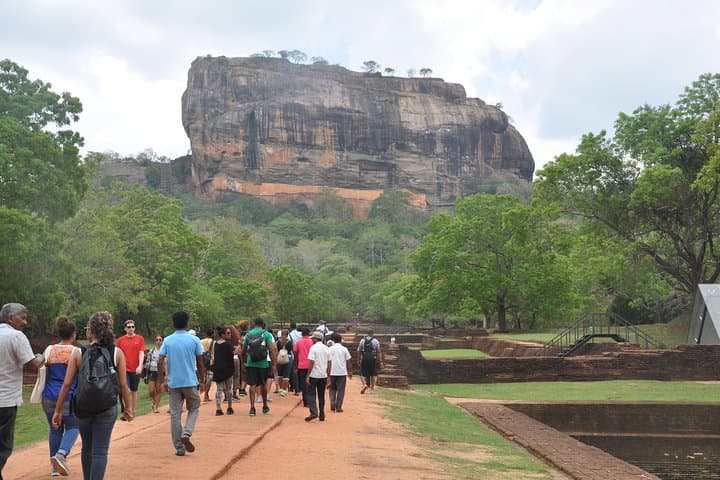
You step out of the air‑conditioned car into heat that feels like a hand pressing gently against your back. Ahead, Sigiriya rises from the flat plains — a sheer monolith of red rock, roughly 200 meters above the surrounding paddy fields — its remnant lion paws marking the old ceremonial entrance. The climb begins as a rhythm: stone steps, metal staircases that hug the cliff, and occasional landings that open onto fresco panels and the wide sweep of the Central Province.
You step out of the air‑conditioned car into heat that feels like a hand pressing gently against your back. Ahead, Sigiriya rises from the flat plains — a sheer monolith of red rock, roughly 200 meters above the surrounding paddy fields — its remnant lion paws marking the old ceremonial entrance. The climb begins as a rhythm: stone steps, metal staircases that hug the cliff, and occasional landings that open onto fresco panels and the wide sweep of the Central Province.
This is a day of contrasts. In the morning the guide moves deliberately through Dambulla’s cave temple complex, where dim, painted ceilings curve low over rows of Buddha statues. These rock-cut sanctuaries date to around the 1st century BCE, their murals and gilded images accumulated through centuries of devotion. Later, Sigiriya delivers something closer to an engineered landscape: terraced gardens, moats, and ancient irrigation channels that hint at King Kasyapa’s 5th‑century AD palace planning — waterworks and urban design carved into stone.
Geology and human ambition are on display here. The granite outcrops were quarried by forces of nature and then turned into platforms for kings and monks. Locals still farm the plains below; voices from village markets and the occasional temple bell keep the day tethered to present life.
Practicalities shape the experience. This private, eight‑hour tour from Negombo includes hotel pickup, an English‑speaking chauffeur‑guide, and bottled water, but entrance fees to the monuments are paid locally. Expect an active day: Sigiriya’s ascent uses steep metal staircases and several hundred steps; people with spinal injuries, heart conditions, or pregnancy should avoid the climb. Bring sturdy shoes, sun protection, and at least 2 liters of water per person. Start early to avoid mid‑day heat and the busiest tour buses.
Timing matters for photography and comfort. Sunrise views from Pidurangala Rock are spectacular if you can add a brief detour; late afternoon light softens the Sigiriya faces and flattens the plains. At Dambulla, move quietly and cover shoulders and knees inside the sacred caves.
A private tour changes the rhythm — more time to linger at frescoes, to ask about irrigation channels visible from the ramparts, to step off the beaten path for a local snack. It’s a day that asks for curiosity and a moderate level of fitness, and repays both with layered history, bold rock views, and the peculiar satisfaction of standing where engineering, politics, and devotion once intersected.