THE ADVENTURE COLLECTIVE® · Independent discovery and booking for outdoor travel

A long but richly rewarding day that pairs Petra’s carved sandstone city with a high-speed 4x4 safari in Wadi Rum. Ideal for travelers short on time who want a guided, private experience from Amman or the Dead Sea.
A long but richly rewarding day that pairs Petra’s carved sandstone city with a high-speed 4x4 safari in Wadi Rum. Ideal for travelers short on time who want a guided, private experience from Amman or the Dead Sea.
The morning air off the Dead Sea tastes of mineral and distance as your driver eases the minivan onto Highway 15. For the next three hours the land opens and closes—olive groves and basalt ridges giving way to the ochre canyons around Wadi Musa. When you enter Petra through the 1.2 km Siq, the rock walls lean in like an audience; the Treasury appears not as an image but as a physical arrival, its carved façade catching light and holding it.
Verified experiences and guided adventures in the surrounding area.
Operated by Alamal Travel &Tourism · Wadi Musa, Ma'an Governorate
The morning air off the Dead Sea tastes of mineral and distance as your driver eases the minivan onto Highway 15. For the next three hours the land opens and closes—olive groves and basalt ridges giving way to the ochre canyons around Wadi Musa. When you enter Petra through the 1.2 km Siq, the rock walls lean in like an audience; the Treasury appears not as an image but as a physical arrival, its carved façade catching light and holding it.
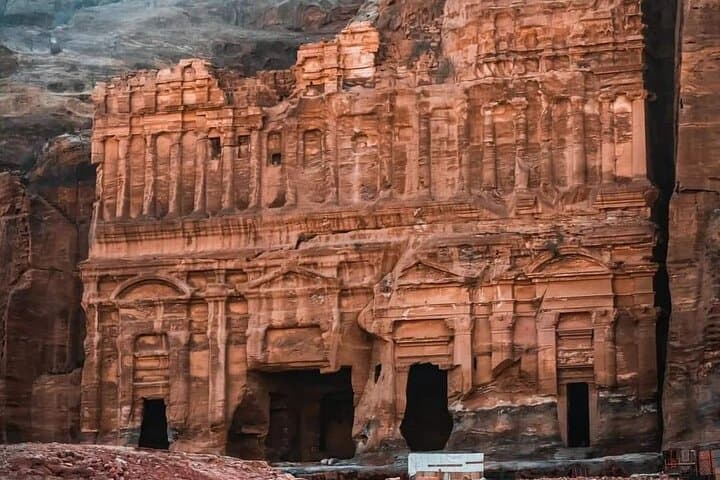
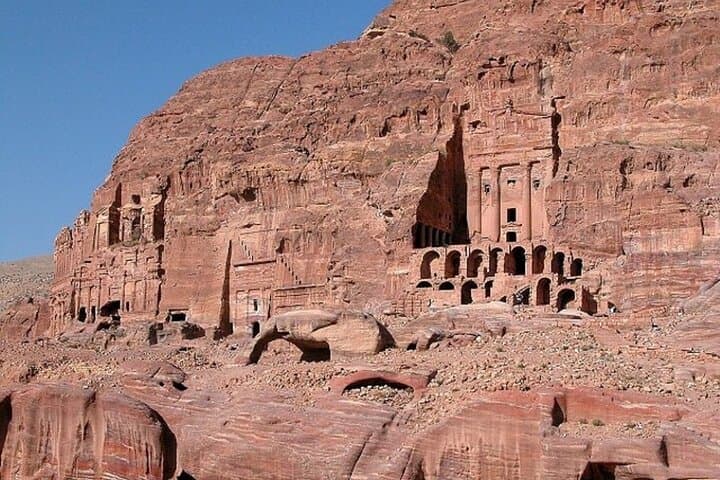
Petra was the capital of the Nabataeans, an ancient people who turned trade routes into a living city by chiseling streets, tombs and water channels from sandstone. The geology is obvious: layers of wind-sculpted sandstone that change color through the day, fissures that channel rare rains and supported farming on ledges. Wadi Rum, later in the day, is a different argument—broad desert basins framed by monolithic granite and sandstone towers. The Bedouin have read and shaped this topography for generations; their camps, trails and stories are part of the landscape.
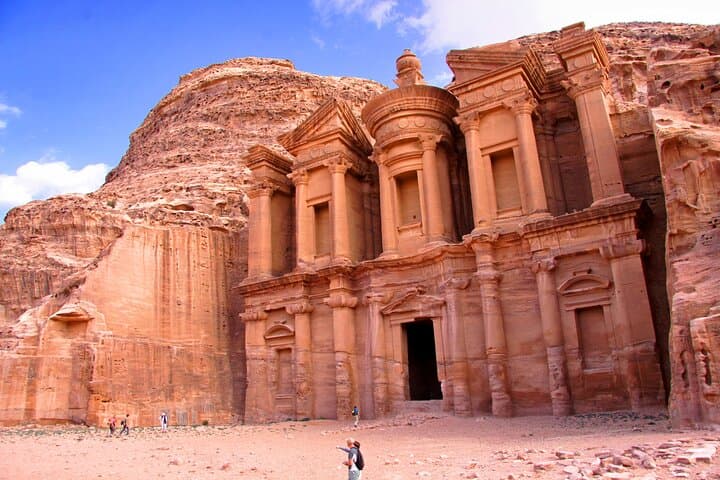
On a single day you get a concentrated version of southern Jordan: roughly three hours of guided walking in Petra—enough to see the Treasury, the Roman-style theatre and to take a steady climb toward the Monastery if time and legs allow—and a two-hour 4x4 safari in Wadi Rum where the jeep becomes a brush against rolling dunes and red rock.
Practicalities are straightforward. The tour runs 12–14 hours door-to-door; pickup is available in Amman or along the Dead Sea shore. Entrance fees to Petra are not included; buy tickets in advance during high season to avoid lines. Expect uneven flagstones, steep steps and sections of loose sand in Wadi Rum—sturdy shoes and hydration are non-negotiable. The provider includes private transport, bottled water, an English-speaking driver and a two-hour jeep ride in Wadi Rum.
Timing matters: start early to see the Treasury with soft morning light and lighter crowds; aim to reach Wadi Rum in late afternoon for the desert’s warm palette at sunset. Bring sun protection, cash for local vendors and a light layer for the desert evening. If you want the Monastery or a full archaeological sweep, consider staying overnight in Wadi Musa or booking a two-day itinerary—this one-day route is paced for highlights rather than deep exploration.
Whether you’re drawn to carved façades or the hush of an open desert, this private day tour compresses Jordan’s two signature landscapes into one long, memorable day—equal parts geology, human history and practical travel rhythm.
moderate.
12–14 hours.
Moderate stamina required—able to walk several hours on uneven surfaces and manage short climbs.
No—entrance fees to Petra are not included; purchase tickets ahead of time or at the Petra Visitor Center.
Yes—the tour includes a two-hour 4x4 jeep safari in Wadi Rum as listed in the itinerary.
Pickup is offered from hotels in Amman or the Dead Sea area; the driver contacts you before departure to confirm details.
Lunch is not specified as included—plan to bring snacks or budget time and cash for a meal during stops.
The tour is marked suitable for various fitness levels, but Petra’s uneven terrain and steps make it challenging for wheelchair users or those with significant mobility limitations.
Expect about three hours driving from Amman or the Dead Sea to Petra, and roughly 1–1.5 hours between Petra and Wadi Rum depending on route and traffic.
Petra was the Nabataeans’ capital and a crossroads of ancient trade routes; Wadi Rum’s desert has been home to Bedouin communities and gained fame through T.E. Lawrence’s early 20th-century accounts.
Both Petra and Wadi Rum are vulnerable to erosion and visitor impact—stick to marked paths, avoid climbing fragile carvings and support local operators who follow sustainable practices.
Alamal Travel &Tourism operates guided outdoor trips and adventures with an emphasis on safety, stewardship, and memorable experiences.
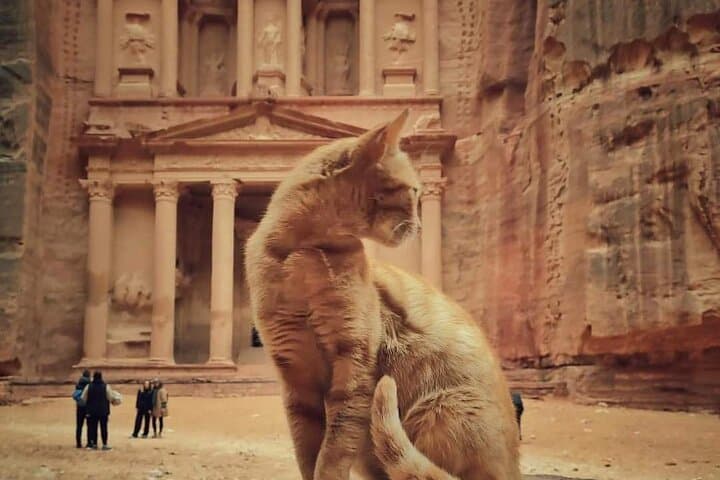
The morning air off the Dead Sea tastes of mineral and distance as your driver eases the minivan onto Highway 15. For the next three hours the land opens and closes—olive groves and basalt ridges giving way to the ochre canyons around Wadi Musa. When you enter Petra through the 1.2 km Siq, the rock walls lean in like an audience; the Treasury appears not as an image but as a physical arrival, its carved façade catching light and holding it.
The morning air off the Dead Sea tastes of mineral and distance as your driver eases the minivan onto Highway 15. For the next three hours the land opens and closes—olive groves and basalt ridges giving way to the ochre canyons around Wadi Musa. When you enter Petra through the 1.2 km Siq, the rock walls lean in like an audience; the Treasury appears not as an image but as a physical arrival, its carved façade catching light and holding it.
Petra was the capital of the Nabataeans, an ancient people who turned trade routes into a living city by chiseling streets, tombs and water channels from sandstone. The geology is obvious: layers of wind-sculpted sandstone that change color through the day, fissures that channel rare rains and supported farming on ledges. Wadi Rum, later in the day, is a different argument—broad desert basins framed by monolithic granite and sandstone towers. The Bedouin have read and shaped this topography for generations; their camps, trails and stories are part of the landscape.
On a single day you get a concentrated version of southern Jordan: roughly three hours of guided walking in Petra—enough to see the Treasury, the Roman-style theatre and to take a steady climb toward the Monastery if time and legs allow—and a two-hour 4x4 safari in Wadi Rum where the jeep becomes a brush against rolling dunes and red rock.
Practicalities are straightforward. The tour runs 12–14 hours door-to-door; pickup is available in Amman or along the Dead Sea shore. Entrance fees to Petra are not included; buy tickets in advance during high season to avoid lines. Expect uneven flagstones, steep steps and sections of loose sand in Wadi Rum—sturdy shoes and hydration are non-negotiable. The provider includes private transport, bottled water, an English-speaking driver and a two-hour jeep ride in Wadi Rum.
Timing matters: start early to see the Treasury with soft morning light and lighter crowds; aim to reach Wadi Rum in late afternoon for the desert’s warm palette at sunset. Bring sun protection, cash for local vendors and a light layer for the desert evening. If you want the Monastery or a full archaeological sweep, consider staying overnight in Wadi Musa or booking a two-day itinerary—this one-day route is paced for highlights rather than deep exploration.
Whether you’re drawn to carved façades or the hush of an open desert, this private day tour compresses Jordan’s two signature landscapes into one long, memorable day—equal parts geology, human history and practical travel rhythm.