THE ADVENTURE COLLECTIVE® · Independent discovery and booking for outdoor travel

Spend a full day from Luxor exploring Kom Ombo’s rare double temple and the nearly intact Ptolemaic temple of Horus at Edfu. This private, air‑conditioned tour pairs long scenic drives along the Nile with focused visits to two of Upper Egypt’s most evocative monuments.
Spend a full day from Luxor exploring Kom Ombo’s rare double temple and the nearly intact Ptolemaic temple of Horus at Edfu. This private, air‑conditioned tour pairs long scenic drives along the Nile with focused visits to two of Upper Egypt’s most evocative monuments.
You step into the warm light of Upper Egypt before dawn, the Nile at your window moving like a slow argument with the shore. The drive from Luxor unfolds across an irrigated plain, palms and villages sliding past as the river dares you to keep watching. Kom Ombo appears as a compact, symmetric rise of stone: two parallel sanctuaries, Horus and Sobek facing different skies.
Verified experiences and guided adventures in the surrounding area.
Operated by Far and Beyond Travel · Luxor, Luxor Governorate
You step into the warm light of Upper Egypt before dawn, the Nile at your window moving like a slow argument with the shore. The drive from Luxor unfolds across an irrigated plain, palms and villages sliding past as the river dares you to keep watching. Kom Ombo appears as a compact, symmetric rise of stone: two parallel sanctuaries, Horus and Sobek facing different skies.
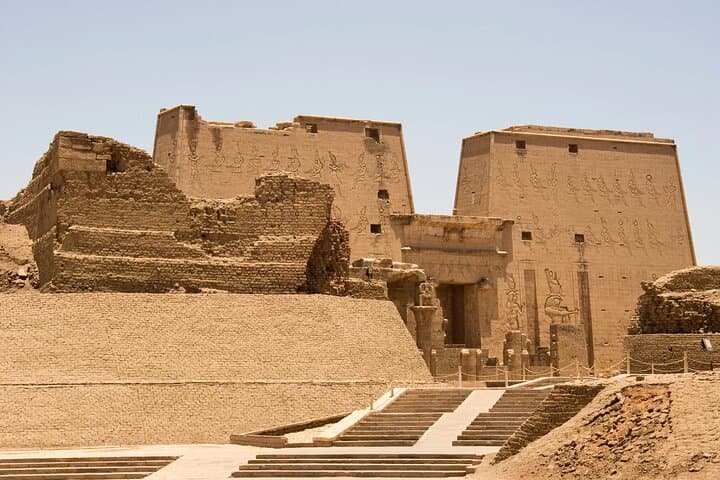
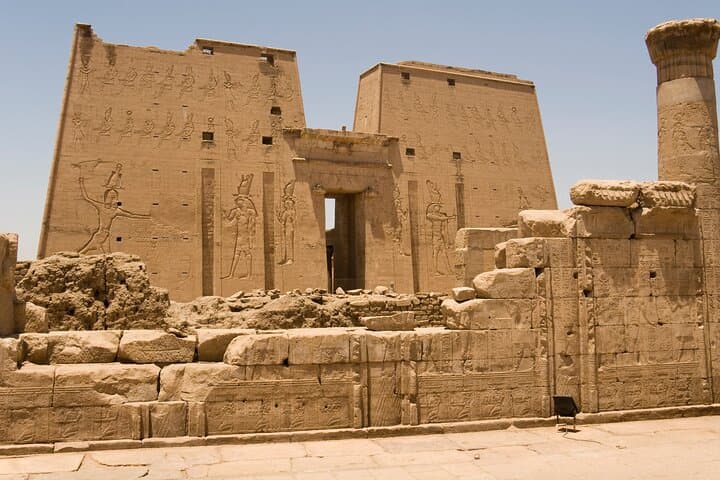
Kom Ombo’s double plan and the on-site nilometer speak to a society built around irrigation and calendar — priests measured water to set taxes and rituals. Further south at Edfu the Ptolemaic temple to Horus remains one of Egypt’s most intact classical monuments; its carved reliefs read like a preserved handbook of Hellenistic-era cult life.
Geology here is plain: mud-rich floodplain capped by cut sandstone blocks reused and restored over millennia. Local culture still orbits the river — feluccas, farmers and small-market stalls provide the modern frame for ancient stones.
Practical guide: this is a long but low‑impact day—expect roughly 11 hours total including drives (Luxor→Kom Ombo ≈3h, Kom Ombo→Edfu ≈1.5h, Edfu→Luxor ≈2.5h). Admission fees are usually paid on-site; bring passport copies for booking and original ID for checkpoints. Wear supportive walking shoes, sun protection, and carry water—the shade inside temples is limited. A private, air-conditioned vehicle and an Egyptologist guide are included; lunch boxes are provided. Aim for an early start to avoid midday heat and crowds and keep camera batteries charged—the carvings at Edfu repay a patient eye.
easy.
11 hours (approx.).
Light fitness—able to walk short distances and climb temple steps; mostly seated during transfers.
No—admission is typically paid on-site; the tour includes private transport, guide, and a lunch box.
Expect about 3 hours from Luxor to Kom Ombo, 1.5 hours from Kom Ombo to Edfu, and roughly 2.5 hours back to Luxor.
The tour is marketed as accessible, but temple interiors have steps and uneven floors; wheelchair users may be able to see exteriors with assistance—check specifics with the operator.
Yes—an Egyptologist guide is included and will interpret key inscriptions and the historical context at each temple.
Kom Ombo’s split dedication reflects the duality of Pharaonic religion; Edfu’s temple, begun under Ptolemy III (237 BC), preserves detailed ritual inscriptions from the Hellenistic era.
Visitor pressure and riverbank development are ongoing concerns; stick to marked paths, avoid touching reliefs, and support local guides to ensure income stays in the community.
Far and Beyond Travel operates guided outdoor trips and adventures with an emphasis on safety, stewardship, and memorable experiences.
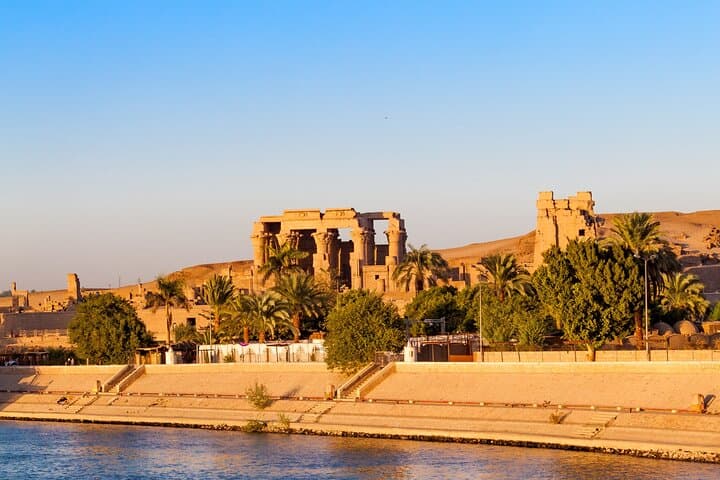
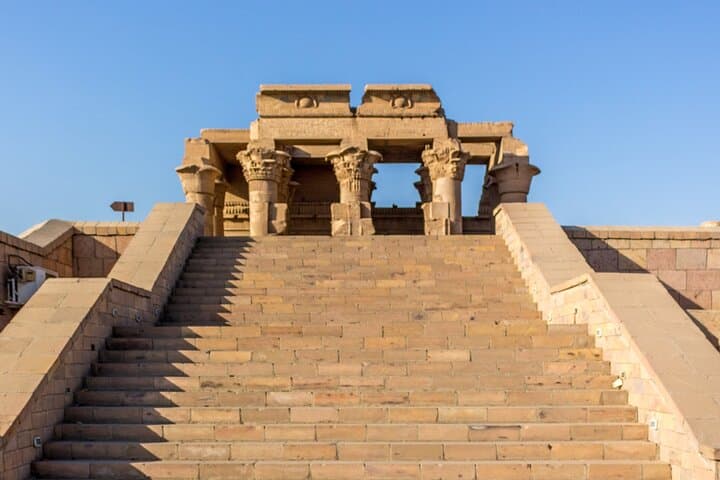
You step into the warm light of Upper Egypt before dawn, the Nile at your window moving like a slow argument with the shore. The drive from Luxor unfolds across an irrigated plain, palms and villages sliding past as the river dares you to keep watching. Kom Ombo appears as a compact, symmetric rise of stone: two parallel sanctuaries, Horus and Sobek facing different skies.
You step into the warm light of Upper Egypt before dawn, the Nile at your window moving like a slow argument with the shore. The drive from Luxor unfolds across an irrigated plain, palms and villages sliding past as the river dares you to keep watching. Kom Ombo appears as a compact, symmetric rise of stone: two parallel sanctuaries, Horus and Sobek facing different skies.
Kom Ombo’s double plan and the on-site nilometer speak to a society built around irrigation and calendar — priests measured water to set taxes and rituals. Further south at Edfu the Ptolemaic temple to Horus remains one of Egypt’s most intact classical monuments; its carved reliefs read like a preserved handbook of Hellenistic-era cult life.
Geology here is plain: mud-rich floodplain capped by cut sandstone blocks reused and restored over millennia. Local culture still orbits the river — feluccas, farmers and small-market stalls provide the modern frame for ancient stones.
Practical guide: this is a long but low‑impact day—expect roughly 11 hours total including drives (Luxor→Kom Ombo ≈3h, Kom Ombo→Edfu ≈1.5h, Edfu→Luxor ≈2.5h). Admission fees are usually paid on-site; bring passport copies for booking and original ID for checkpoints. Wear supportive walking shoes, sun protection, and carry water—the shade inside temples is limited. A private, air-conditioned vehicle and an Egyptologist guide are included; lunch boxes are provided. Aim for an early start to avoid midday heat and crowds and keep camera batteries charged—the carvings at Edfu repay a patient eye.