THE ADVENTURE COLLECTIVE® · Independent discovery and booking for outdoor travel

Spend a full day outside Madrid visiting the 16th‑century El Escorial monastery, the controversial Valley of the Fallen, and Segovia’s Roman aqueduct and Alcázar. This private tour combines art, history and dramatic landscapes with hotel pickup for a seamless 12‑hour outing.
Spend a full day outside Madrid visiting the 16th‑century El Escorial monastery, the controversial Valley of the Fallen, and Segovia’s Roman aqueduct and Alcázar. This private tour combines art, history and dramatic landscapes with hotel pickup for a seamless 12‑hour outing.
The road moves northwest out of Madrid, the urban skyline shrinking as oak-scrubbed hills slip past the window. In late morning light the slate roofs and granite façades of San Lorenzo de El Escorial appear—an austere silhouette of cloisters, vaults and courtyards that reads like a chapter of 16th‑century Spain.
Verified experiences and guided adventures in the surrounding area.
Operated by Tour Travel & More · San Lorenzo de El Escorial, Community of Madrid
The road moves northwest out of Madrid, the urban skyline shrinking as oak-scrubbed hills slip past the window. In late morning light the slate roofs and granite façades of San Lorenzo de El Escorial appear—an austere silhouette of cloisters, vaults and courtyards that reads like a chapter of 16th‑century Spain.
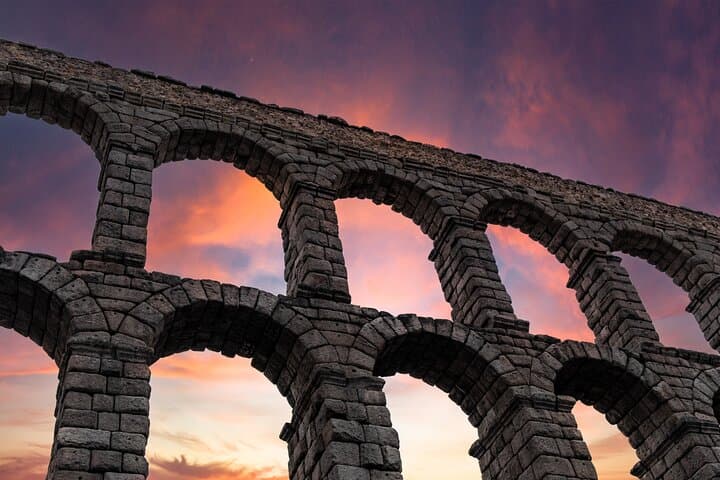
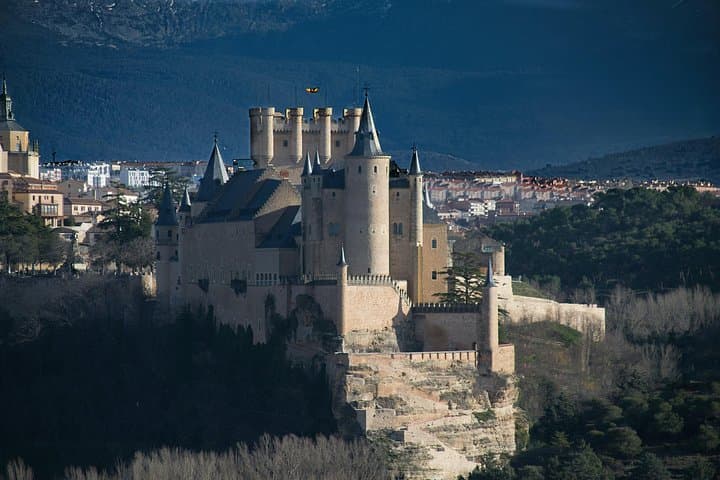
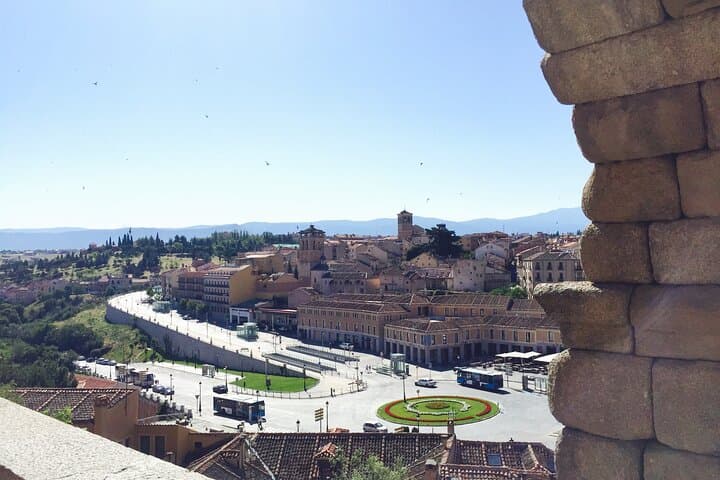
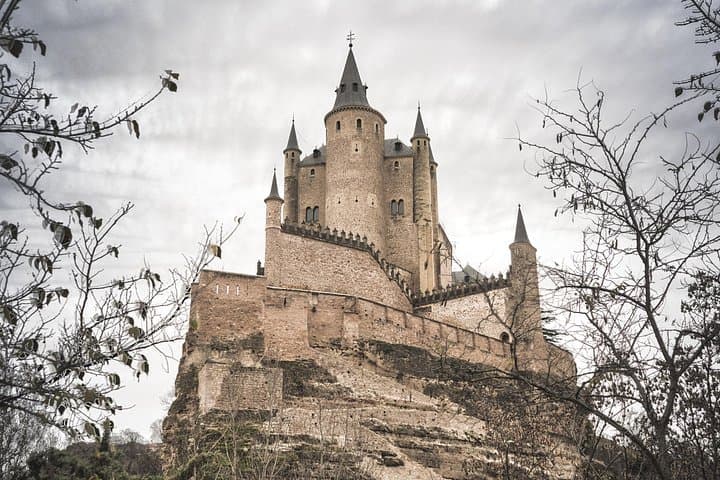
The itinerary puts history first: the Royal Monastery of San Lorenzo, built by Philip II as palace, monastery and royal pantheon, then the Valley of the Fallen—a cavernous basilica and memorial carved into granite with a controversial modern history. Geology is plain to see; the buildings sit on Cenozoic granitic outcrops and the surrounding Guadarrama foothills funnel wind and light into dramatic contrasts. The day closes in Segovia, where a Roman aqueduct still shoulders the sky and the fairy‑tale Alcázar crowns a rocky spur above the Eresma River.
Culturally the tour threads monarchy, military memory and Roman engineering into a compact day: royal chapels, ornate tombs, medieval battlements and narrow Jewish Quarter lanes give different eras room to speak.
Practically: expect roughly 12 hours including hotel pickup, about an hour drive to El Escorial from central Madrid, short transfer to the Valley of the Fallen, and a one‑hour drive to Segovia. Wear sturdy walking shoes for cobbled streets and castle steps, carry sun protection and water, and bring a respectful layer for religious sites where modest dress is requested. Lunch is typically an hour in Segovia—try cochinillo if you want a local classic. Confirm pickup details at least 48 hours ahead to streamline the day.
easy.
12 hours.
Suitable for most fitness levels; requires extended periods of walking on cobbles and climbing stairs in historic buildings.
Yes—tickets for El Escorial, the Valley of the Fallen and the Alcázar are included as stated in the itinerary.
No—lunch is typically an hour in Segovia; guides can recommend local restaurants but meals are at your expense.
Yes; infant seats are available on request. The tour requires a minimum of two people per booking.
Many historic sites include uneven surfaces and staircases; the Alcázar and certain viewpoints have limited wheelchair access—check specifics with the operator when booking.
El Escorial was commissioned by Philip II in the 16th century as a royal monastery and pantheon; the Valley of the Fallen was completed in the mid‑20th century as a Civil War memorial, while Segovia’s aqueduct dates to the early 2nd century AD and the Alcázar evolved from a medieval fortress.
These monuments are protected historic sites—follow posted routes, avoid touching frescoes or stonework, and minimize waste. The surrounding Guadarrama foothills are sensitive habitats; stick to trails and don’t feed wildlife.
Tour Travel & More operates guided outdoor trips and adventures with an emphasis on safety, stewardship, and memorable experiences.
The road moves northwest out of Madrid, the urban skyline shrinking as oak-scrubbed hills slip past the window. In late morning light the slate roofs and granite façades of San Lorenzo de El Escorial appear—an austere silhouette of cloisters, vaults and courtyards that reads like a chapter of 16th‑century Spain.
The road moves northwest out of Madrid, the urban skyline shrinking as oak-scrubbed hills slip past the window. In late morning light the slate roofs and granite façades of San Lorenzo de El Escorial appear—an austere silhouette of cloisters, vaults and courtyards that reads like a chapter of 16th‑century Spain.
The itinerary puts history first: the Royal Monastery of San Lorenzo, built by Philip II as palace, monastery and royal pantheon, then the Valley of the Fallen—a cavernous basilica and memorial carved into granite with a controversial modern history. Geology is plain to see; the buildings sit on Cenozoic granitic outcrops and the surrounding Guadarrama foothills funnel wind and light into dramatic contrasts. The day closes in Segovia, where a Roman aqueduct still shoulders the sky and the fairy‑tale Alcázar crowns a rocky spur above the Eresma River.
Culturally the tour threads monarchy, military memory and Roman engineering into a compact day: royal chapels, ornate tombs, medieval battlements and narrow Jewish Quarter lanes give different eras room to speak.
Practically: expect roughly 12 hours including hotel pickup, about an hour drive to El Escorial from central Madrid, short transfer to the Valley of the Fallen, and a one‑hour drive to Segovia. Wear sturdy walking shoes for cobbled streets and castle steps, carry sun protection and water, and bring a respectful layer for religious sites where modest dress is requested. Lunch is typically an hour in Segovia—try cochinillo if you want a local classic. Confirm pickup details at least 48 hours ahead to streamline the day.