THE ADVENTURE COLLECTIVE® · Independent discovery and booking for outdoor travel

Spend a half‑day exploring Cairo’s Egyptian Museum and the monumental Giza Pyramids on a private tour. See ancient artifacts and stand beside the Great Pyramid and Sphinx with a guide handling logistics and admissions.
Spend a half‑day exploring Cairo’s Egyptian Museum and the monumental Giza Pyramids on a private tour. See ancient artifacts and stand beside the Great Pyramid and Sphinx with a guide handling logistics and admissions.
You step out of an air‑conditioned van into Cairo’s bright, dry air — dust lifts off the asphalt and the horizon is cut by three perfect triangles. The Giza Plateau holds the kind of scale that rearranges perspective: the Great Pyramid’s weathered blocks loom, the Sphinx watches the valley like a slow guardian, and the desert wind dares you to move closer.
Verified experiences and guided adventures in the surrounding area.
Operated by NORTH AFRICAN SHIPPING AND TOURISM COMPANY (NASCO TOURS) · Cairo, Cairo Governorate
You step out of an air‑conditioned van into Cairo’s bright, dry air — dust lifts off the asphalt and the horizon is cut by three perfect triangles. The Giza Plateau holds the kind of scale that rearranges perspective: the Great Pyramid’s weathered blocks loom, the Sphinx watches the valley like a slow guardian, and the desert wind dares you to move closer.
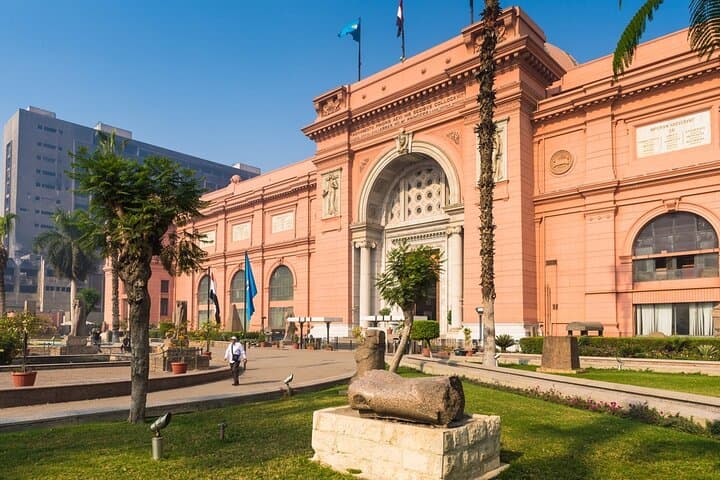
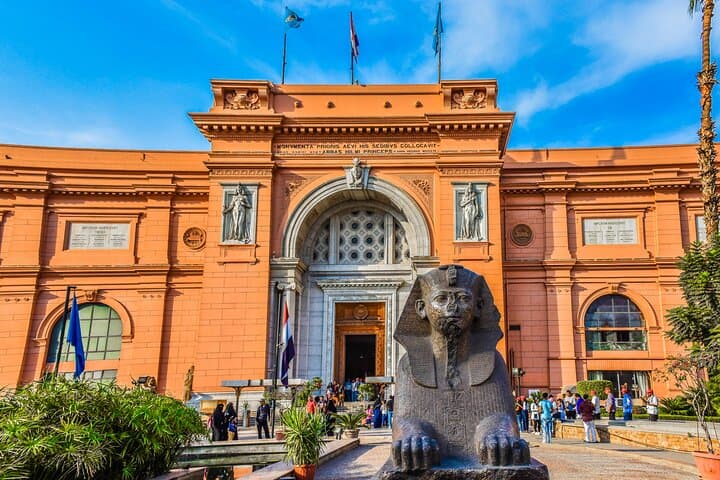
Begin inland at the Egyptian Museum in Tahrir Square, where wood‑warmed cases hold coffins, statuary, and the glitter of Tutankhamun’s funerary treasures. The museum narrates millennia of Nile civilization, while the limestone and sandstone of the pyramids speak to Old Kingdom engineering — precise angles, massive labor forces, and astute astronomy that oriented tombs to stars.
Cairo’s streets echo Ottoman and Fatimid layers; a visit pairs ancient funerary culture with living Egyptian urban rhythms — vendors, call to prayer, and the scent of spices. On the plateau, geology is simple and brute: wind‑polished limestone, eroded surfaces, and sand that creaks underfoot.
Practical guidance: this private four‑hour loop includes museum and Giza access with admissions arranged. Bring a printed or mobile ticket and your passport for entry. Expect uneven walkways, short climbs over sand and stone, and strong sun; plan 2–3 hours on the plateau to absorb views and photos. Stay hydrated with a reusable bottle, wear closed shoes for rocky surfaces, and keep valuables secure — touts and vendors are common. Morning visits avoid the worst heat and give softer light on the pyramids. Respect site rules: no climbing, follow your guide, and leave nothing behind — these monuments endure when visitors do their part.
easy.
4 hours.
Low to moderate — mostly short walks and standing; able to manage uneven terrain and brief climbs.
This private tour typically includes museum and Giza admissions; confirm at booking and carry your ticket or voucher.
Yes — the itinerary is rated easy, though expect walking and uneven ground; notify the operator of mobility limits for adjustments.
Early morning offers cooler temperatures and softer light for photos; late afternoon gives golden tones but can be hotter in summer.
Access to interior chambers depends on current site rules and extra tickets; speak with your guide about availability on your tour date.
The pyramids at Giza date to Egypt’s Fourth Dynasty (c. 2600–2500 BCE); the Egyptian Museum chronicles artifacts spanning Pharaonic, Greco‑Roman, and Islamic eras.
Visitor pressure and urban expansion stress the site; stay on marked paths, avoid littering, and support licensed guides and local conservation fees when offered.
NORTH AFRICAN SHIPPING AND TOURISM COMPANY (NASCO TOURS) operates guided outdoor trips and adventures with an emphasis on safety, stewardship, and memorable experiences.
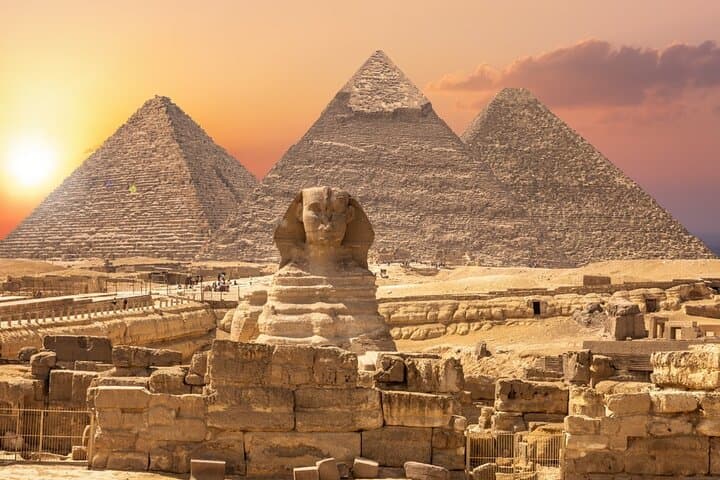
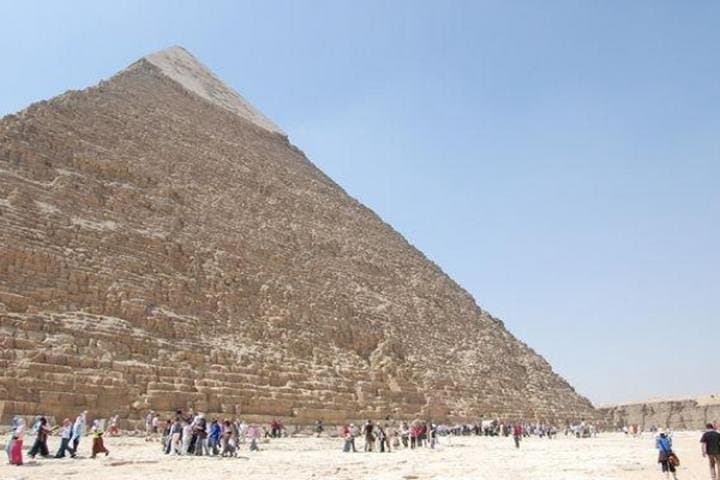
You step out of an air‑conditioned van into Cairo’s bright, dry air — dust lifts off the asphalt and the horizon is cut by three perfect triangles. The Giza Plateau holds the kind of scale that rearranges perspective: the Great Pyramid’s weathered blocks loom, the Sphinx watches the valley like a slow guardian, and the desert wind dares you to move closer.
You step out of an air‑conditioned van into Cairo’s bright, dry air — dust lifts off the asphalt and the horizon is cut by three perfect triangles. The Giza Plateau holds the kind of scale that rearranges perspective: the Great Pyramid’s weathered blocks loom, the Sphinx watches the valley like a slow guardian, and the desert wind dares you to move closer.
Begin inland at the Egyptian Museum in Tahrir Square, where wood‑warmed cases hold coffins, statuary, and the glitter of Tutankhamun’s funerary treasures. The museum narrates millennia of Nile civilization, while the limestone and sandstone of the pyramids speak to Old Kingdom engineering — precise angles, massive labor forces, and astute astronomy that oriented tombs to stars.
Cairo’s streets echo Ottoman and Fatimid layers; a visit pairs ancient funerary culture with living Egyptian urban rhythms — vendors, call to prayer, and the scent of spices. On the plateau, geology is simple and brute: wind‑polished limestone, eroded surfaces, and sand that creaks underfoot.
Practical guidance: this private four‑hour loop includes museum and Giza access with admissions arranged. Bring a printed or mobile ticket and your passport for entry. Expect uneven walkways, short climbs over sand and stone, and strong sun; plan 2–3 hours on the plateau to absorb views and photos. Stay hydrated with a reusable bottle, wear closed shoes for rocky surfaces, and keep valuables secure — touts and vendors are common. Morning visits avoid the worst heat and give softer light on the pyramids. Respect site rules: no climbing, follow your guide, and leave nothing behind — these monuments endure when visitors do their part.