THE ADVENTURE COLLECTIVE® · Independent discovery and booking for outdoor travel

Experience two UNESCO World Heritage sites in a single private half-day: the monumental Boudhanath Stupa’s Tibetan Buddhist rhythms and the sacred, active ghats of Pashupatinath Temple. This guided tour pairs cultural insight with practical logistics for first-time visitors to Kathmandu.
Experience two UNESCO World Heritage sites in a single private half-day: the monumental Boudhanath Stupa’s Tibetan Buddhist rhythms and the sacred, active ghats of Pashupatinath Temple. This guided tour pairs cultural insight with practical logistics for first-time visitors to Kathmandu.
You step from an air-conditioned vehicle into a ring of prayer flags and the low murmur of mantra wheels; the colossal dome of Boudhanath fills the sky, prayer flags snapping like a language of its own. The plaza hums with monks in maroon robes, shopkeepers arranging butter lamps and the scent of incense threading through street food smoke. The experience then shifts: a short drive brings you to the Bagmati River where Pashupatinath’s gilded roofs sit above funeral ghats and chanting flows along the riverbank.
Verified experiences and guided adventures in the surrounding area.
Operated by The Xutti Pvt Ltd · Kathmandu, Bagmati Province
You step from an air-conditioned vehicle into a ring of prayer flags and the low murmur of mantra wheels; the colossal dome of Boudhanath fills the sky, prayer flags snapping like a language of its own. The plaza hums with monks in maroon robes, shopkeepers arranging butter lamps and the scent of incense threading through street food smoke. The experience then shifts: a short drive brings you to the Bagmati River where Pashupatinath’s gilded roofs sit above funeral ghats and chanting flows along the riverbank.
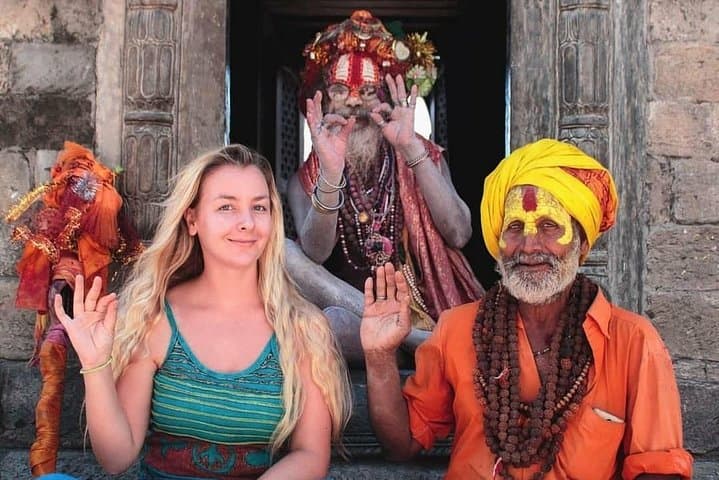
Boudhanath dates to the 5th century and became a global center for Tibetan Buddhism after waves of refugees in the 20th century. Pashupatinath, a major Shiva shrine, contains structures rebuilt over centuries and remains a live ritual landscape where cremation rites continue openly. Geologically, the Kathmandu Valley is an alluvial bowl ringed by hills, its microclimate influencing bustling temple precincts and leafy stupas alike. Locals mix Newar, Tibetan and Hindu customs; expect to meet sadhus, shopkeepers and roadside artisans.
Practically: plan 3–4 hours, take modest clothing (shoulders covered) and comfortable shoes for walking stone courtyards. Photography is allowed around Boudhanath; Pashupatinath’s inner sanctum is restricted to Hindus. A guide clarifies rituals, explains iconography and helps navigate respectful behavior during cremation ceremonies.
Timing matters—early morning or late afternoon offers softer light and quieter spaces. Carry water, buy fresh tea near the stupa, and leave space in your schedule to absorb both the contemplative rhythm of the stupa and the raw immediacy of life at the river.
easy.
3–4 hours.
Suitable for most fitness levels; involves short walks on flat and stone surfaces
The private tour runs about 3–4 hours depending on pickup location and how long you spend at each site.
Non-Hindus are not permitted inside the temple precinct; visitors can observe from designated viewing areas along the river.
Photography is generally fine at Boudhanath and around exteriors, but avoid photographing cremation rituals or individuals without permission; follow your guide’s advice.
Yes—the tour includes hotel pickup and drop-off by private AC vehicle as stated in the inclusions.
Boudhanath was established in the 5th century and evolved into a primary Tibetan Buddhist center; Pashupatinath has been a Hindu holy site for over a millennium with structures rebuilt across centuries.
The Bagmati River suffers from pollution and cremation-related waste; local NGOs run cleanup and awareness programs—visitors can support by avoiding plastic and following guide directions.
The Xutti Pvt Ltd operates guided outdoor trips and adventures with an emphasis on safety, stewardship, and memorable experiences.
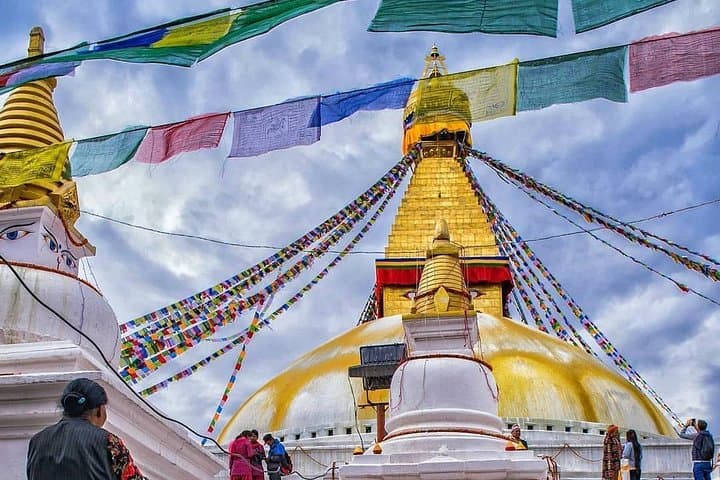
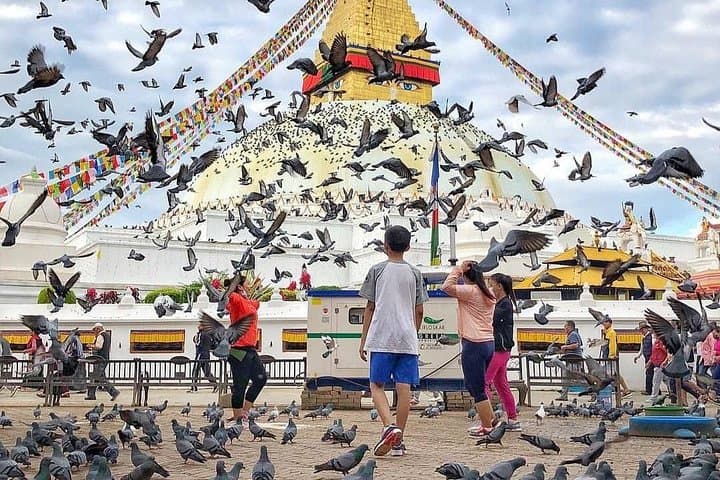
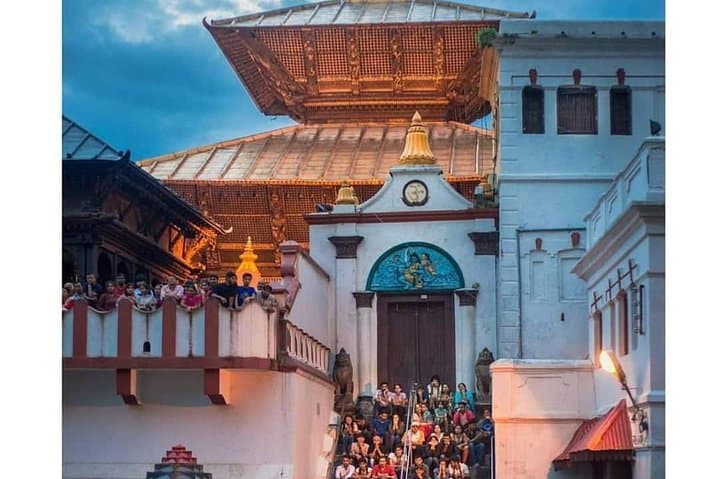
You step from an air-conditioned vehicle into a ring of prayer flags and the low murmur of mantra wheels; the colossal dome of Boudhanath fills the sky, prayer flags snapping like a language of its own. The plaza hums with monks in maroon robes, shopkeepers arranging butter lamps and the scent of incense threading through street food smoke. The experience then shifts: a short drive brings you to the Bagmati River where Pashupatinath’s gilded roofs sit above funeral ghats and chanting flows along the riverbank.
You step from an air-conditioned vehicle into a ring of prayer flags and the low murmur of mantra wheels; the colossal dome of Boudhanath fills the sky, prayer flags snapping like a language of its own. The plaza hums with monks in maroon robes, shopkeepers arranging butter lamps and the scent of incense threading through street food smoke. The experience then shifts: a short drive brings you to the Bagmati River where Pashupatinath’s gilded roofs sit above funeral ghats and chanting flows along the riverbank.
Boudhanath dates to the 5th century and became a global center for Tibetan Buddhism after waves of refugees in the 20th century. Pashupatinath, a major Shiva shrine, contains structures rebuilt over centuries and remains a live ritual landscape where cremation rites continue openly. Geologically, the Kathmandu Valley is an alluvial bowl ringed by hills, its microclimate influencing bustling temple precincts and leafy stupas alike. Locals mix Newar, Tibetan and Hindu customs; expect to meet sadhus, shopkeepers and roadside artisans.
Practically: plan 3–4 hours, take modest clothing (shoulders covered) and comfortable shoes for walking stone courtyards. Photography is allowed around Boudhanath; Pashupatinath’s inner sanctum is restricted to Hindus. A guide clarifies rituals, explains iconography and helps navigate respectful behavior during cremation ceremonies.
Timing matters—early morning or late afternoon offers softer light and quieter spaces. Carry water, buy fresh tea near the stupa, and leave space in your schedule to absorb both the contemplative rhythm of the stupa and the raw immediacy of life at the river.