THE ADVENTURE COLLECTIVE® · Independent discovery and booking for outdoor travel

Leave Cairo’s traffic for a full-day private tour to Dahshur where the Bent and Red Pyramids reveal early pyramid engineering, then cross into living farmland for a hands-on taste of traditional Egyptian rural life and cuisine.
Leave Cairo’s traffic for a full-day private tour to Dahshur where the Bent and Red Pyramids reveal early pyramid engineering, then cross into living farmland for a hands-on taste of traditional Egyptian rural life and cuisine.
You step out of Cairo’s bustle and into a wide, low-slung horizon where two ancient stones tilt against the sky. The Bent Pyramid rises with an awkward grace—its angle changing mid-face—and the Red Pyramid holds a calm, sun-baked bulk that seems to breathe history.
Verified experiences and guided adventures in the surrounding area.
Operated by Sofy · Dahshur, Giza Governorate
You step out of Cairo’s bustle and into a wide, low-slung horizon where two ancient stones tilt against the sky. The Bent Pyramid rises with an awkward grace—its angle changing mid-face—and the Red Pyramid holds a calm, sun-baked bulk that seems to breathe history.
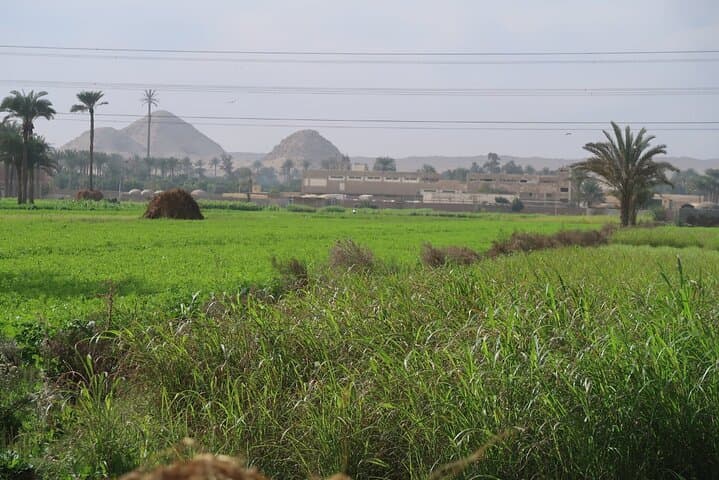
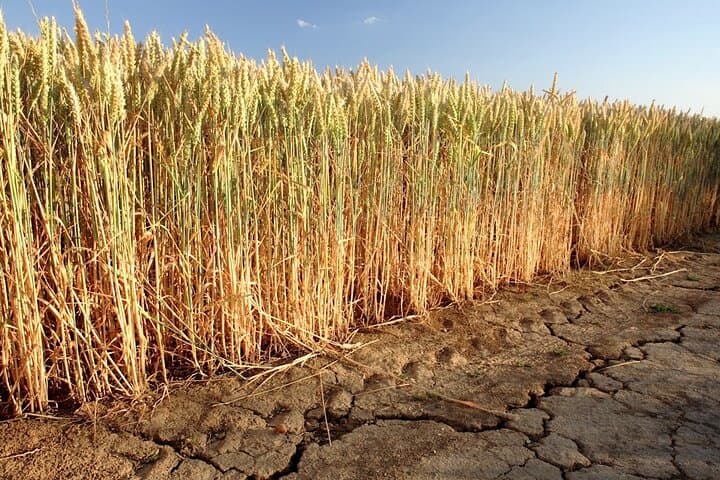
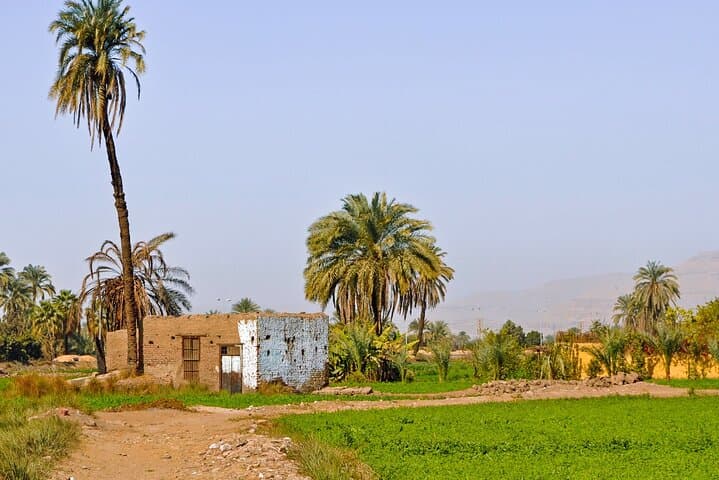
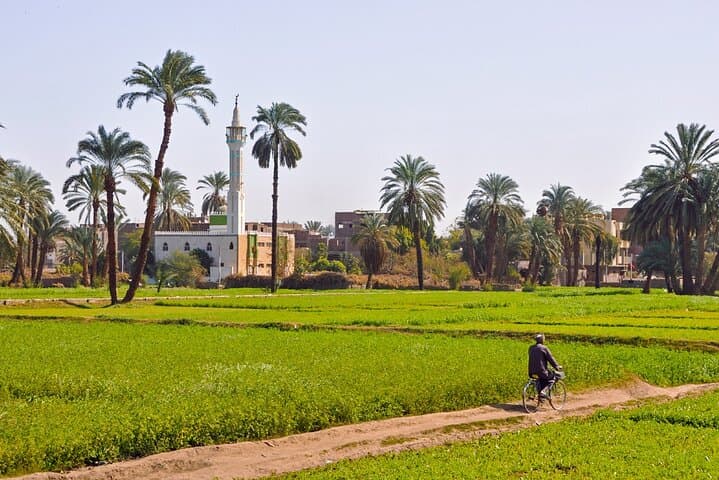
Dahshur sits on the edge of the Western Desert, where King Sneferu’s experiments in stone shaped the course of pyramid building around 2613–2589 BC. Geologically the site is limestone bedrock and desert sands; culturally it’s a quiet counterpoint to Giza’s crowds, and the adjacent farmland still uses irrigation patterns descended from Pharaonic practice. Local families keep small plots of wheat, vegetables, and sugarcane; you’ll watch women tending earthen ovens and sip strong Egyptian tea as sunlight slides across furrowed rows. The irrigation canals braid the fields, daring you to follow their reflective lines into a simpler rhythm.
The tour balances guided archaeology with rural life: expect 2–3 hours at the pyramids (including interior passageways if available) and a relaxed farm visit with a traditional lunch. Practicalities matter—wear closed-toe walking shoes for uneven stone and packed sand, bring sun protection and a refillable water bottle, and aim for a morning start to avoid the afternoon heat. Photography is excellent in soft light; interior passages are tight and cooler but claustrophobic for some.
Respect fragile masonry, stay on marked paths, and plan for a full-day outing (about seven hours). The reward is a layered day—ancient engineering, honest food, and the measured pace of Egyptian farmland outside the city.
easy.
7 hours.
Suitable for most fitness levels; requires ability to walk on uneven ground and climb short stairways.
The tour runs about seven hours, typically departing in the morning and returning mid-afternoon.
Yes—admission to the Bent Pyramid is included, though access to interior passages can depend on site rules that day.
Yes; the experience is family-friendly with simple walks, food demonstrations, and short rides on local transport like a donkey or tuk-tuk.
Yes—pick-up and drop-off options include Cairo and Giza hotels as specified when booking.
Dahshur preserves early royal experiments by King Sneferu; the Bent Pyramid’s changed angle shows an important step between mastaba and true pyramid form.
Sites are fragile—avoid climbing on structures, stay on paths, and support local families by buying lunch or small goods to help sustain traditional farming.
Sofy operates guided outdoor trips and adventures with an emphasis on safety, stewardship, and memorable experiences.
You step out of Cairo’s bustle and into a wide, low-slung horizon where two ancient stones tilt against the sky. The Bent Pyramid rises with an awkward grace—its angle changing mid-face—and the Red Pyramid holds a calm, sun-baked bulk that seems to breathe history.
You step out of Cairo’s bustle and into a wide, low-slung horizon where two ancient stones tilt against the sky. The Bent Pyramid rises with an awkward grace—its angle changing mid-face—and the Red Pyramid holds a calm, sun-baked bulk that seems to breathe history.
Dahshur sits on the edge of the Western Desert, where King Sneferu’s experiments in stone shaped the course of pyramid building around 2613–2589 BC. Geologically the site is limestone bedrock and desert sands; culturally it’s a quiet counterpoint to Giza’s crowds, and the adjacent farmland still uses irrigation patterns descended from Pharaonic practice. Local families keep small plots of wheat, vegetables, and sugarcane; you’ll watch women tending earthen ovens and sip strong Egyptian tea as sunlight slides across furrowed rows. The irrigation canals braid the fields, daring you to follow their reflective lines into a simpler rhythm.
The tour balances guided archaeology with rural life: expect 2–3 hours at the pyramids (including interior passageways if available) and a relaxed farm visit with a traditional lunch. Practicalities matter—wear closed-toe walking shoes for uneven stone and packed sand, bring sun protection and a refillable water bottle, and aim for a morning start to avoid the afternoon heat. Photography is excellent in soft light; interior passages are tight and cooler but claustrophobic for some.
Respect fragile masonry, stay on marked paths, and plan for a full-day outing (about seven hours). The reward is a layered day—ancient engineering, honest food, and the measured pace of Egyptian farmland outside the city.