THE ADVENTURE COLLECTIVE® · Independent discovery and booking for outdoor travel

Drive the cliffs of Santorini with a private local driver who tailors stops to your interests—from Akrotiri’s ruins to hidden caldera viewpoints. Learn when to arrive, what to pack, and how to avoid the big crowds.
Drive the cliffs of Santorini with a private local driver who tailors stops to your interests—from Akrotiri’s ruins to hidden caldera viewpoints. Learn when to arrive, what to pack, and how to avoid the big crowds.
The road unwinds above the caldera and the Aegean opens like a living map—whitewashed houses clinging to the cliff, boats pinpricking the sea below, and wind that pushes you toward the next viewpoint. A private driver slides between narrow lanes, pulling up where the crowd thins so visitors can step out and drink the light.
Verified experiences and guided adventures in the surrounding area.
Operated by Santorinian Collection · Fira, South Aegean
The road unwinds above the caldera and the Aegean opens like a living map—whitewashed houses clinging to the cliff, boats pinpricking the sea below, and wind that pushes you toward the next viewpoint. A private driver slides between narrow lanes, pulling up where the crowd thins so visitors can step out and drink the light.
Santorini’s landscape is volcanic: pumice and lava shaped the crescent island after millennia of eruptions and the major Minoan-era event around 1600–1450 BC. The island’s villages—Megalochori’s quiet courtyards and Pyrgos’ hilltop lanes—show layers of Venetian, Ottoman, and Greek island life. Akrotiri’s excavations reveal a Bronze Age town remarkably preserved beneath ash; the red and black sand beaches are direct products of long-ago lava flows meeting sea.
Culturally, this is a place of small churches, fortified houses, and hospitality centered on seafood and local wines pressed from volcanic soils. A local driver-guide can tailor timing to avoid sunset crowds in Oia, steer you to quieter churches with blue domes, or pause at a family-run vineyard for a tasting.
Practically, expect door-to-door pickup, flexibility between three and eight hours, and air-conditioned comfort. Bring sturdy shoes for uneven alleys and a light jacket for coastal breezes. Time permit, plan stops at Akrotiri early in the day for cooler conditions and at lesser-known viewpoints to capture the caldera without the shoulder-to-shoulder crowds. For families, booster seats are available; for photographers, sunrise or the blue-hour after sunset offers the best light.
easy.
3–8 hours.
Suitable for most fitness levels; mostly vehicle-based with short walks on uneven ground.
Yes—tours are fully customizable and drivers will adjust the route and timing to match your interests and local conditions.
Round-trip pickup is included; specify your exact pickup point when booking to ensure the driver meets you at the nearest accessible location.
Admission to archaeological sites like Akrotiri is not included by default; the driver can advise on tickets and timings.
Yes; booster and infant seats are available on request—note this in booking questions to ensure proper equipment.
Santorini’s modern shape and archaeological record were heavily influenced by ancient volcanic eruptions; Akrotiri preserves a Bronze Age settlement buried under ash around the mid-2nd millennium BC.
High tourist volume strains water and waste systems; prioritize local businesses, avoid single-use plastics, and respect marked trails and archaeological site rules.
Santorinian Collection operates guided outdoor trips and adventures with an emphasis on safety, stewardship, and memorable experiences.

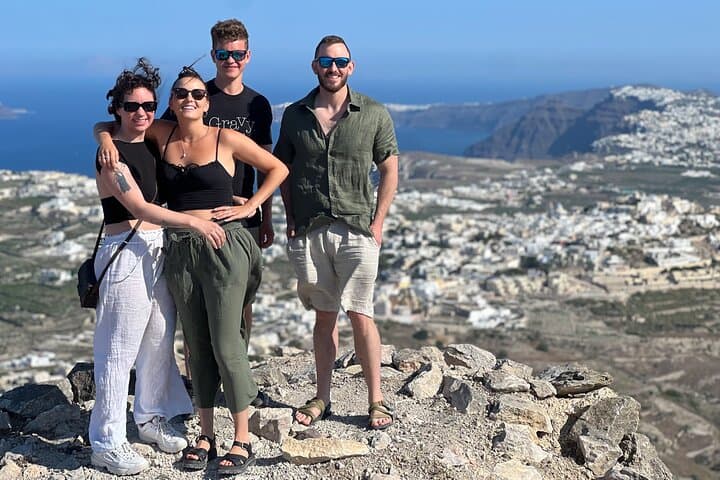


The road unwinds above the caldera and the Aegean opens like a living map—whitewashed houses clinging to the cliff, boats pinpricking the sea below, and wind that pushes you toward the next viewpoint. A private driver slides between narrow lanes, pulling up where the crowd thins so visitors can step out and drink the light.
The road unwinds above the caldera and the Aegean opens like a living map—whitewashed houses clinging to the cliff, boats pinpricking the sea below, and wind that pushes you toward the next viewpoint. A private driver slides between narrow lanes, pulling up where the crowd thins so visitors can step out and drink the light.
Santorini’s landscape is volcanic: pumice and lava shaped the crescent island after millennia of eruptions and the major Minoan-era event around 1600–1450 BC. The island’s villages—Megalochori’s quiet courtyards and Pyrgos’ hilltop lanes—show layers of Venetian, Ottoman, and Greek island life. Akrotiri’s excavations reveal a Bronze Age town remarkably preserved beneath ash; the red and black sand beaches are direct products of long-ago lava flows meeting sea.
Culturally, this is a place of small churches, fortified houses, and hospitality centered on seafood and local wines pressed from volcanic soils. A local driver-guide can tailor timing to avoid sunset crowds in Oia, steer you to quieter churches with blue domes, or pause at a family-run vineyard for a tasting.
Practically, expect door-to-door pickup, flexibility between three and eight hours, and air-conditioned comfort. Bring sturdy shoes for uneven alleys and a light jacket for coastal breezes. Time permit, plan stops at Akrotiri early in the day for cooler conditions and at lesser-known viewpoints to capture the caldera without the shoulder-to-shoulder crowds. For families, booster seats are available; for photographers, sunrise or the blue-hour after sunset offers the best light.