THE ADVENTURE COLLECTIVE® · Independent discovery and booking for outdoor travel

Explore Manchester on a three-hour private walking tour led by a local guide. Visit St Peter’s Square, the Central Library, Chinatown, and learn about the city’s industrial and social history with a tailored itinerary.
Explore Manchester on a three-hour private walking tour led by a local guide. Visit St Peter’s Square, the Central Library, Chinatown, and learn about the city’s industrial and social history with a tailored itinerary.
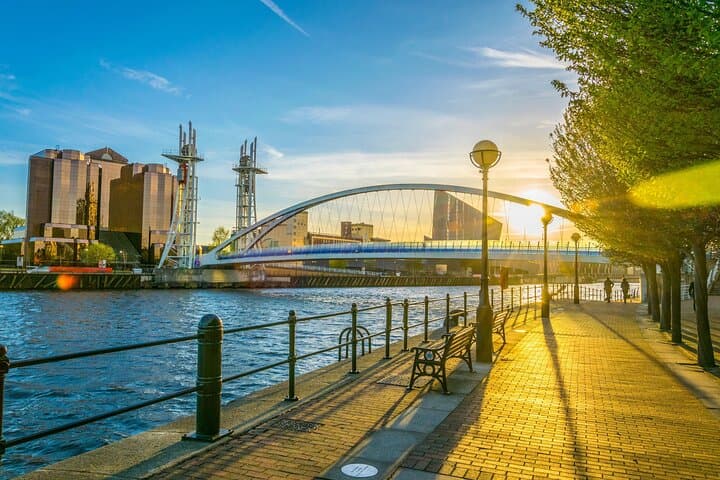
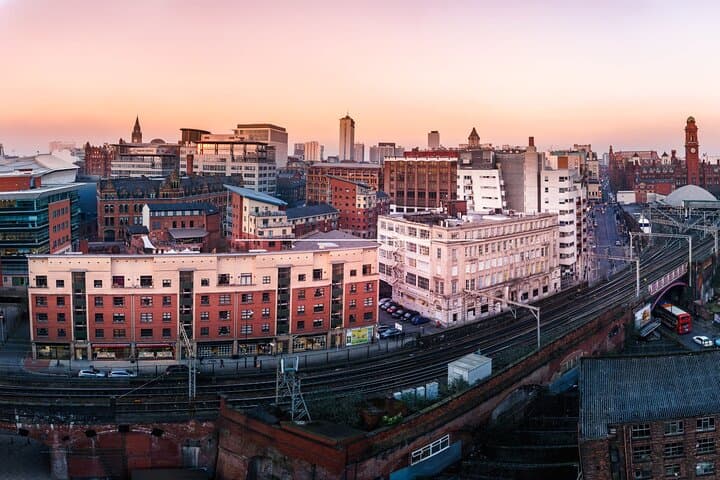
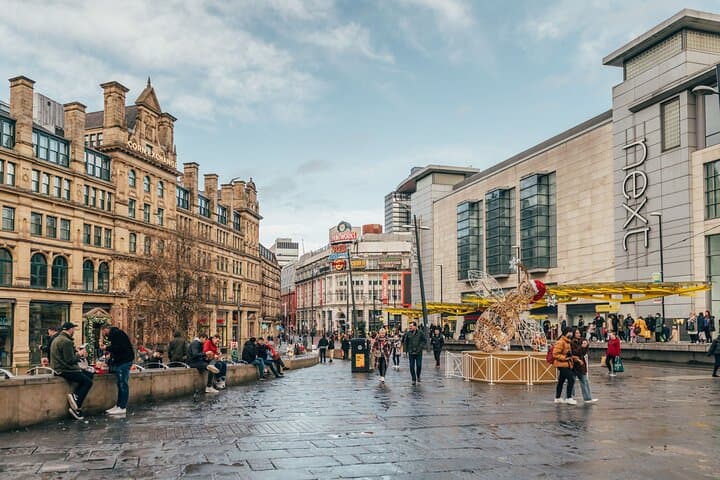
You step out onto a broad Manchester pavement as rain-slicked stone reflects tram lights and the rotunda of the Central Library watches over St Peter’s Square. A local guide falls into step beside you, folding the city’s industrial past into the present—railway arches, civic façades and a Chinatown arch that marks one of Europe’s larger Chinese quarters.
Verified experiences and guided adventures in the surrounding area.
Operated by Guydeez · Manchester, Greater Manchester
You step out onto a broad Manchester pavement as rain-slicked stone reflects tram lights and the rotunda of the Central Library watches over St Peter’s Square. A local guide falls into step beside you, folding the city’s industrial past into the present—railway arches, civic façades and a Chinatown arch that marks one of Europe’s larger Chinese quarters.
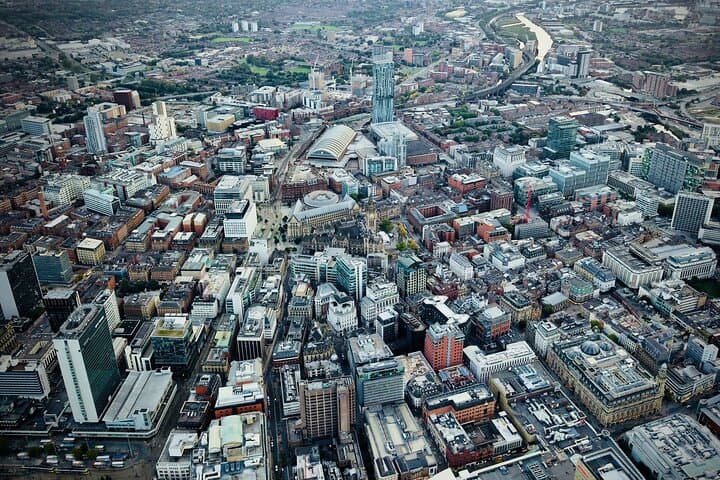
Manchester’s story is architectural and civic: Victorian mills and red-brick universities grew alongside rail and canal networks that powered the Industrial Revolution. Figures like Emmeline Pankhurst reconfigured British politics here; buildings such as the Sackville Street Building and the converted station that is now Manchester Central show the city’s engineering pride. The tour moves at pavement pace, pausing at exteriors and public plazas, with optional museum visits arranged in advance.
Expect a mix of city-center walking on paved streets, brief steps up plazas and wheelchair-accessible routes; there’s little rugged terrain but plenty of standing and walking between stops. Your guide can tailor the itinerary—history, architecture, food stops or student-culture pockets—so bring questions and a sense of curiosity.
Practical notes: tours run about three hours, often begin near central hotels or the library, and are suitable for families and solo travelers. Museum admissions are arranged separately if requested. Dress for Manchester weather, carry a refillable bottle, and plan for comfortable shoes and short urban walks. The result is a compact, customizable orientation to a city that still shapes modern Britain.
easy.
3 hours.
Suitable for all fitness levels; participants should be able to stand and walk for up to three hours at a gentle to moderate urban pace.
Yes—museum or attraction entry can be added if you request it in advance; admission fees are usually not included by default.
Yes; infants may sit in laps and prams are accommodated, but note the pace includes up to three hours of walking with regular stops.
This is a private tour; your group will have the guide to themselves and the itinerary can be customized to interests and mobility needs.
Guides are available in English, Spanish, French and Italian—indicate your language preference when booking.
Manchester expanded rapidly during the Industrial Revolution as textile mills, canals and railways transformed it into a manufacturing and civic center; leaders like Emmeline Pankhurst played key roles in social change here.
Stay on paved paths and respect heritage facades; support small local businesses and use reusable bottles to reduce urban waste during your visit.
Guydeez operates guided outdoor trips and adventures with an emphasis on safety, stewardship, and memorable experiences.
You step out onto a broad Manchester pavement as rain-slicked stone reflects tram lights and the rotunda of the Central Library watches over St Peter’s Square. A local guide falls into step beside you, folding the city’s industrial past into the present—railway arches, civic façades and a Chinatown arch that marks one of Europe’s larger Chinese quarters.
You step out onto a broad Manchester pavement as rain-slicked stone reflects tram lights and the rotunda of the Central Library watches over St Peter’s Square. A local guide falls into step beside you, folding the city’s industrial past into the present—railway arches, civic façades and a Chinatown arch that marks one of Europe’s larger Chinese quarters.
Manchester’s story is architectural and civic: Victorian mills and red-brick universities grew alongside rail and canal networks that powered the Industrial Revolution. Figures like Emmeline Pankhurst reconfigured British politics here; buildings such as the Sackville Street Building and the converted station that is now Manchester Central show the city’s engineering pride. The tour moves at pavement pace, pausing at exteriors and public plazas, with optional museum visits arranged in advance.
Expect a mix of city-center walking on paved streets, brief steps up plazas and wheelchair-accessible routes; there’s little rugged terrain but plenty of standing and walking between stops. Your guide can tailor the itinerary—history, architecture, food stops or student-culture pockets—so bring questions and a sense of curiosity.
Practical notes: tours run about three hours, often begin near central hotels or the library, and are suitable for families and solo travelers. Museum admissions are arranged separately if requested. Dress for Manchester weather, carry a refillable bottle, and plan for comfortable shoes and short urban walks. The result is a compact, customizable orientation to a city that still shapes modern Britain.