THE ADVENTURE COLLECTIVE® · Independent discovery and booking for outdoor travel

Skip the crowds and go private through the Cu Chi Tunnels—two hours underground, expert storytelling, and flexible pickup from Ho Chi Minh City. Learn what to expect, how to prepare, and why claustrophobia and rain matter more here than on a typical city tour.
Skip the crowds and go private through the Cu Chi Tunnels—two hours underground, expert storytelling, and flexible pickup from Ho Chi Minh City. Learn what to expect, how to prepare, and why claustrophobia and rain matter more here than on a typical city tour.
You step off an air-conditioned minivan onto red-clay soil and the heat of the southern Vietnamese plain presses close—tall grass and thin jungle framing a low concrete entrance that seems almost too small to matter. The guide's voice lowers; the story of guerrilla ingenuity begins before you duck into the dark.
Verified experiences and guided adventures in the surrounding area.
Operated by Vietnam Travel Group Co., LTD · Củ Chi, Ho Chi Minh City
You step off an air-conditioned minivan onto red-clay soil and the heat of the southern Vietnamese plain presses close—tall grass and thin jungle framing a low concrete entrance that seems almost too small to matter. The guide's voice lowers; the story of guerrilla ingenuity begins before you duck into the dark.
The Cu Chi Tunnels are both a physical maze and a living history lesson. Built and expanded during the French and later the Vietnam War, the tunnels thread beneath farmland and forest, with cramped living chambers, hidden kitchens, and booby traps that speak to tactical necessity as much as resourcefulness. Geologically the area is flat alluvial plain with sandy-clay soils that made digging feasible and concealment effective.
Culture here mixes wartime memory and rural life: small lacquer workshops and roadside vendors selling sugarcane juice punctuate the ride back to Ho Chi Minh City. Local guides—often from the region—blend technical detail with personal reflections that humanize the conflict.
Practical guidance: expect six to seven hours including hotel pickup, a couple of hours on-site and time for a rest stop. The underground passages are tight and low—claustrophobic travelers should opt to stay above ground. Wear closed-toe shoes for uneven mud and shallow stairways; bring water, sun protection, and a jacket for sudden rain. The private format means flexible pacing: ask your guide about expanded exhibits or a short Vietnamese meal option if you choose the V.I.P. upgrade.
This half-day loop is a compact, intense window into wartime engineering and rural Vietnamese life, suited to travelers who want depth without a full-day commitment.
easy.
6–7 hours.
Suitable for travelers in average physical condition; requires stooping and short crouches but no sustained exertion
Expect about 6–7 hours including hotel pickup and drop-off; driving time to Cu Chi is roughly 1–1.5 hours each way depending on traffic.
Sections shown to visitors are reinforced and maintained, but they are narrow and low—follow your guide's instructions and avoid entering if you have heart or spinal issues or claustrophobia.
Bottled water is provided; the V.I.P. option includes a light Vietnamese meal and vegetarian options if requested in advance.
Children can attend, but parents should assess whether their kids can manage tight, dark spaces; alternative above-ground exhibits are available for younger visitors.
The tunnels expanded significantly during the 1960s and 70s as a guerrilla network—living quarters, hospitals and command posts were all dug by hand into the local soil.
Site managers balance preservation with visitor access; stick to marked paths and avoid touching exhibits to limit wear and protect fragile underground spaces.
Vietnam Travel Group Co., LTD operates guided outdoor trips and adventures with an emphasis on safety, stewardship, and memorable experiences.
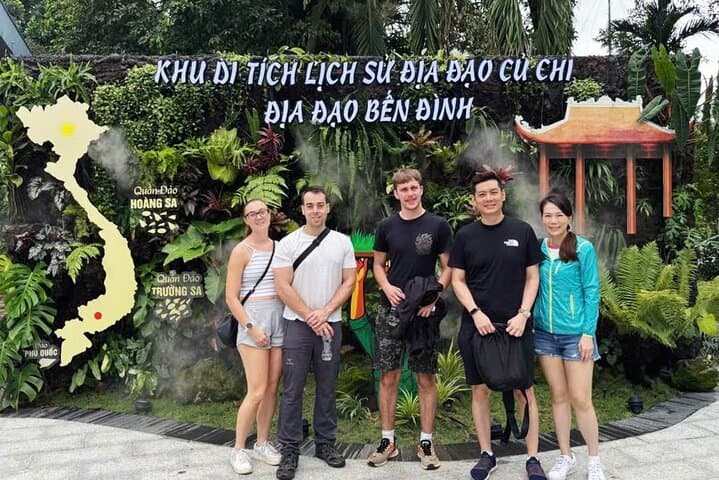
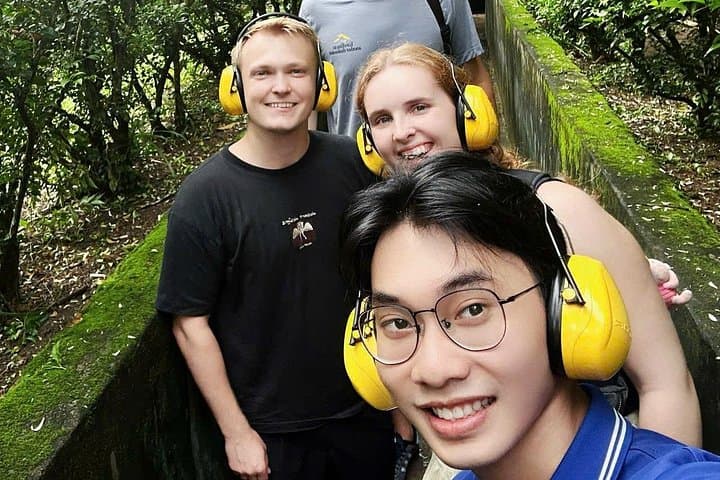
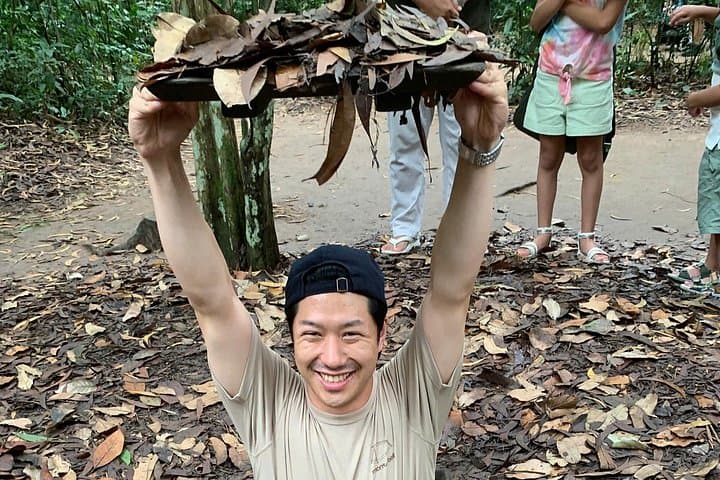

You step off an air-conditioned minivan onto red-clay soil and the heat of the southern Vietnamese plain presses close—tall grass and thin jungle framing a low concrete entrance that seems almost too small to matter. The guide's voice lowers; the story of guerrilla ingenuity begins before you duck into the dark.
You step off an air-conditioned minivan onto red-clay soil and the heat of the southern Vietnamese plain presses close—tall grass and thin jungle framing a low concrete entrance that seems almost too small to matter. The guide's voice lowers; the story of guerrilla ingenuity begins before you duck into the dark.
The Cu Chi Tunnels are both a physical maze and a living history lesson. Built and expanded during the French and later the Vietnam War, the tunnels thread beneath farmland and forest, with cramped living chambers, hidden kitchens, and booby traps that speak to tactical necessity as much as resourcefulness. Geologically the area is flat alluvial plain with sandy-clay soils that made digging feasible and concealment effective.
Culture here mixes wartime memory and rural life: small lacquer workshops and roadside vendors selling sugarcane juice punctuate the ride back to Ho Chi Minh City. Local guides—often from the region—blend technical detail with personal reflections that humanize the conflict.
Practical guidance: expect six to seven hours including hotel pickup, a couple of hours on-site and time for a rest stop. The underground passages are tight and low—claustrophobic travelers should opt to stay above ground. Wear closed-toe shoes for uneven mud and shallow stairways; bring water, sun protection, and a jacket for sudden rain. The private format means flexible pacing: ask your guide about expanded exhibits or a short Vietnamese meal option if you choose the V.I.P. upgrade.
This half-day loop is a compact, intense window into wartime engineering and rural Vietnamese life, suited to travelers who want depth without a full-day commitment.