THE ADVENTURE COLLECTIVE® · Independent discovery and booking for outdoor travel

Descend into the Colosseum’s hypogeum, stand on the arena floor and continue to Palatine Hill and the Roman Forum with a licensed private guide. This focused 2–3 hour experience combines underground engineering, imperial vistas and hands-on history.
Descend into the Colosseum’s hypogeum, stand on the arena floor and continue to Palatine Hill and the Roman Forum with a licensed private guide. This focused 2–3 hour experience combines underground engineering, imperial vistas and hands-on history.
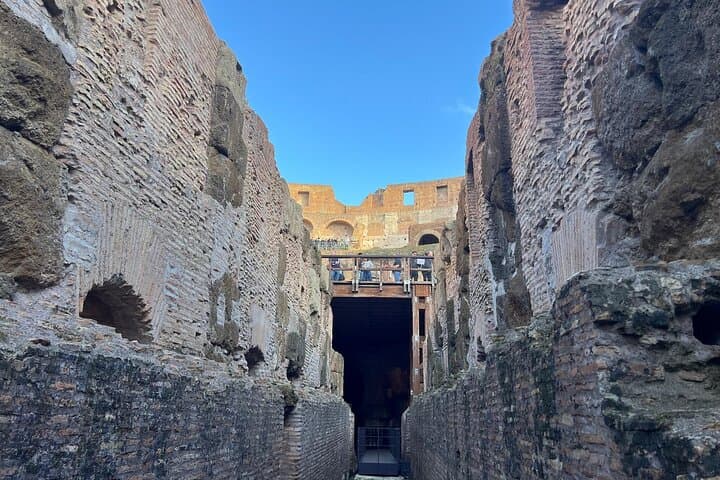
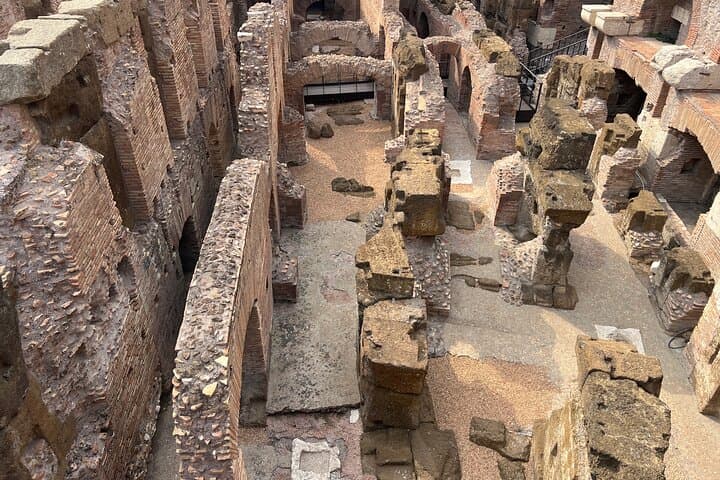
You step through security into a courtyard that smells faintly of stone and sun—Rome presses close, traffic murmuring beyond the ancient walls. The Colosseum’s outer arches frame a chunk of sky while your guide leads you under the arena, where cavernous corridors once held gladiators, props and beasts waiting for their cue. The air here feels cooler; the stone seems to remember footsteps.
Verified experiences and guided adventures in the surrounding area.
Operated by Rome guided tours · Rome, Lazio
You step through security into a courtyard that smells faintly of stone and sun—Rome presses close, traffic murmuring beyond the ancient walls. The Colosseum’s outer arches frame a chunk of sky while your guide leads you under the arena, where cavernous corridors once held gladiators, props and beasts waiting for their cue. The air here feels cooler; the stone seems to remember footsteps.
Built between AD 70 and 80 under the Flavian emperors, the amphitheater’s engineering—vomitoria, vaulted corridors and the subterranean hypogeum—redefined large-scale spectacle. The underground (hypogeum) reveals the mechanics of Roman theatercraft: pulleys, cages and partitioned rooms that made chaos move with precision. From the Colosseum you’ll walk to Palatine Hill, a patchwork of imperial ruins and terraces that reveal Rome’s layered geology—tufa and travertine quarried from the region—and end at the Forum, once the civic heart where law, trade and ritual met.
Practical guidance: bring a government ID that matches the booking name and arrive 30 minutes early for mandatory security checks. Wear comfortable shoes on uneven stone and carry a small bottle of water; the tour covers ground and stairs over roughly 2–3 hours. Photography is allowed but follow your guide’s instructions—some areas close unexpectedly for conservation or events.
This private format gives flexibility when parts are closed: expect a concentrated, interpretive walk that balances close-up archaeology with sweeping city views—history you can touch, and logistics that keep the day moving.
easy.
2–3 hours.
Suitable for general fitness; you should be able to walk and climb stairs for up to 90 minutes intermittently.
Yes—every participant must present a valid government ID that exactly matches the full name on the booking or entry will be denied.
Access to the hypogeum can be adjusted for conservation or operational reasons; when closures occur the guide will extend other sections of the tour to match the advertised duration.
The site includes stairs and narrow passageways; inform the operator in advance—alternative arrangements may be possible but full access cannot be guaranteed.
Children are permitted but must have ID matching the reservation; the tour includes confined spaces and staircases, so parental discretion is advised.
The Colosseum was constructed under Emperors Vespasian and Titus (AD 70–80); its hypogeum later revealed the hydraulic and mechanical complexity behind Roman spectacles.
Ongoing restoration and strict visitor rules protect fragile masonry; follow pathways, avoid touching carved surfaces and respect closures to minimize wear.
Rome guided tours operates guided outdoor trips and adventures with an emphasis on safety, stewardship, and memorable experiences.


You step through security into a courtyard that smells faintly of stone and sun—Rome presses close, traffic murmuring beyond the ancient walls. The Colosseum’s outer arches frame a chunk of sky while your guide leads you under the arena, where cavernous corridors once held gladiators, props and beasts waiting for their cue. The air here feels cooler; the stone seems to remember footsteps.
You step through security into a courtyard that smells faintly of stone and sun—Rome presses close, traffic murmuring beyond the ancient walls. The Colosseum’s outer arches frame a chunk of sky while your guide leads you under the arena, where cavernous corridors once held gladiators, props and beasts waiting for their cue. The air here feels cooler; the stone seems to remember footsteps.
Built between AD 70 and 80 under the Flavian emperors, the amphitheater’s engineering—vomitoria, vaulted corridors and the subterranean hypogeum—redefined large-scale spectacle. The underground (hypogeum) reveals the mechanics of Roman theatercraft: pulleys, cages and partitioned rooms that made chaos move with precision. From the Colosseum you’ll walk to Palatine Hill, a patchwork of imperial ruins and terraces that reveal Rome’s layered geology—tufa and travertine quarried from the region—and end at the Forum, once the civic heart where law, trade and ritual met.
Practical guidance: bring a government ID that matches the booking name and arrive 30 minutes early for mandatory security checks. Wear comfortable shoes on uneven stone and carry a small bottle of water; the tour covers ground and stairs over roughly 2–3 hours. Photography is allowed but follow your guide’s instructions—some areas close unexpectedly for conservation or events.
This private format gives flexibility when parts are closed: expect a concentrated, interpretive walk that balances close-up archaeology with sweeping city views—history you can touch, and logistics that keep the day moving.