THE ADVENTURE COLLECTIVE® · Independent discovery and booking for outdoor travel

Step onto the Colosseum arena floor and explore Palatine Hill and the Roman Forum with a private guide. This 2–3 hour tour gives rare access to the heart of ancient Rome and practical insight into its architecture and daily life.
Step onto the Colosseum arena floor and explore Palatine Hill and the Roman Forum with a private guide. This 2–3 hour tour gives rare access to the heart of ancient Rome and practical insight into its architecture and daily life.
Step from a modern piazza into a roar that time refuses to let die. The guide leads the small group through a gated entrance and onto the Colosseum’s arena floor—an open stage where sand once swallowed the footsteps of gladiators and beasts—and the stones beneath your feet hold the weight of centuries.
Verified experiences and guided adventures in the surrounding area.
Operated by Golf Cart Tours Rome · Rome, Lazio
Step from a modern piazza into a roar that time refuses to let die. The guide leads the small group through a gated entrance and onto the Colosseum’s arena floor—an open stage where sand once swallowed the footsteps of gladiators and beasts—and the stones beneath your feet hold the weight of centuries.
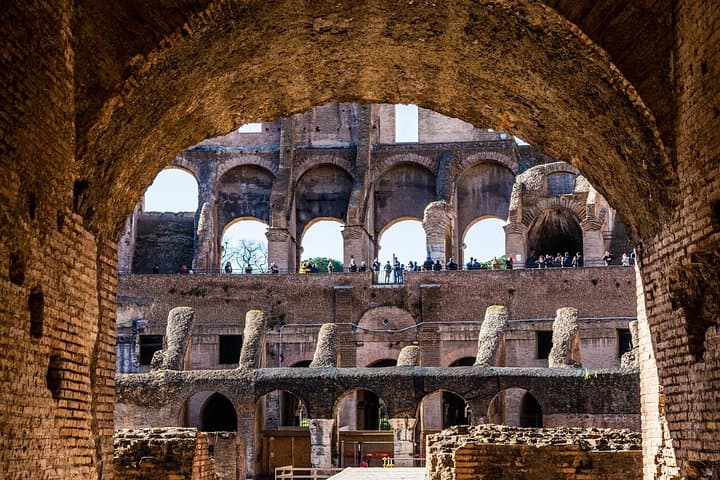
The Colosseum (70–80 AD), Palatine Hill and Roman Forum form a compact architectural record of imperial Rome. The amphitheater’s exterior of travertine and concrete and the Palatine’s terraces cut into volcanic tuff tell a geologic story of the region: local limestone and tuff shaped foundations and façades, while human hands reworked them into grand urban form. Walk the Forum’s paved routes and you trace the political and religious arteries of an empire—the Curia, basilicas and triumphal arches mapped against the skyline.
Local culture is present and practical: vendors, the persistent Tiber river a short walk away, and the city’s routine rhythm threading through tourist zones. Expect interpretation about construction techniques, imperial patronage, and later restorations that preserved the site as both monument and archaeological lab.
Plan for uneven stone, stairs and narrow passages. Bring a refillable water bottle, sturdy shoes, and a lightweight layer for cool subterranean spaces. Tours run 2–3 hours; midday sun in summer is intense so schedule mornings or late afternoons. Photography is allowed but tripods and professional equipment may be restricted. Book private, arena-access tours in advance—the limited slots mean a more intimate, informative visit and fewer crowds on the floor itself.
moderate.
2–3 hours.
Moderate level of fitness recommended—able to climb stairs and walk on uneven surfaces for several hours.
Yes—this private tour includes official Colosseum entrance with arena-floor access as stated in the inclusions.
Mobile or paper tickets are accepted; you’ll receive confirmation and instructions at booking.
The Colosseum and some Forum areas have limited accessibility; arena-floor access and stairs may restrict full participation—check with the operator if mobility is a concern.
Full refund available if you cancel at least 24 hours before the scheduled departure time; less than 24 hours is non-refundable.
The Colosseum was completed under Emperor Titus in 80 AD as the largest Roman amphitheatre; the Forum and Palatine nearby were political and residential centers of imperial Rome.
Ongoing restorations balance public access with preservation—stay on paths and avoid touching fragile masonry; entrance fees support maintenance and research.
Golf Cart Tours Rome operates guided outdoor trips and adventures with an emphasis on safety, stewardship, and memorable experiences.
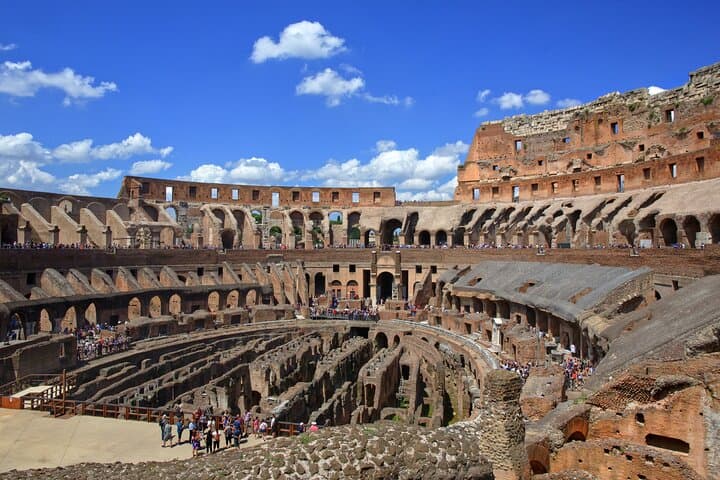
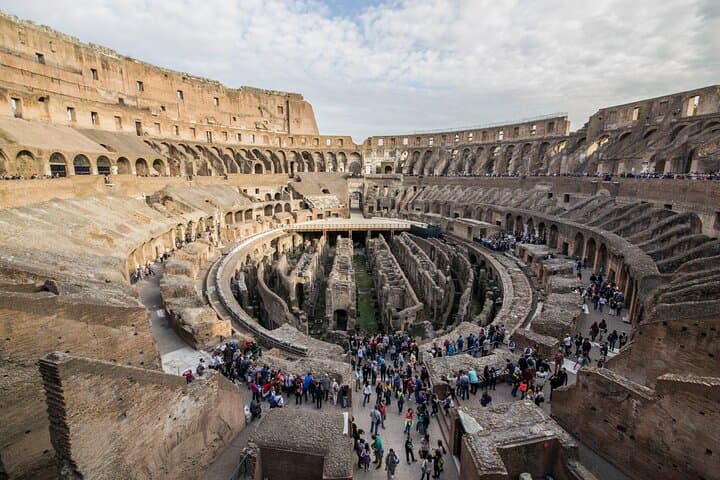
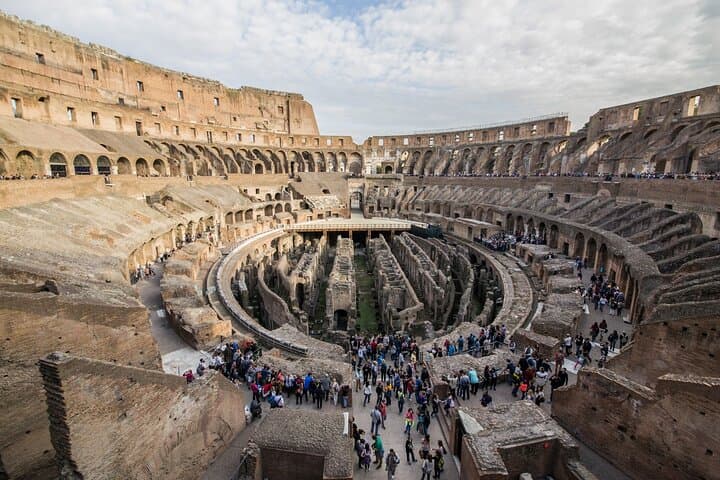
Step from a modern piazza into a roar that time refuses to let die. The guide leads the small group through a gated entrance and onto the Colosseum’s arena floor—an open stage where sand once swallowed the footsteps of gladiators and beasts—and the stones beneath your feet hold the weight of centuries.
Step from a modern piazza into a roar that time refuses to let die. The guide leads the small group through a gated entrance and onto the Colosseum’s arena floor—an open stage where sand once swallowed the footsteps of gladiators and beasts—and the stones beneath your feet hold the weight of centuries.
The Colosseum (70–80 AD), Palatine Hill and Roman Forum form a compact architectural record of imperial Rome. The amphitheater’s exterior of travertine and concrete and the Palatine’s terraces cut into volcanic tuff tell a geologic story of the region: local limestone and tuff shaped foundations and façades, while human hands reworked them into grand urban form. Walk the Forum’s paved routes and you trace the political and religious arteries of an empire—the Curia, basilicas and triumphal arches mapped against the skyline.
Local culture is present and practical: vendors, the persistent Tiber river a short walk away, and the city’s routine rhythm threading through tourist zones. Expect interpretation about construction techniques, imperial patronage, and later restorations that preserved the site as both monument and archaeological lab.
Plan for uneven stone, stairs and narrow passages. Bring a refillable water bottle, sturdy shoes, and a lightweight layer for cool subterranean spaces. Tours run 2–3 hours; midday sun in summer is intense so schedule mornings or late afternoons. Photography is allowed but tripods and professional equipment may be restricted. Book private, arena-access tours in advance—the limited slots mean a more intimate, informative visit and fewer crowds on the floor itself.