THE ADVENTURE COLLECTIVE® · Independent discovery and booking for outdoor travel

Walk where emperors and gladiators once moved: a private guided tour of the Colosseum, Roman Forum and Palatine Hill that combines fast-track access with expert storytelling. Expect uneven ancient stone, layered history and clear practical rules for entry.
Walk where emperors and gladiators once moved: a private guided tour of the Colosseum, Roman Forum and Palatine Hill that combines fast-track access with expert storytelling. Expect uneven ancient stone, layered history and clear practical rules for entry.
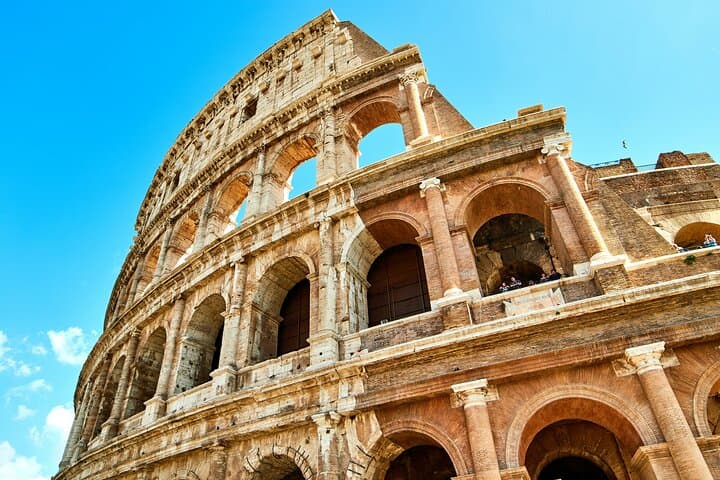
You step through a modern gate and the city exhales around you — stone tiers rise like a ruined amphitheater of memory, and the Colosseum's arches frame the Roman sky. A private guide leads you across flagstones warmed by centuries of foot traffic; voices of the past seem to press at the edges of the present.
Verified experiences and guided adventures in the surrounding area.
Operated by Best of Italy Tours · Rome, Lazio
You step through a modern gate and the city exhales around you — stone tiers rise like a ruined amphitheater of memory, and the Colosseum's arches frame the Roman sky. A private guide leads you across flagstones warmed by centuries of foot traffic; voices of the past seem to press at the edges of the present.
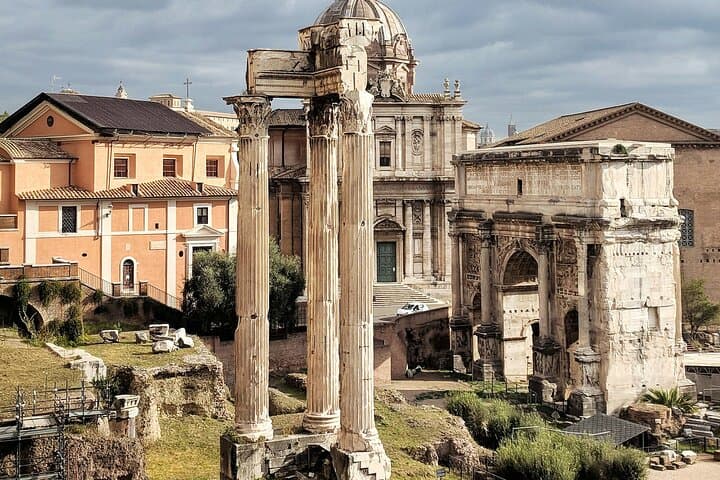
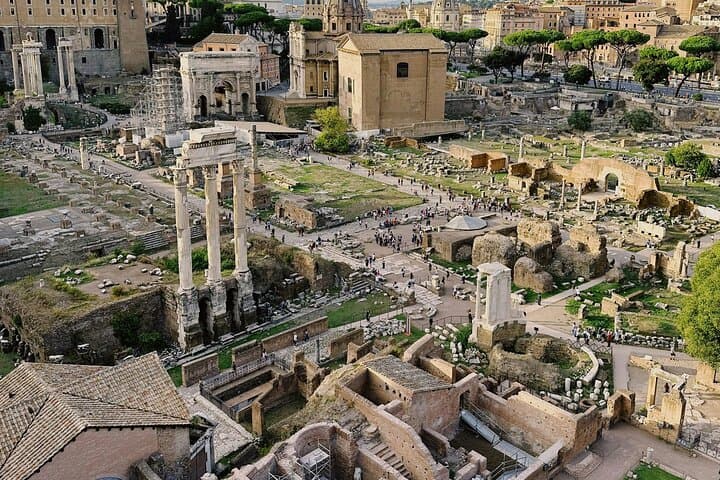
Built between AD 72 and 80, the Colosseum, Roman Forum and Palatine Hill map Rome’s political and social evolution. The Colosseum’s engineering — concrete vaults, travertine facades — once held tens of thousands; the Forum’s columns mark where law and commerce fought for space; Palatine’s terraces sit on layers of volcanic tuff that shaped both settlement and sightlines. Your guide pieces these elements together: emperors, senators and ordinary Romans appear not as names on plaques but as actors in an urban drama.
Culturally, this trio is central: civic life, ritual and imperial residence intersect in visible ruins, and nearby neighborhoods still carry trattorie and artisan shops that trace long urban continuities.
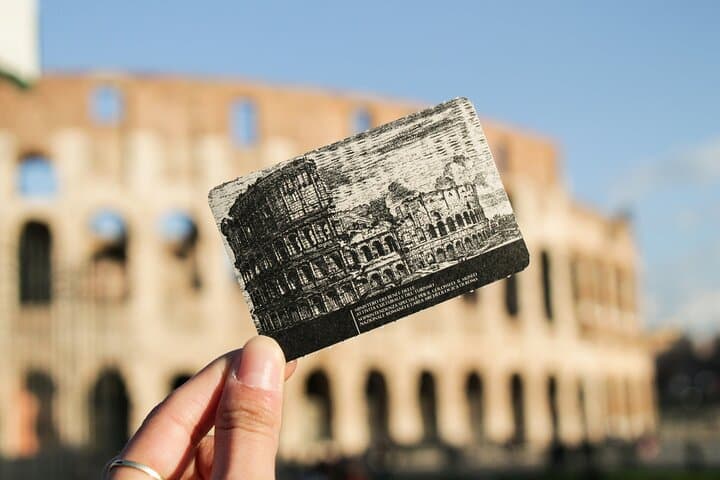
Practical guidance: plan for 60–120 minutes of mostly flat walking over uneven ancient stone and short stair sections. Fast-track entry avoids long queues, but security checks and bag restrictions are strict — no large backpacks or glass bottles. Bring comfortable shoes, a refillable water bottle, a photo-ready mindset and ID for ticket validation. Morning visits mean softer light and fewer crowds; late afternoons offer warm stone tones but shorter access on cooler days. A private tour condenses history into an accessible, walkable loop — efficient, informative and rooted in the city’s layered geology and human story.
easy.
1–2 hours.
Suitable for most fitness levels; should be comfortable standing and walking on uneven stone for up to two hours.
The private tour runs approximately 60–120 minutes depending on route and group pace.
Yes — Colosseum, Roman Forum and Palatine Hill admission and reservation fees are included in the tour price.
The sites have uneven terrain and steps; strollers can be used in parts but full wheelchair access is limited — contact the operator for specifics.
Large backpacks, glass containers, alcoholic beverages, aerosols and bulky luggage are not permitted.
The Colosseum opened under Emperor Titus in AD 80; the Forum served as Rome’s civic core for centuries, while Palatine Hill hosted imperial palaces built atop older settlements.
High visitor numbers strain fragile masonry and mosaics; follow site rules, avoid touching delicate surfaces and use designated paths to support ongoing preservation efforts.
Best of Italy Tours operates guided outdoor trips and adventures with an emphasis on safety, stewardship, and memorable experiences.
You step through a modern gate and the city exhales around you — stone tiers rise like a ruined amphitheater of memory, and the Colosseum's arches frame the Roman sky. A private guide leads you across flagstones warmed by centuries of foot traffic; voices of the past seem to press at the edges of the present.
You step through a modern gate and the city exhales around you — stone tiers rise like a ruined amphitheater of memory, and the Colosseum's arches frame the Roman sky. A private guide leads you across flagstones warmed by centuries of foot traffic; voices of the past seem to press at the edges of the present.
Built between AD 72 and 80, the Colosseum, Roman Forum and Palatine Hill map Rome’s political and social evolution. The Colosseum’s engineering — concrete vaults, travertine facades — once held tens of thousands; the Forum’s columns mark where law and commerce fought for space; Palatine’s terraces sit on layers of volcanic tuff that shaped both settlement and sightlines. Your guide pieces these elements together: emperors, senators and ordinary Romans appear not as names on plaques but as actors in an urban drama.
Culturally, this trio is central: civic life, ritual and imperial residence intersect in visible ruins, and nearby neighborhoods still carry trattorie and artisan shops that trace long urban continuities.
Practical guidance: plan for 60–120 minutes of mostly flat walking over uneven ancient stone and short stair sections. Fast-track entry avoids long queues, but security checks and bag restrictions are strict — no large backpacks or glass bottles. Bring comfortable shoes, a refillable water bottle, a photo-ready mindset and ID for ticket validation. Morning visits mean softer light and fewer crowds; late afternoons offer warm stone tones but shorter access on cooler days. A private tour condenses history into an accessible, walkable loop — efficient, informative and rooted in the city’s layered geology and human story.