THE ADVENTURE COLLECTIVE® · Independent discovery and booking for outdoor travel

Explore Colonial Williamsburg after dark on a private walking tour that explains 18th‑century holiday decoration practices and cultural traditions. This accessible, 90‑minute route from Merchant’s Square to the Capitol combines hands‑on insights, historic context, and seasonal treats.
Explore Colonial Williamsburg after dark on a private walking tour that explains 18th‑century holiday decoration practices and cultural traditions. This accessible, 90‑minute route from Merchant’s Square to the Capitol combines hands‑on insights, historic context, and seasonal treats.
A Christmas evening on Duke of Gloucester Street feels like walking through history with lamplight as your companion. The group meets at The Williamsburg Inn, hot drink steam rising if the shop is still open, and then slips into the cobbled rhythm of an 18th‑century capital dressed for the holidays.
Verified experiences and guided adventures in the surrounding area.
Operated by Best Williamsburg Tours · Williamsburg, Virginia
A Christmas evening on Duke of Gloucester Street feels like walking through history with lamplight as your companion. The group meets at The Williamsburg Inn, hot drink steam rising if the shop is still open, and then slips into the cobbled rhythm of an 18th‑century capital dressed for the holidays.
The tour threads together Colonial Williamsburg’s holiday craft traditions, from handmade wreaths and garlands to judging categories that echo 18th‑century civic pageantry. Guides explain how craftsmen used locally available materials and imported spices to adorn houses and public buildings, and how enslaved African and European artisans shaped the culinary and decorative customs — including ginger cakes and biscuits offered on the walk.
Geologically, the area sits on the Atlantic Coastal Plain: level streets, clay soils, and nearby tidal creeks that historically shaped settlement patterns and materials availability. Culturally, the Capitol, Bruton Parish Church (1715), and Governor’s Palace anchor stories of colonial government, Revolutionary War logistics, and early restoration efforts led by Reverend W.A.R. Goodwin.
Practically: Expect a mostly flat, wheelchair‑accessible one‑mile round trip between Merchant’s Square and the Capitol. Evening tours use guide lamps; bring a small flashlight for darker sections. Wear layered outerwear for December nights, sensible walking shoes, and arrive 10 minutes early to collect the included parking pass.
The private format lets the guide tailor commentary to questions about construction techniques, judging criteria, and local holiday customs. After the tour, guests often linger at the ice rink or Merchant’s Square shops—warm drinks and extra photo opportunities that extend the season’s atmosphere without adding much distance to the walk.
easy.
1–1.5 hours.
Minimal fitness required; mostly flat walking and short standing periods suitable for most travelers
Yes — the route from Merchant’s Square to the Capitol is largely level and marked as wheelchair and stroller accessible.
Guides may offer hot beverages before 7pm and small holiday biscuits or ginger cakes; availability can vary, and vegan options are not guaranteed.
Round trip from Merchant’s Square to the Capitol is a little over one mile and typically takes about 90 minutes with stops and commentary.
Grand Illuminations occur the first three Saturdays in December with fireworks; Yule Log lightings are the first three Fridays in December—both are seasonal highlights that may affect crowd levels.
Colonial Williamsburg’s restoration was driven in the early 20th century to preserve the city’s 18th‑century buildings; holiday decorating reproduces period methods and community judging traditions.
The historic area emphasizes low‑impact tourism—stay on paved routes, avoid touching period decorations, and follow guide instructions to help protect fragile materials.
Best Williamsburg Tours operates guided outdoor trips and adventures with an emphasis on safety, stewardship, and memorable experiences.
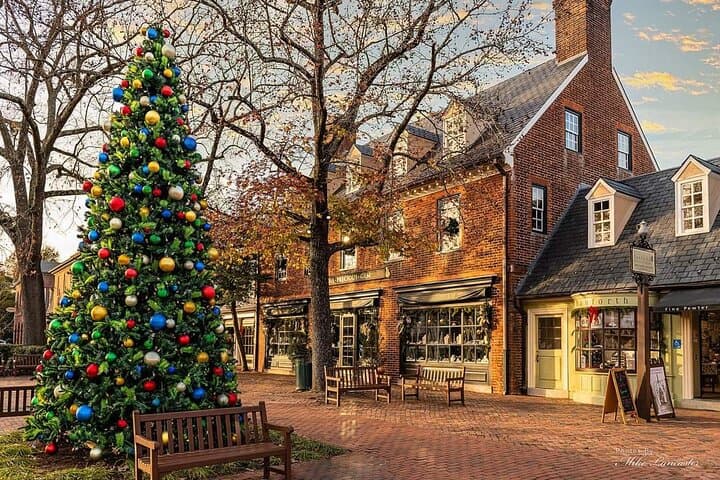


A Christmas evening on Duke of Gloucester Street feels like walking through history with lamplight as your companion. The group meets at The Williamsburg Inn, hot drink steam rising if the shop is still open, and then slips into the cobbled rhythm of an 18th‑century capital dressed for the holidays.
A Christmas evening on Duke of Gloucester Street feels like walking through history with lamplight as your companion. The group meets at The Williamsburg Inn, hot drink steam rising if the shop is still open, and then slips into the cobbled rhythm of an 18th‑century capital dressed for the holidays.
The tour threads together Colonial Williamsburg’s holiday craft traditions, from handmade wreaths and garlands to judging categories that echo 18th‑century civic pageantry. Guides explain how craftsmen used locally available materials and imported spices to adorn houses and public buildings, and how enslaved African and European artisans shaped the culinary and decorative customs — including ginger cakes and biscuits offered on the walk.
Geologically, the area sits on the Atlantic Coastal Plain: level streets, clay soils, and nearby tidal creeks that historically shaped settlement patterns and materials availability. Culturally, the Capitol, Bruton Parish Church (1715), and Governor’s Palace anchor stories of colonial government, Revolutionary War logistics, and early restoration efforts led by Reverend W.A.R. Goodwin.
Practically: Expect a mostly flat, wheelchair‑accessible one‑mile round trip between Merchant’s Square and the Capitol. Evening tours use guide lamps; bring a small flashlight for darker sections. Wear layered outerwear for December nights, sensible walking shoes, and arrive 10 minutes early to collect the included parking pass.
The private format lets the guide tailor commentary to questions about construction techniques, judging criteria, and local holiday customs. After the tour, guests often linger at the ice rink or Merchant’s Square shops—warm drinks and extra photo opportunities that extend the season’s atmosphere without adding much distance to the walk.