THE ADVENTURE COLLECTIVE® · Independent discovery and booking for outdoor travel

Move from Shanghai’s neon riverfront to Xi’an’s ancient tombs and Beijing’s monumental walls in seven fast-paced days. This private itinerary blends city walking, a domestic flight and a bullet-train transfer with guided visits to the Terra Cotta Warriors and Mutianyu Great Wall.
Move from Shanghai’s neon riverfront to Xi’an’s ancient tombs and Beijing’s monumental walls in seven fast-paced days. This private itinerary blends city walking, a domestic flight and a bullet-train transfer with guided visits to the Terra Cotta Warriors and Mutianyu Great Wall.
You step out of Pudong airport into Shanghai’s humid night, the city lights pulling you toward the Bund while tomorrow’s skyline waits like a held breath. Over seven days you move from Shanghai’s wide riverfront promenades to Xi’an’s old city walls and the earthen rows of the Terra Cotta Warriors, then ride a high-speed train into the lined avenues of Beijing. Each city keeps its own tempo; the streets hum, and the Great Wall at Mutianyu holds a quieter, wind-carved patience.
Verified experiences and guided adventures in the surrounding area.
Operated by SilkRoadTrips · Shanghai, Shanghai
You step out of Pudong airport into Shanghai’s humid night, the city lights pulling you toward the Bund while tomorrow’s skyline waits like a held breath. Over seven days you move from Shanghai’s wide riverfront promenades to Xi’an’s old city walls and the earthen rows of the Terra Cotta Warriors, then ride a high-speed train into the lined avenues of Beijing. Each city keeps its own tempo; the streets hum, and the Great Wall at Mutianyu holds a quieter, wind-carved patience.
This trip stitches together millennia of history: imperial courts in the Forbidden City, Qin dynasty burial sculptures 45 km outside Xi’an, and Ming-era wallwork at Mutianyu. Geology shows in the loess basin around Xi’an and the reclaimed riverbanks of Shanghai; culturally you’ll pass Muslim Quarter vendors, hutong courtyards, and Shanghai’s former concession lanes where Shikumen houses press close to narrow streets.
Logistics are straightforward: private transfers, domestic flight Shanghai–Xi’an, and a second-class bullet train Xi’an–Beijing (about five hours). Accommodations and six breakfasts are included; time at Mutianyu is typically four hours, Terra Cotta about three. Expect a mix of urban walking and moderate ascents on the wall; comfortable shoes and a light daypack make cells of both cities manageable.
Practical edge: plan morning visits to major sites to avoid crowds, carry local ID and copies of your passport, and use cash for smaller stalls in Xi’an’s Muslim Quarter. Hydrate between visits and allow padding for transit—China’s scale rewards patience as much as curiosity.
moderate.
7 days.
Light-to-moderate fitness for walking tours and stair climbs on the Great Wall; suitable for most travelers who can manage several hours of walking in a day.
Most foreign nationals require a Chinese visa obtained before arrival; check your country’s requirements and secure it prior to booking.
Second-class seats on China’s high-speed trains are comfortable with reclining seats and overhead storage—suitable for the roughly five-hour Xi’an–Beijing segment.
The itinerary lists admissions for some sites (e.g., Terra Cotta Warriors, Mutianyu, Forbidden City); confirm with the operator which specific entrance fees are included at booking.
Expect several hours of walking daily—city explorations, market strolls, and up to moderate climbs at the Great Wall; pacing and rest stops are included in the schedule.
This route links distinctive eras: the Qin dynasty’s Terra Cotta Army, Ming and Qing imperial centers preserved in Beijing, and Shanghai’s colonial-era architecture reflecting 19th–20th century trade.
Choose local guides and businesses that practice low-impact tourism, reduce single-use plastics, and respect site rules—especially at fragile archaeological sites like the Terra Cotta pits.
SilkRoadTrips operates guided outdoor trips and adventures with an emphasis on safety, stewardship, and memorable experiences.
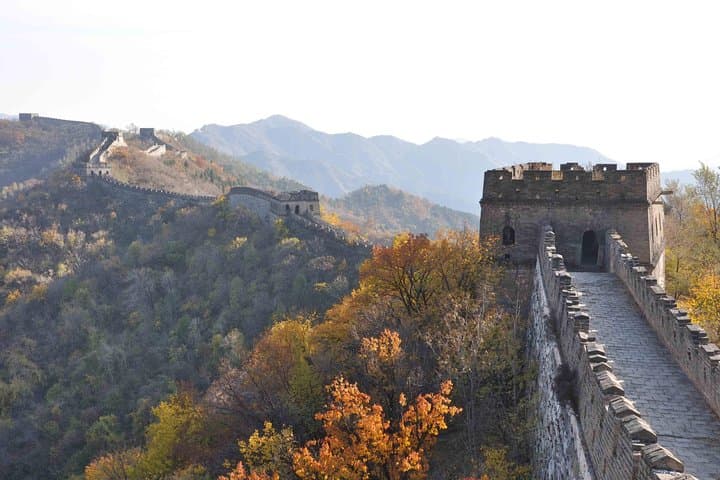


You step out of Pudong airport into Shanghai’s humid night, the city lights pulling you toward the Bund while tomorrow’s skyline waits like a held breath. Over seven days you move from Shanghai’s wide riverfront promenades to Xi’an’s old city walls and the earthen rows of the Terra Cotta Warriors, then ride a high-speed train into the lined avenues of Beijing. Each city keeps its own tempo; the streets hum, and the Great Wall at Mutianyu holds a quieter, wind-carved patience.
You step out of Pudong airport into Shanghai’s humid night, the city lights pulling you toward the Bund while tomorrow’s skyline waits like a held breath. Over seven days you move from Shanghai’s wide riverfront promenades to Xi’an’s old city walls and the earthen rows of the Terra Cotta Warriors, then ride a high-speed train into the lined avenues of Beijing. Each city keeps its own tempo; the streets hum, and the Great Wall at Mutianyu holds a quieter, wind-carved patience.
This trip stitches together millennia of history: imperial courts in the Forbidden City, Qin dynasty burial sculptures 45 km outside Xi’an, and Ming-era wallwork at Mutianyu. Geology shows in the loess basin around Xi’an and the reclaimed riverbanks of Shanghai; culturally you’ll pass Muslim Quarter vendors, hutong courtyards, and Shanghai’s former concession lanes where Shikumen houses press close to narrow streets.
Logistics are straightforward: private transfers, domestic flight Shanghai–Xi’an, and a second-class bullet train Xi’an–Beijing (about five hours). Accommodations and six breakfasts are included; time at Mutianyu is typically four hours, Terra Cotta about three. Expect a mix of urban walking and moderate ascents on the wall; comfortable shoes and a light daypack make cells of both cities manageable.
Practical edge: plan morning visits to major sites to avoid crowds, carry local ID and copies of your passport, and use cash for smaller stalls in Xi’an’s Muslim Quarter. Hydrate between visits and allow padding for transit—China’s scale rewards patience as much as curiosity.