THE ADVENTURE COLLECTIVE® · Independent discovery and booking for outdoor travel

Descend into the Churchill War Rooms on a private Westminster tour that pairs streetside history with preserved subterranean command rooms. Expect focused walking, compact spaces, and a three-hour deep dive into Britain’s wartime leadership.
Descend into the Churchill War Rooms on a private Westminster tour that pairs streetside history with preserved subterranean command rooms. Expect focused walking, compact spaces, and a three-hour deep dive into Britain’s wartime leadership.
You step off King Charles Street and the city’s cadence narrows into a hush: motorists and Parliament’s distant bell fade while a narrow entrance leads below the government buildings.
Verified experiences and guided adventures in the surrounding area.
Operated by Travel Curious · London, Greater London
You step off King Charles Street and the city’s cadence narrows into a hush: motorists and Parliament’s distant bell fade while a narrow entrance leads below the government buildings.
The Churchill War Rooms press close around you—corridors that still hold the fossilized breath of wartime decisions. Your private guide threads biography and policy through dimly lit rooms: the Map Room’s tiled desk, the Cabinet Room’s chairs, the tiny bedrooms where ministers slept. Above ground, Westminster’s limestone and London Clay compress into the vault that kept the war effort functioning.
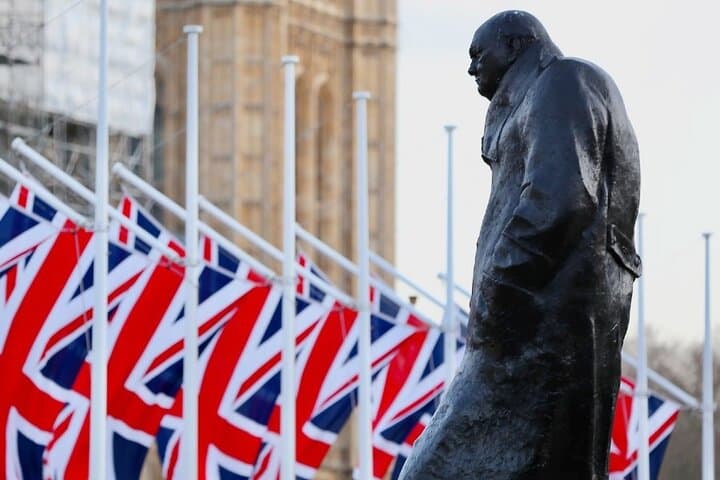
This isn’t only a museum; it’s a preserved command centre where strategy, grit, and rationed tea converged. The site charts the five-year arc from 1939 to 1945, showing how civil resilience, military intelligence and urban geology combined to shelter leadership beneath the capital. Nearby, Downing Street, the Cenotaph and partially bombed façades tell the wider story of the Blitz and post-war recovery.
Practical guidance: plan for roughly 1.5 miles (2.5 km) of walking across the tour with several flights of stairs descending into the bunker—elevation change is minor but spaces are compact. Allow three hours total, including street-level stops. Wear sturdy shoes and a light layer; temperature underground is cooler and constant. Photography is permitted in most areas but follow signage and your guide. Arrive 10–15 minutes early to clear security and present mobile tickets. Book a private group to get the full context from a specialist guide and expect moderate walking and periods of standing during the detailed exhibits.
moderate.
3 hours.
Moderate—comfortable walking on paved streets, short stair descents into confined spaces, and standing during exhibits.
Yes—there is wheelchair access to street-level areas, but some historic rooms have limited access; contact the museum in advance for specific arrangements.
Yes—this booking includes entrance to the Churchill War Rooms as stated in the itinerary and inclusions.
Photography is permitted in many spaces but some displays or rooms are restricted; follow signage and your guide’s directions.
Expect about 1.5 miles (2.5 km) total walking and periods of standing during exhibits; the tour includes stair descents into the bunker.
The Churchill War Rooms served as the subterranean nerve centre for Britain’s wartime leadership from 1939–1945, with the Cabinet War Rooms preserved almost exactly as they were used during WWII.
The Imperial War Museums actively conserve original fittings and documents—follow visitor rules, avoid touching artifacts, and consider supporting museum conservation through donations or respectful behavior.
Travel Curious operates guided outdoor trips and adventures with an emphasis on safety, stewardship, and memorable experiences.
You step off King Charles Street and the city’s cadence narrows into a hush: motorists and Parliament’s distant bell fade while a narrow entrance leads below the government buildings.
You step off King Charles Street and the city’s cadence narrows into a hush: motorists and Parliament’s distant bell fade while a narrow entrance leads below the government buildings.
The Churchill War Rooms press close around you—corridors that still hold the fossilized breath of wartime decisions. Your private guide threads biography and policy through dimly lit rooms: the Map Room’s tiled desk, the Cabinet Room’s chairs, the tiny bedrooms where ministers slept. Above ground, Westminster’s limestone and London Clay compress into the vault that kept the war effort functioning.
This isn’t only a museum; it’s a preserved command centre where strategy, grit, and rationed tea converged. The site charts the five-year arc from 1939 to 1945, showing how civil resilience, military intelligence and urban geology combined to shelter leadership beneath the capital. Nearby, Downing Street, the Cenotaph and partially bombed façades tell the wider story of the Blitz and post-war recovery.
Practical guidance: plan for roughly 1.5 miles (2.5 km) of walking across the tour with several flights of stairs descending into the bunker—elevation change is minor but spaces are compact. Allow three hours total, including street-level stops. Wear sturdy shoes and a light layer; temperature underground is cooler and constant. Photography is permitted in most areas but follow signage and your guide. Arrive 10–15 minutes early to clear security and present mobile tickets. Book a private group to get the full context from a specialist guide and expect moderate walking and periods of standing during the detailed exhibits.