THE ADVENTURE COLLECTIVE® · Independent discovery and booking for outdoor travel

Beat the crowds with a private, early-access guided visit to Chichén Itzá. Spend 2–2.5 hours seeing El Castillo, the Great Ball Court and the Sacred Cenote with an expert local interpreter.
Beat the crowds with a private, early-access guided visit to Chichén Itzá. Spend 2–2.5 hours seeing El Castillo, the Great Ball Court and the Sacred Cenote with an expert local interpreter.
You step through the main gate as the plaza cools from night; limestone steps hold the quiet of centuries while the first light draws a sharp silhouette of El Castillo against a pale sky.
Verified experiences and guided adventures in the surrounding area.
Operated by Mayanworldtours · Pisté, Yucatán
You step through the main gate as the plaza cools from night; limestone steps hold the quiet of centuries while the first light draws a sharp silhouette of El Castillo against a pale sky.
This private, early-access tour moves at a human pace — your certified native guide unpacks the chronology of the site, pointing out Toltec influences, astronomical alignments and the ceremonial function of the Great Ball Court. Geologically, Chichén Itzá sits on a porous Yucatán shelf where sinkholes and cenotes are the subsurface plumbing that shaped Maya settlement; the Sacred Cenote nearby once carried offerings to the underworld.
Culturally the site marks a crossroads: Classic Maya architecture blended with Postclassic motifs and trade-era introductions. Local life persists in Pisté, where market stalls and cochinita pibil sellers keep culinary traditions alive.
Practical guidance: plan for 2–2.5 hours on-site; the route is mostly compacted earth with short staircases and no steep climbs. Bring a refillable water bottle, sun protection and a camera with a wide lens for the pyramid and ball court. Tickets are usually handled in advance by your operator but confirm before arrival — the guide typically meets at 7:50 a.m. to beat crowds and mid-day heat.
Respect the site: stay on paths, follow your guide’s directions and note that climbing structures is prohibited. With a private guide you get context, hidden details and a quieter window to absorb the physics, ritual and sheer presence of one of Mesoamerica’s most studied ruins.
moderate.
2–2.5 hours.
Able to walk on uneven packed-earth surfaces and climb short stone steps; moderate fitness recommended.
Tickets are typically purchased in advance by the operator but are not always included — confirm at booking; mobile or paper tickets are accepted.
No — climbing on El Castillo and other major structures has been prohibited for years to protect the monuments and visitors.
Yes if they can walk for 2–3 hours and tolerate heat; travelers with spinal or serious heart problems should avoid the site per provider guidance.
Most visitors drive or take a shuttle; Mérida is ~120 km west (about 1.5–2 hours), Cancún ~200 km east (about 2–2.5 hours). Many travelers base in Valladolid (approx. 40 minutes away).
Chichén Itzá developed as a major Maya urban and ceremonial center with notable Toltec influences; El Castillo aligns with equinox light-and-shadow events tied to Maya astronomy.
High visitor numbers stress fragile limestone and cenote environments — stay on designated paths, avoid litter, and use biodegradable products to reduce impact.
Mayanworldtours operates guided outdoor trips and adventures with an emphasis on safety, stewardship, and memorable experiences.
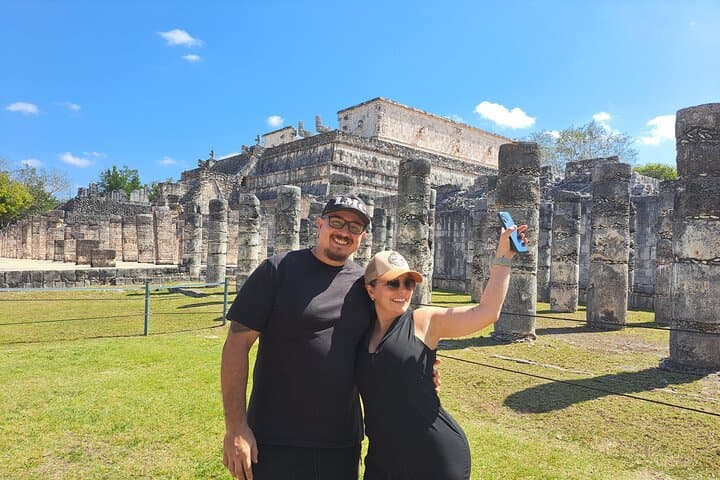
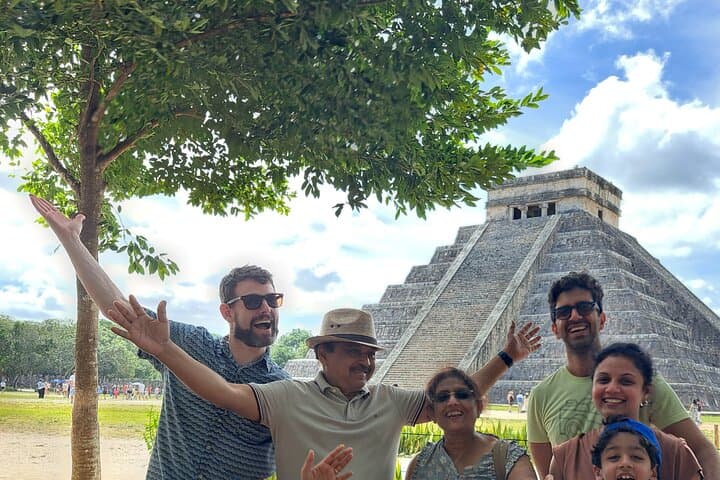
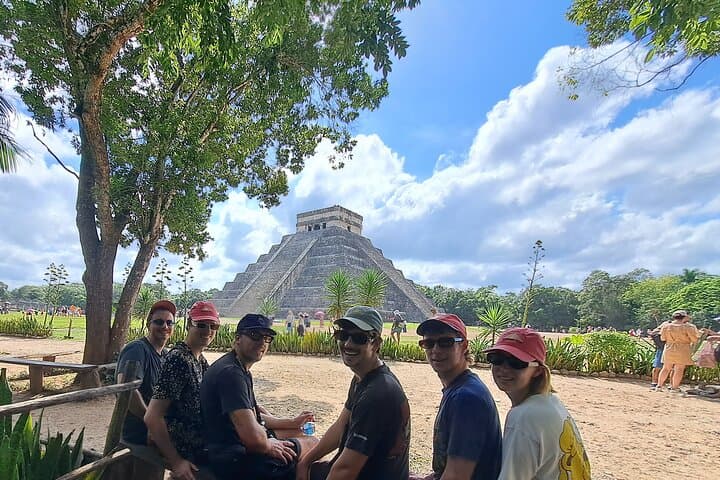
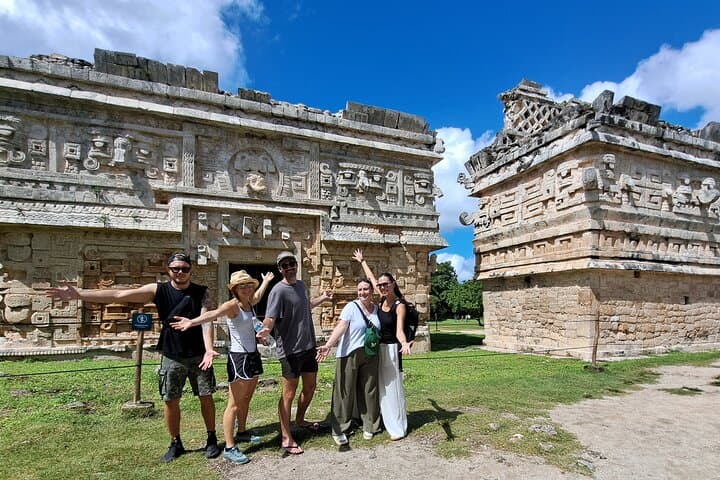
You step through the main gate as the plaza cools from night; limestone steps hold the quiet of centuries while the first light draws a sharp silhouette of El Castillo against a pale sky.
You step through the main gate as the plaza cools from night; limestone steps hold the quiet of centuries while the first light draws a sharp silhouette of El Castillo against a pale sky.
This private, early-access tour moves at a human pace — your certified native guide unpacks the chronology of the site, pointing out Toltec influences, astronomical alignments and the ceremonial function of the Great Ball Court. Geologically, Chichén Itzá sits on a porous Yucatán shelf where sinkholes and cenotes are the subsurface plumbing that shaped Maya settlement; the Sacred Cenote nearby once carried offerings to the underworld.
Culturally the site marks a crossroads: Classic Maya architecture blended with Postclassic motifs and trade-era introductions. Local life persists in Pisté, where market stalls and cochinita pibil sellers keep culinary traditions alive.
Practical guidance: plan for 2–2.5 hours on-site; the route is mostly compacted earth with short staircases and no steep climbs. Bring a refillable water bottle, sun protection and a camera with a wide lens for the pyramid and ball court. Tickets are usually handled in advance by your operator but confirm before arrival — the guide typically meets at 7:50 a.m. to beat crowds and mid-day heat.
Respect the site: stay on paths, follow your guide’s directions and note that climbing structures is prohibited. With a private guide you get context, hidden details and a quieter window to absorb the physics, ritual and sheer presence of one of Mesoamerica’s most studied ruins.