THE ADVENTURE COLLECTIVE® · Independent discovery and booking for outdoor travel

Spend a focused half-day inside the Chengdu Research Base of Giant Panda Breeding with a private guide. Time visits for the morning nursery and feeding windows, bring quiet shoes, and expect accessible paths and interpretive exhibits.
Spend a focused half-day inside the Chengdu Research Base of Giant Panda Breeding with a private guide. Time visits for the morning nursery and feeding windows, bring quiet shoes, and expect accessible paths and interpretive exhibits.
You step through a shaded gate and the city noise falls away—bamboo groves press close and the air tastes faintly of green. A low, contented munching drifts from an enclosure; pandas, indifferent and engaging, chew through culms like slow machines of appetite. Mornings are the best time: cubs tumble in the nursery while adults move between feeding, resting, and brief, comical bursts of curiosity.
Verified experiences and guided adventures in the surrounding area.
Operated by NewPanda Trip · Chengdu, Sichuan
You step through a shaded gate and the city noise falls away—bamboo groves press close and the air tastes faintly of green. A low, contented munching drifts from an enclosure; pandas, indifferent and engaging, chew through culms like slow machines of appetite. Mornings are the best time: cubs tumble in the nursery while adults move between feeding, resting, and brief, comical bursts of curiosity.
The Chengdu Research Base of Giant Panda Breeding began in 1987 as a concentrated effort to save an animal whose range and numbers had collapsed during the 20th century. Built on low, rolling hills north of downtown Chengdu, the site uses terraced enclosures and planted bamboo species to mimic Sichuan’s mountain foothills. Local culture here blends modern urban life with reverence for conservation—visitors will encounter informative exhibits, keeper talks, and research displays that explain breeding, genetics, and reintroduction work.
Practical guidance: reserve a morning slot to catch keeper feeds and the nursery’s peak activity, allow about 3–4 hours for a relaxed visit, and keep noise to a minimum—pandas respond to calm. Photography without flash is fine; stay behind barriers and follow guide instructions. The facility is largely wheelchair-accessible and suitable for families. Dress in layers (shade gives way to sun on open paths), bring a refillable water bottle, and expect patrolled paths and clear signage. A private guide and hotel transfer remove logistics, letting you focus on the encounter itself: watching an adult panda deliberate over a bamboo shoot, or seeing a cub attempt a first climb, is both quietly educational and memorably immediate.
easy.
4 hours.
Light walking on mostly paved, slightly sloped paths—suitable for all fitness levels
Plan about 3–4 hours to see the main enclosures, the nursery, and the small research exhibits at a relaxed pace.
Yes—the site has accessible paths and transportation options are wheelchair-accessible; check with the operator about specific pick-up logistics.
The nursery is a highlight but cub viewing depends on breeding season and animal care schedules—mornings increase your chances.
Outside food is discouraged near enclosures; there are designated eating areas and on-site kiosks for refreshments.
Founded in 1987, the Chengdu base was created as a concentrated captive-breeding and conservation center to reverse population loss and support research.
The base focuses on captive breeding, habitat research, and public education—visitors should minimize disturbance, follow rules, and support accredited conservation programs.
NewPanda Trip operates guided outdoor trips and adventures with an emphasis on safety, stewardship, and memorable experiences.

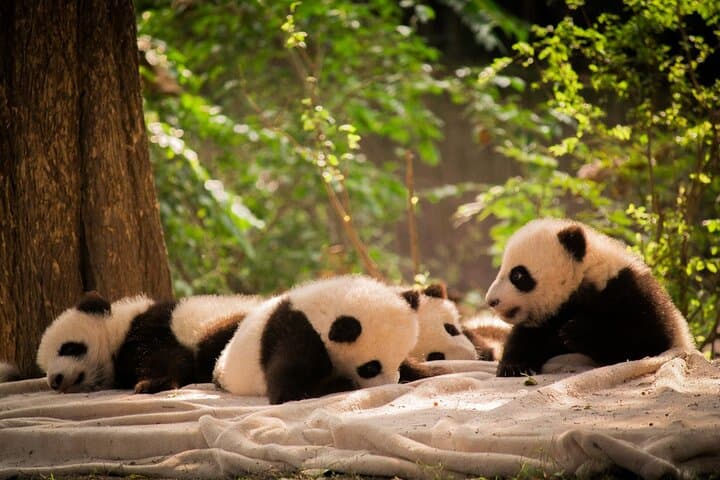
You step through a shaded gate and the city noise falls away—bamboo groves press close and the air tastes faintly of green. A low, contented munching drifts from an enclosure; pandas, indifferent and engaging, chew through culms like slow machines of appetite. Mornings are the best time: cubs tumble in the nursery while adults move between feeding, resting, and brief, comical bursts of curiosity.
You step through a shaded gate and the city noise falls away—bamboo groves press close and the air tastes faintly of green. A low, contented munching drifts from an enclosure; pandas, indifferent and engaging, chew through culms like slow machines of appetite. Mornings are the best time: cubs tumble in the nursery while adults move between feeding, resting, and brief, comical bursts of curiosity.
The Chengdu Research Base of Giant Panda Breeding began in 1987 as a concentrated effort to save an animal whose range and numbers had collapsed during the 20th century. Built on low, rolling hills north of downtown Chengdu, the site uses terraced enclosures and planted bamboo species to mimic Sichuan’s mountain foothills. Local culture here blends modern urban life with reverence for conservation—visitors will encounter informative exhibits, keeper talks, and research displays that explain breeding, genetics, and reintroduction work.
Practical guidance: reserve a morning slot to catch keeper feeds and the nursery’s peak activity, allow about 3–4 hours for a relaxed visit, and keep noise to a minimum—pandas respond to calm. Photography without flash is fine; stay behind barriers and follow guide instructions. The facility is largely wheelchair-accessible and suitable for families. Dress in layers (shade gives way to sun on open paths), bring a refillable water bottle, and expect patrolled paths and clear signage. A private guide and hotel transfer remove logistics, letting you focus on the encounter itself: watching an adult panda deliberate over a bamboo shoot, or seeing a cub attempt a first climb, is both quietly educational and memorably immediate.