THE ADVENTURE COLLECTIVE® · Independent discovery and booking for outdoor travel

A private full‑day from Fez to Chefchaouen lets you explore the Blue City’s alleys, Kasbah and springs at your own pace. This guided tour covers transport, entrance fees and curated stops for photography and local insights.
A private full‑day from Fez to Chefchaouen lets you explore the Blue City’s alleys, Kasbah and springs at your own pace. This guided tour covers transport, entrance fees and curated stops for photography and local insights.
You step from the air‑conditioned vehicle and the Rif Mountains inhale around you — cool, pine-scented air that pushes through blue alleys and past whitewashed walls. Bab el Ain frames the medina like a doorway to a different pace: narrow lanes, open courtyards, and stairways that lead your eyes up to the ridgeline.
Verified experiences and guided adventures in the surrounding area.
Operated by Fez Luxury Services · Chefchaouen, Tanger-Tetouan-Al Hoceima
You step from the air‑conditioned vehicle and the Rif Mountains inhale around you — cool, pine-scented air that pushes through blue alleys and past whitewashed walls. Bab el Ain frames the medina like a doorway to a different pace: narrow lanes, open courtyards, and stairways that lead your eyes up to the ridgeline.
Chefchaouen began as a 15th‑century mountain stronghold and later welcomed refugees from Andalusia, its lanes reflecting centuries of Berber, Arab and Spanish influences. The town sits on folded limestone and sandstone of the Rif range; springs such as Ras El‑Ma still shape daily rhythms and irrigate rooftop gardens and terraced plots. Culture here is artisanal and tactile — dye pots, woven textiles, and small workshops where traditional techniques persist.
A private full‑day excursion from Fez delivers this compact mosaic in a single, organized loop: a guided walk from Bab el Ain into Place Outa el‑Hammam, a visit to the Kasbah and its small ethnographic museum, time at Ras El‑Ma and a climb to the Kasbah tower for wide views over the blue roofs. Expect lots of walking on uneven cobbles and steps; the guide handles logistics and ticketing so you can linger on photo stops.
Practicalities: leave early to avoid midday crowds, carry water and modest clothing for visiting religious sites, and plan for 3–3.5 hours each way on winding mountain roads. Support local craft shops directly and practice low‑impact visiting — the blue paint is fragile, and the medina’s rhythm depends on respectful foot traffic.
easy.
10–12 hours.
Suitable for travelers in average physical shape — requires walking on uneven cobbles and short stair climbs.
Expect roughly 3 to 3.5 hours each way on winding mountain roads; the private vehicle includes stops for photos or short breaks.
Yes — the Kasbah and Ethnographic Museum entrance fees are included in the tour price as stated in the itinerary.
Meals are not included; the itinerary allows time in Place Outa el‑Hammam to purchase local snacks or sit for a meal at a café.
No — non‑Muslims cannot enter the Grand Mosque, but its octagonal minaret and exterior architecture are key photographic stops on the tour.
Founded in the 15th century, Chefchaouen served as a refuge and crossroads for Berber, Arab and Andalusian communities; its blue walls became prominent under Andalusian influence and later local practice.
Tourism strains fragile painted surfaces and limited water resources; visitors should avoid touching painted walls, use refillable bottles, and buy from local artisans to support sustainable livelihoods.
Fez Luxury Services operates guided outdoor trips and adventures with an emphasis on safety, stewardship, and memorable experiences.
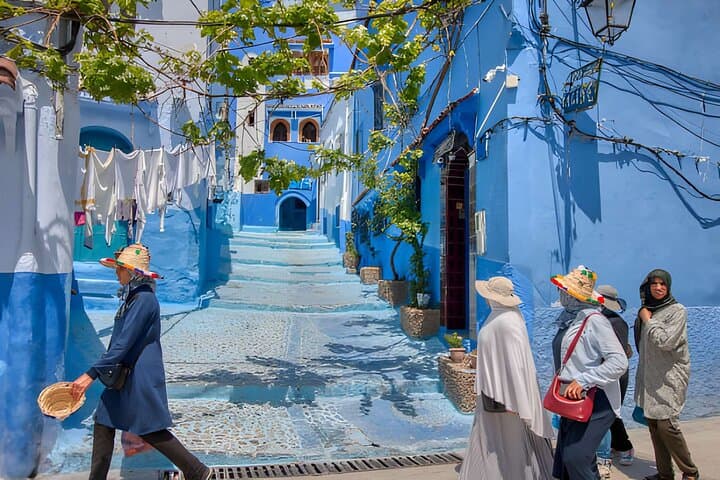
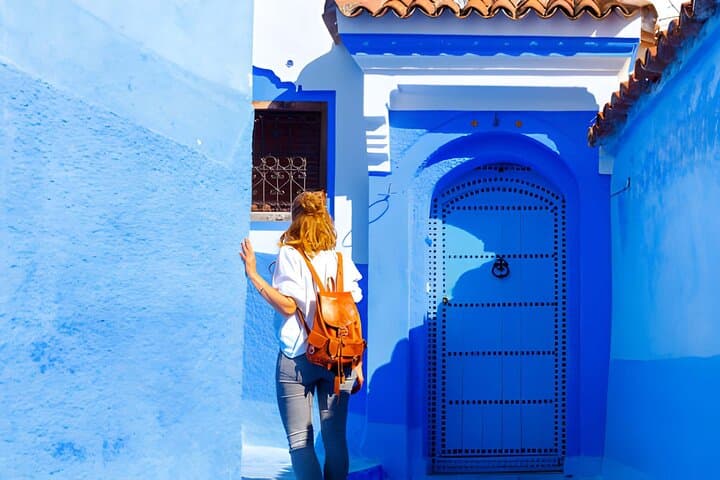
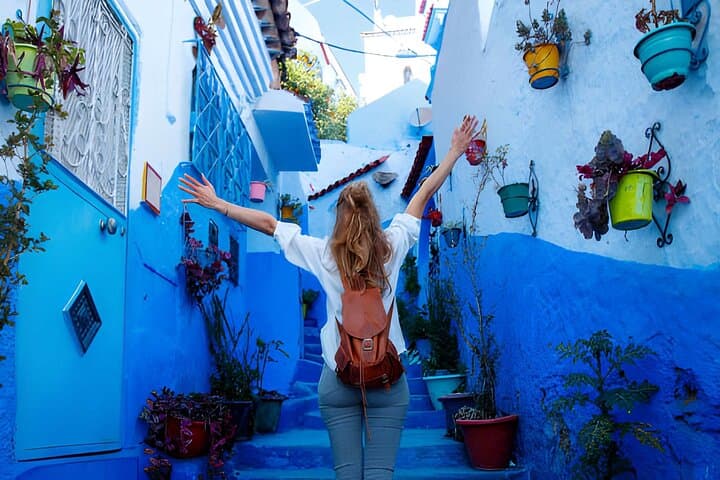
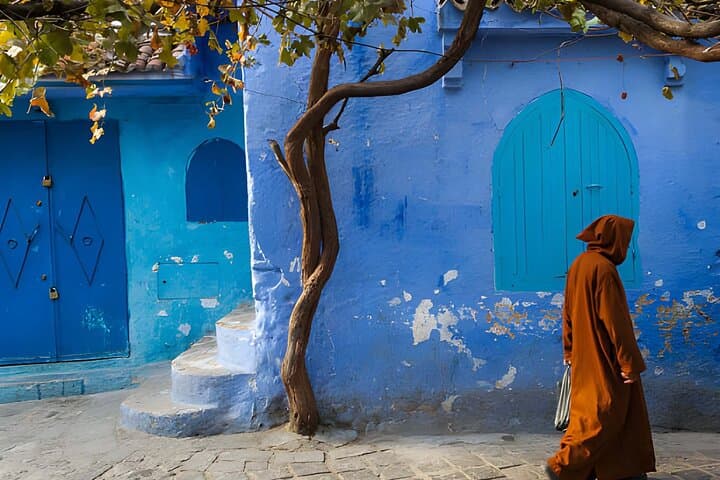
You step from the air‑conditioned vehicle and the Rif Mountains inhale around you — cool, pine-scented air that pushes through blue alleys and past whitewashed walls. Bab el Ain frames the medina like a doorway to a different pace: narrow lanes, open courtyards, and stairways that lead your eyes up to the ridgeline.
You step from the air‑conditioned vehicle and the Rif Mountains inhale around you — cool, pine-scented air that pushes through blue alleys and past whitewashed walls. Bab el Ain frames the medina like a doorway to a different pace: narrow lanes, open courtyards, and stairways that lead your eyes up to the ridgeline.
Chefchaouen began as a 15th‑century mountain stronghold and later welcomed refugees from Andalusia, its lanes reflecting centuries of Berber, Arab and Spanish influences. The town sits on folded limestone and sandstone of the Rif range; springs such as Ras El‑Ma still shape daily rhythms and irrigate rooftop gardens and terraced plots. Culture here is artisanal and tactile — dye pots, woven textiles, and small workshops where traditional techniques persist.
A private full‑day excursion from Fez delivers this compact mosaic in a single, organized loop: a guided walk from Bab el Ain into Place Outa el‑Hammam, a visit to the Kasbah and its small ethnographic museum, time at Ras El‑Ma and a climb to the Kasbah tower for wide views over the blue roofs. Expect lots of walking on uneven cobbles and steps; the guide handles logistics and ticketing so you can linger on photo stops.
Practicalities: leave early to avoid midday crowds, carry water and modest clothing for visiting religious sites, and plan for 3–3.5 hours each way on winding mountain roads. Support local craft shops directly and practice low‑impact visiting — the blue paint is fragile, and the medina’s rhythm depends on respectful foot traffic.