THE ADVENTURE COLLECTIVE® · Independent discovery and booking for outdoor travel

Skip the crowds on a private, two-hour walking tour through Český Krumlov’s medieval streets. Climb toward the Castle Tower, cross the Cloak Bridge and explore St. Vitus, guided by local stories and panoramic views of the Vltava.
Skip the crowds on a private, two-hour walking tour through Český Krumlov’s medieval streets. Climb toward the Castle Tower, cross the Cloak Bridge and explore St. Vitus, guided by local stories and panoramic views of the Vltava.
Morning light slants across red-tiled roofs as the Vltava dares you to follow its curve through Český Krumlov. In two hours a private guide leads your group up narrow, cobbled lanes, past carved doorways and under the multi-level arches of the Cloak Bridge, where the town spreads out like a living map.
Verified experiences and guided adventures in the surrounding area.
Operated by Opatrip.com Czech · Český Krumlov, South Bohemian Region
Morning light slants across red-tiled roofs as the Vltava dares you to follow its curve through Český Krumlov. In two hours a private guide leads your group up narrow, cobbled lanes, past carved doorways and under the multi-level arches of the Cloak Bridge, where the town spreads out like a living map.
This small South Bohemian town rose around a 13th-century castle complex; its streets preserve Renaissance and Baroque façades and the 15th-century Church of St. Vitus. The castle tower, painted with vivid frescoes, commands views over the river’s bends and the layered rooftops below. Geologically, the valley was carved by the Vltava over millennia, producing the steep, walkable slopes and viewpoints that define the town’s compact topography.
Culture here pivots on art and history — the Egon Schiele Art Centrum recalls the artist’s brief residency and the town’s cross-border Austro-Hungarian past. Local life clusters around Namesti Svornosti, where cafés and markets give a sense of contemporary rhythm amid old stone.
Practical guidance: expect roughly 1.5–2 km of walking with 50–100 m of elevation gain and uneven cobblestones underfoot. Bring sturdy shoes, a light jacket for hilltop breezes, and a camera with steady grip for the tower’s panoramas. Public transit reaches the town; private tour status minimizes waits at popular viewpoints. Allow time at the end to linger over a riverside café — the quiet side streets often reveal small ateliers and bakery windows.
easy.
2 hours.
Suitable for most fitness levels; requires walking on uneven surfaces and climbing stairs.
The private tour lasts two hours and covers the historic center, Cloak Bridge, and castle viewpoints.
This tour provides outside visits and panoramic viewpoints; individual admissions to tower interiors are not included unless specified.
Yes—it's rated easy, but expect cobblestones and stairs; consider mobility limitations for steep sections.
Český Krumlov is served by regional buses and trains from České Budějovice; the town center is compact and walkable from transit stops.
The town developed around the Rosenberg and later Eggenberg noble families; its castle complex dates back to the 13th century and reflects Gothic through Baroque phases.
Visitor pressure is managed through preservation rules for historic buildings; stick to marked paths and avoid touching frescoes or carved stone to protect fragile surfaces.
Opatrip.com Czech operates guided outdoor trips and adventures with an emphasis on safety, stewardship, and memorable experiences.

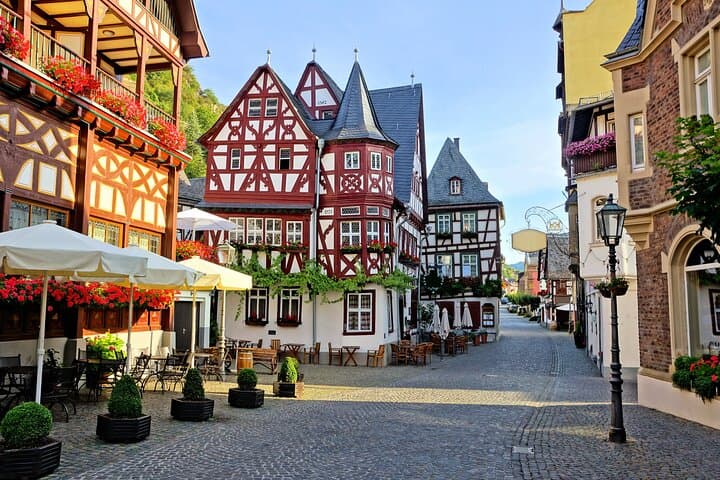

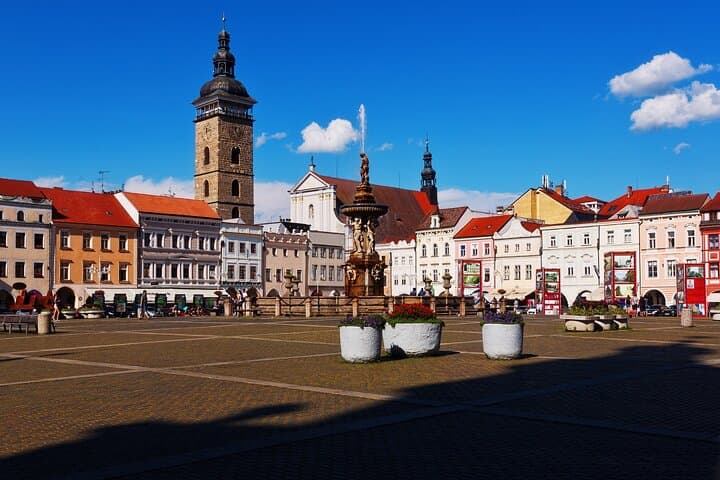
Morning light slants across red-tiled roofs as the Vltava dares you to follow its curve through Český Krumlov. In two hours a private guide leads your group up narrow, cobbled lanes, past carved doorways and under the multi-level arches of the Cloak Bridge, where the town spreads out like a living map.
Morning light slants across red-tiled roofs as the Vltava dares you to follow its curve through Český Krumlov. In two hours a private guide leads your group up narrow, cobbled lanes, past carved doorways and under the multi-level arches of the Cloak Bridge, where the town spreads out like a living map.
This small South Bohemian town rose around a 13th-century castle complex; its streets preserve Renaissance and Baroque façades and the 15th-century Church of St. Vitus. The castle tower, painted with vivid frescoes, commands views over the river’s bends and the layered rooftops below. Geologically, the valley was carved by the Vltava over millennia, producing the steep, walkable slopes and viewpoints that define the town’s compact topography.
Culture here pivots on art and history — the Egon Schiele Art Centrum recalls the artist’s brief residency and the town’s cross-border Austro-Hungarian past. Local life clusters around Namesti Svornosti, where cafés and markets give a sense of contemporary rhythm amid old stone.
Practical guidance: expect roughly 1.5–2 km of walking with 50–100 m of elevation gain and uneven cobblestones underfoot. Bring sturdy shoes, a light jacket for hilltop breezes, and a camera with steady grip for the tower’s panoramas. Public transit reaches the town; private tour status minimizes waits at popular viewpoints. Allow time at the end to linger over a riverside café — the quiet side streets often reveal small ateliers and bakery windows.