THE ADVENTURE COLLECTIVE® · Independent discovery and booking for outdoor travel

Skip the long transfers and take a private car from Aswan to Abu Simbel with an Egyptologist guide. Spend three focused hours at the relocated temples of Ramses II and Nefertari, then return to Aswan the same day.
Skip the long transfers and take a private car from Aswan to Abu Simbel with an Egyptologist guide. Spend three focused hours at the relocated temples of Ramses II and Nefertari, then return to Aswan the same day.
You arrive before the heat bends the horizon: a low desert road unspools from Aswan and the flat, ochre plain pushes you toward two hulking façades carved into sandstone that stare back at the sun. The colossal statues of Ramses II loom like guardians above the lake’s edge, and the wind moves across Lake Nasser with a deliberate, cooling patience.
Verified experiences and guided adventures in the surrounding area.
Operated by Luxor Private Day Tours · Abu Simbel, Aswan Governorate
You arrive before the heat bends the horizon: a low desert road unspools from Aswan and the flat, ochre plain pushes you toward two hulking façades carved into sandstone that stare back at the sun. The colossal statues of Ramses II loom like guardians above the lake’s edge, and the wind moves across Lake Nasser with a deliberate, cooling patience.
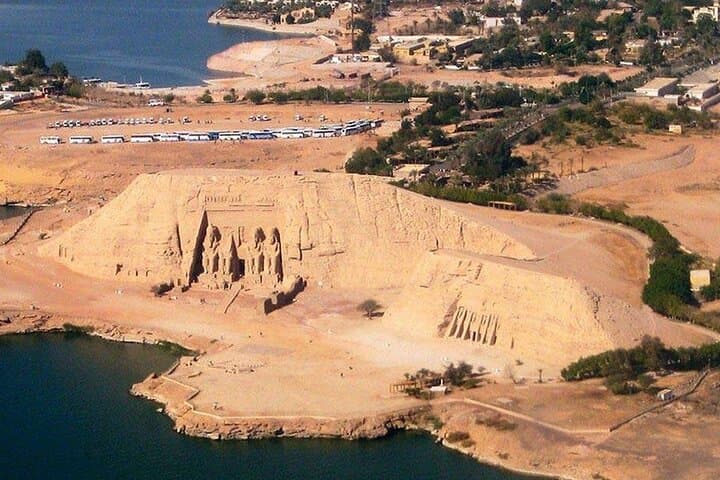
Carved in the 13th century BCE under Ramses II, Abu Simbel’s temples celebrate royal power and divine patronage — their placement on the lakefront speaks to both ritual and control of the Nile valley. Geologically the site sits on Nubian sandstone; centuries of sand, sun and infrequent flash flows have sculpted its surfaces. The 1960s international relocation saved the complex from inundation by the Aswan High Dam, an engineering drama now part of the site’s story.
Culturally, the site is compact but dense: statues, reliefs and the smaller temple to Nefertari reveal ritual role and royal imagery most travelers expect. Local guides—often Egyptologists—translate names and gestures that otherwise flatten into stone.
Practical guidance: this private, round-trip car tour is an eight-hour day with about three hours at the site; expect short walks on even, compacted ground and stair sections into the temple interiors. Sun protection, a filled water bottle, and steady footwear make the visit comfortable. Photography is allowed outside; interiors are dim and cooler—move slowly to take in carved registers and painted ceilings. Timing matters: early or late afternoon light softens the façades and cuts the desert glare. Respect roped-off areas, follow your guide’s route, and leave no trace on the ancient stone.
easy.
8 hours.
Light activity: suitable for travelers with basic mobility; involves short walks and stairs inside temples.
Admission is not included by default for many private car tours—confirm with your operator and purchase tickets on arrival or in advance when possible.
The private drive takes about three hours each way on a paved desert route; travel time varies with stops, traffic and border checks.
Photography is generally allowed inside and outside but avoid flash on fragile painted surfaces where signs restrict it; follow on-site rules.
Basic restrooms and a small visitor area exist near the site; bring snacks and water for the round trip as amenities are limited.
Constructed during Ramses II’s reign (circa 13th century BCE) and meticulously relocated in the 1960s to avoid dam flooding, Abu Simbel is both ancient monument and modern conservation story.
The 1960s UNESCO-led relocation preserved the temples, but ongoing tourism and fluctuating lake levels require respectful visitor behavior—stay on paths, avoid touching reliefs, and support licensed guides.
Luxor Private Day Tours operates guided outdoor trips and adventures with an emphasis on safety, stewardship, and memorable experiences.
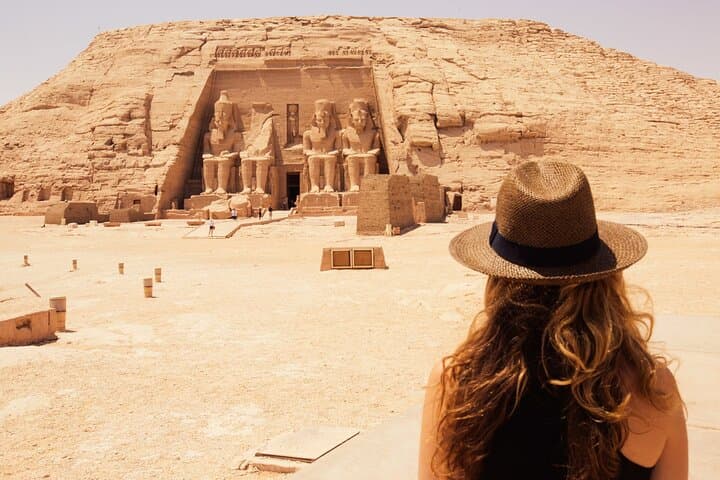
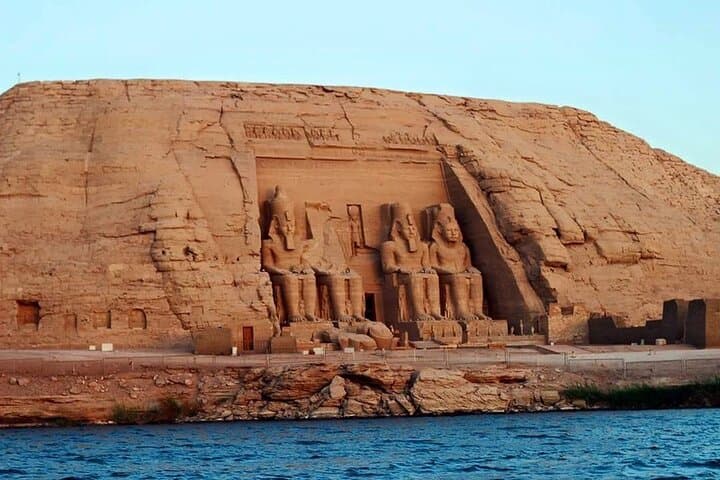

You arrive before the heat bends the horizon: a low desert road unspools from Aswan and the flat, ochre plain pushes you toward two hulking façades carved into sandstone that stare back at the sun. The colossal statues of Ramses II loom like guardians above the lake’s edge, and the wind moves across Lake Nasser with a deliberate, cooling patience.
You arrive before the heat bends the horizon: a low desert road unspools from Aswan and the flat, ochre plain pushes you toward two hulking façades carved into sandstone that stare back at the sun. The colossal statues of Ramses II loom like guardians above the lake’s edge, and the wind moves across Lake Nasser with a deliberate, cooling patience.
Carved in the 13th century BCE under Ramses II, Abu Simbel’s temples celebrate royal power and divine patronage — their placement on the lakefront speaks to both ritual and control of the Nile valley. Geologically the site sits on Nubian sandstone; centuries of sand, sun and infrequent flash flows have sculpted its surfaces. The 1960s international relocation saved the complex from inundation by the Aswan High Dam, an engineering drama now part of the site’s story.
Culturally, the site is compact but dense: statues, reliefs and the smaller temple to Nefertari reveal ritual role and royal imagery most travelers expect. Local guides—often Egyptologists—translate names and gestures that otherwise flatten into stone.
Practical guidance: this private, round-trip car tour is an eight-hour day with about three hours at the site; expect short walks on even, compacted ground and stair sections into the temple interiors. Sun protection, a filled water bottle, and steady footwear make the visit comfortable. Photography is allowed outside; interiors are dim and cooler—move slowly to take in carved registers and painted ceilings. Timing matters: early or late afternoon light softens the façades and cuts the desert glare. Respect roped-off areas, follow your guide’s route, and leave no trace on the ancient stone.