THE ADVENTURE COLLECTIVE® · Independent discovery and booking for outdoor travel

Spend a private day driving Cappadocia’s Red Tour loop—Devrent’s imagination valley, Pasabag’s hoodoos, Zelve’s cave settlement and Uchisar’s castle—paired with a local guide and short hikes. Expect dramatic rock formations, early Christian frescoes and a practical, crowd-smart itinerary.
Spend a private day driving Cappadocia’s Red Tour loop—Devrent’s imagination valley, Pasabag’s hoodoos, Zelve’s cave settlement and Uchisar’s castle—paired with a local guide and short hikes. Expect dramatic rock formations, early Christian frescoes and a practical, crowd-smart itinerary.
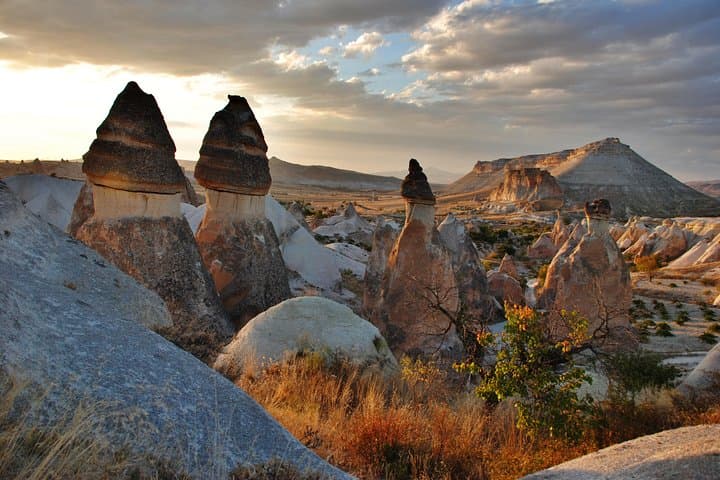
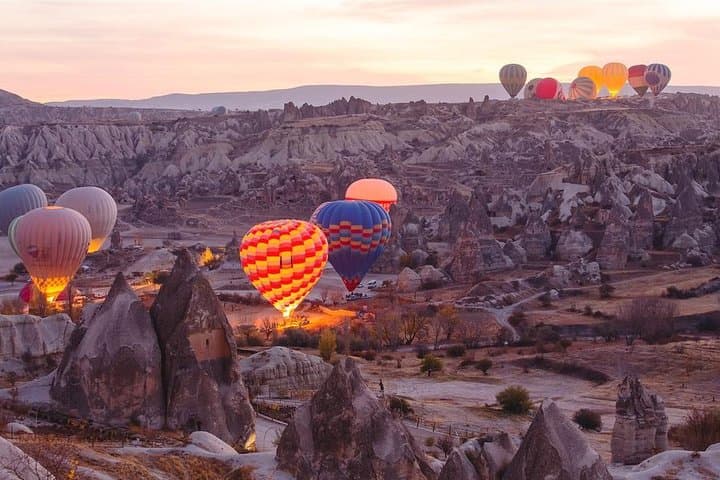
The morning light arrives low and cool over Göreme, washing the honey-colored cliffs in a pale gold that seems to make the stone breathe. You step into a Mercedes Sprinter and the driver threads quiet roads past vineyards and fields laid over miles of volcanic tuff. By the time the van pulls into Devrent Valley, the spires and hoodoos are already upright like characters from a story; some will stand mute and alien, others will pose as animals, daring your imagination to name them.
Verified experiences and guided adventures in the surrounding area.
Operated by Pupa Travel · Göreme, Nevşehir Province
The morning light arrives low and cool over Göreme, washing the honey-colored cliffs in a pale gold that seems to make the stone breathe. You step into a Mercedes Sprinter and the driver threads quiet roads past vineyards and fields laid over miles of volcanic tuff. By the time the van pulls into Devrent Valley, the spires and hoodoos are already upright like characters from a story; some will stand mute and alien, others will pose as animals, daring your imagination to name them.
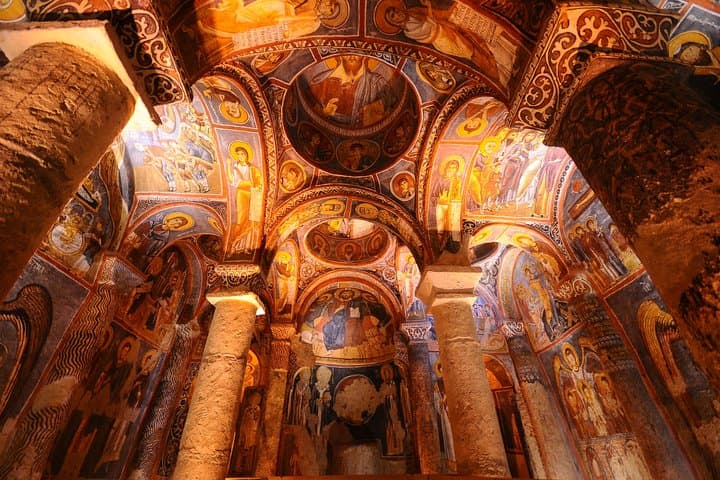
This Red Tour is a day-long circuit through Central Cappadocia’s most iconic geology and living history. The region began forming after eruptions from Mount Erciyes and Hasan three to five million years ago; ash consolidated into soft tuff that wind and water later carved into the fairy chimneys you see now. Humans followed—farmers and monks hollowed the soft rock, chiseling homes, monasteries and chapels whose frescoes survive in surprising vibrancy. At the Göreme Open Air Museum, 1,500-year-old cave churches still hold frescoes that feel shockingly immediate, saints and scenes watching over the valley like an unexpected gallery carved from stone.
Culturally the route threads small Anatolian villages: Pasabag’s mushroom-shaped columns, Zelve’s abandoned troglodyte streets that whisper of earlier daily life, and Uçhisar’s castle—an observation post turned panoramic landmark. The tour includes a stop at a local artisan shop where you can see Anatolian pottery and try a step or two in traditional craftwork; these moments are less spectacle and more local context—how people adapt to the geology that defines the landscape.
Practicalities matter on a packed day like this. Expect a 6–8 hour private excursion with multiple short walks on uneven trails and steps. Bring layered clothing: mornings can be crisp, afternoons warm. Shoes with good traction are essential for climbing over broken tuff and narrow ridge paths. Water, sunscreen, and a wide-brim hat make the day more comfortable; mornings are best for softer light and fewer crowds, while sunset casts the valleys into their most dramatic colors.
For photographers and planners: aim to arrive early at key viewpoints like Pigeon Valley and Uchisar Castle to avoid tour-bus congestion. Respect fragile rock and frescoes—do not touch painted surfaces—and stay on marked paths to reduce erosion. A private guide will pace the day to your group, providing history and local insights while navigating permits and parking, making this a practical and immersive way to see Cappadocia’s lunar landscapes without missing the history carved inside them.
easy.
6–8 hours.
Suitable for travelers in normal physical condition; involves short walks and some climbing on uneven ground.
The tour runs about 6–8 hours (360–480 minutes) and includes multiple short walks and photo stops.
Admission is not included in the base tour price—your guide can advise on tickets and wait times.
Yes—there’s typically a stop at a local restaurant or café; let the operator know dietary needs in advance.
Yes—infant seats are available and the itinerary is marked as physically easy, though some cave steps are steep.
This is a private tour, so your guide can adjust pacing and stops within the standard itinerary where possible.
The tour includes a private English-speaking guide; request other languages when booking to confirm availability.
Cappadocia’s cave churches and carved settlements date back to Byzantine and early Christian communities who used the soft tuff to create monastic complexes and painted chapels.
Erosion from visitor traffic threatens fragile formations and frescoes—stay on marked paths, avoid touching painted surfaces, and support local conservation funds when possible.
Pupa Travel operates guided outdoor trips and adventures with an emphasis on safety, stewardship, and memorable experiences.
The morning light arrives low and cool over Göreme, washing the honey-colored cliffs in a pale gold that seems to make the stone breathe. You step into a Mercedes Sprinter and the driver threads quiet roads past vineyards and fields laid over miles of volcanic tuff. By the time the van pulls into Devrent Valley, the spires and hoodoos are already upright like characters from a story; some will stand mute and alien, others will pose as animals, daring your imagination to name them.
The morning light arrives low and cool over Göreme, washing the honey-colored cliffs in a pale gold that seems to make the stone breathe. You step into a Mercedes Sprinter and the driver threads quiet roads past vineyards and fields laid over miles of volcanic tuff. By the time the van pulls into Devrent Valley, the spires and hoodoos are already upright like characters from a story; some will stand mute and alien, others will pose as animals, daring your imagination to name them.
This Red Tour is a day-long circuit through Central Cappadocia’s most iconic geology and living history. The region began forming after eruptions from Mount Erciyes and Hasan three to five million years ago; ash consolidated into soft tuff that wind and water later carved into the fairy chimneys you see now. Humans followed—farmers and monks hollowed the soft rock, chiseling homes, monasteries and chapels whose frescoes survive in surprising vibrancy. At the Göreme Open Air Museum, 1,500-year-old cave churches still hold frescoes that feel shockingly immediate, saints and scenes watching over the valley like an unexpected gallery carved from stone.
Culturally the route threads small Anatolian villages: Pasabag’s mushroom-shaped columns, Zelve’s abandoned troglodyte streets that whisper of earlier daily life, and Uçhisar’s castle—an observation post turned panoramic landmark. The tour includes a stop at a local artisan shop where you can see Anatolian pottery and try a step or two in traditional craftwork; these moments are less spectacle and more local context—how people adapt to the geology that defines the landscape.
Practicalities matter on a packed day like this. Expect a 6–8 hour private excursion with multiple short walks on uneven trails and steps. Bring layered clothing: mornings can be crisp, afternoons warm. Shoes with good traction are essential for climbing over broken tuff and narrow ridge paths. Water, sunscreen, and a wide-brim hat make the day more comfortable; mornings are best for softer light and fewer crowds, while sunset casts the valleys into their most dramatic colors.
For photographers and planners: aim to arrive early at key viewpoints like Pigeon Valley and Uchisar Castle to avoid tour-bus congestion. Respect fragile rock and frescoes—do not touch painted surfaces—and stay on marked paths to reduce erosion. A private guide will pace the day to your group, providing history and local insights while navigating permits and parking, making this a practical and immersive way to see Cappadocia’s lunar landscapes without missing the history carved inside them.