THE ADVENTURE COLLECTIVE® · Independent discovery and booking for outdoor travel

Spend a private day moving through Cappadocia’s sculpted valleys and ancient cave sites with a local guide. This full-day itinerary hits Paşabağ, Love Valley, Zelve, Uçhisar Castle and Avanos pottery workshops, with hotel pickup and flexible pacing.
Spend a private day moving through Cappadocia’s sculpted valleys and ancient cave sites with a local guide. This full-day itinerary hits Paşabağ, Love Valley, Zelve, Uçhisar Castle and Avanos pottery workshops, with hotel pickup and flexible pacing.
You step out of an air-conditioned van onto a plateau that feels older than language. Morning light spills across mushroom-shaped pinnacles—fairy chimneys scored by wind and rain—and your guide points to a cluster of multi-capped formations that seem to balance by accident and geology. The air smells faintly of sun-baked clay; somewhere below, a potter begins the day at a wheel beside the Kızılırmak River.
Verified experiences and guided adventures in the surrounding area.
Operated by Cappadocia Route Travel · Göreme, Nevşehir Province
You step out of an air-conditioned van onto a plateau that feels older than language. Morning light spills across mushroom-shaped pinnacles—fairy chimneys scored by wind and rain—and your guide points to a cluster of multi-capped formations that seem to balance by accident and geology. The air smells faintly of sun-baked clay; somewhere below, a potter begins the day at a wheel beside the Kızılırmak River.
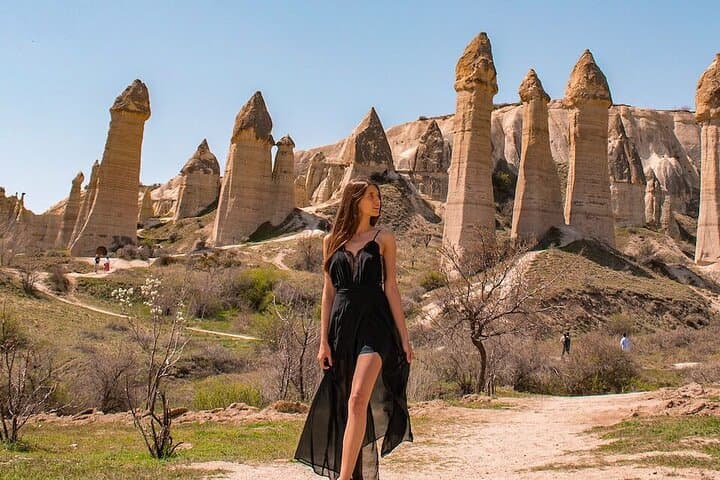
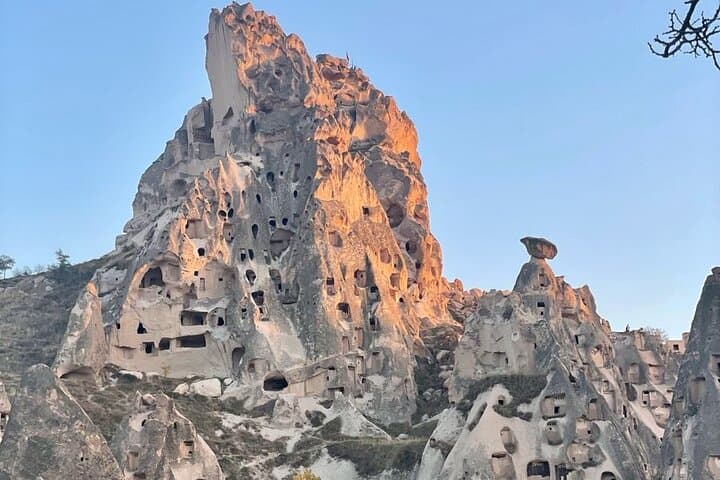
This private full-day tour strings together Cappadocia’s most cinematic landscapes with local cultural stops: Paşabağ (Monks Valley) for the shock of stacked chimneys, Love Valley’s improbable columns seen best from the viewpoint terrace, the layered caverns of Zelve Open Air Museum where Byzantine-era life still reads on cave walls, and Uçhisar Castle, the region’s highest overlook. You’ll also have time in Avanos to watch—and try—centuries-old pottery techniques using the river’s red clay.
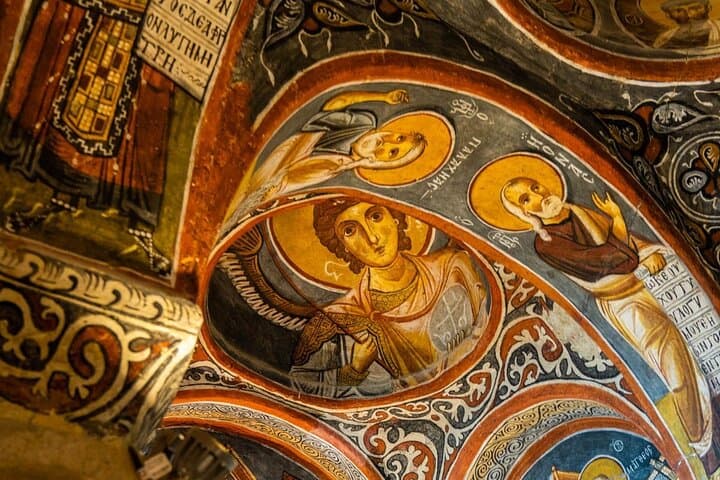
Geologically, Cappadocia is the work of fire and patience. Millennia of volcanic ash hardened into tuff, then rivers and wind carved the soft rock into spires and caves. Human hands layered onto that canvas: early Christians hollowed hermitages and frescoed churches into the stone; Ottoman and Anatolian communities added workshops, homes and mosques. The result is a landscape where geology and culture trade places.
Practicalities are straightforward. The tour runs about nine hours with hotel pickup and drop-off in Göreme and nearby towns. Walks between viewpoints are generally short but uneven—expect dirt tracks, loose gravel, and steps cut into soft rock. Your guide handles logistics and entrance details; some sites have small admission fees. Bring a daypack, snacks if you want longer breaks in Avanos, and enough water: temperatures swing quickly between sun and shade.
Timing matters. Sunrise brings a carpet of balloons over Göreme and softer light for photography; sunset warms the tuff to ochre and rose. If you have mobility concerns, ask for modified stops—many vistas are accessible by vehicle while trails remain optional.
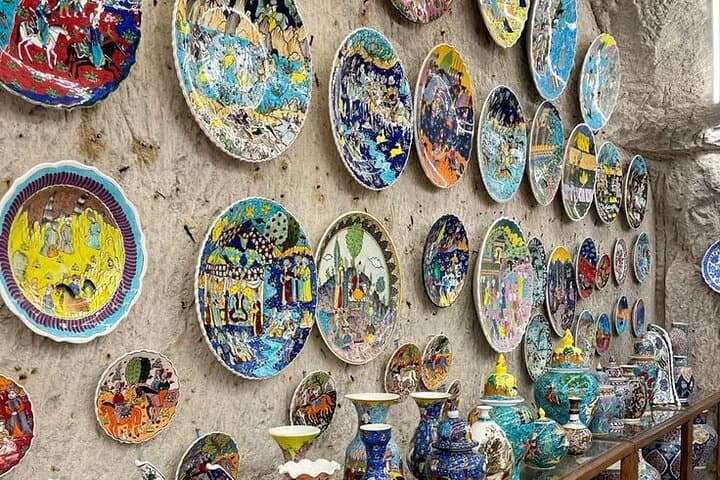
Culturally, Avanos offers the human counterweight: potters who still mix and shape clay with the same motions their grandparents used. Respect workshops by photographing with permission and buying a small piece if you can—local crafts support these fragile economies.
For comfort and safety: layered clothing, sturdy walking shoes, sun protection and plenty of water will keep the day enjoyable. The landscape wants to be explored slowly—let the guide set the pace and you’ll leave with photographs, a few local stories, and a clearer sense of how time and erosion made this extraordinary place.
easy.
9 hours.
Suitable for travelers in average physical condition; involves short walks over uneven terrain and some steps
The guide typically handles logistics; some sites charge small admissions not always included—confirm at booking to know which fees are covered.
Yes—tour notes list it as physically easy; infants can sit on laps and strollers may be used for short distances, but some paths are uneven.
Balloons fly at sunrise; this full-day tour visits viewpoints where balloons may be visible in the morning, but the tour isn’t a balloon flight itself.
This is a private tour with flexible pacing—guides often adjust stops based on interests and mobility needs, within the nine-hour window.
Yes—workshops often welcome visitors to watch and try the wheel; it's customary to ask permission and expect a small fee for a hands-on session.
Operators provide professional licensed local guides; ask at booking which languages are available to ensure a match.
Cappadocia’s cave dwellings and churches date back to Byzantine and early Christian communities who carved sanctuaries into the soft tuff; Avanos carries a pottery tradition tied to the Kızılırmak River’s clay for millennia.
Erosion is an ongoing natural process accelerated by foot traffic—stick to marked paths, avoid climbing fragile formations, and support local conservation efforts by following guide instructions.
Cappadocia Route Travel operates guided outdoor trips and adventures with an emphasis on safety, stewardship, and memorable experiences.
You step out of an air-conditioned van onto a plateau that feels older than language. Morning light spills across mushroom-shaped pinnacles—fairy chimneys scored by wind and rain—and your guide points to a cluster of multi-capped formations that seem to balance by accident and geology. The air smells faintly of sun-baked clay; somewhere below, a potter begins the day at a wheel beside the Kızılırmak River.
You step out of an air-conditioned van onto a plateau that feels older than language. Morning light spills across mushroom-shaped pinnacles—fairy chimneys scored by wind and rain—and your guide points to a cluster of multi-capped formations that seem to balance by accident and geology. The air smells faintly of sun-baked clay; somewhere below, a potter begins the day at a wheel beside the Kızılırmak River.
This private full-day tour strings together Cappadocia’s most cinematic landscapes with local cultural stops: Paşabağ (Monks Valley) for the shock of stacked chimneys, Love Valley’s improbable columns seen best from the viewpoint terrace, the layered caverns of Zelve Open Air Museum where Byzantine-era life still reads on cave walls, and Uçhisar Castle, the region’s highest overlook. You’ll also have time in Avanos to watch—and try—centuries-old pottery techniques using the river’s red clay.
Geologically, Cappadocia is the work of fire and patience. Millennia of volcanic ash hardened into tuff, then rivers and wind carved the soft rock into spires and caves. Human hands layered onto that canvas: early Christians hollowed hermitages and frescoed churches into the stone; Ottoman and Anatolian communities added workshops, homes and mosques. The result is a landscape where geology and culture trade places.
Practicalities are straightforward. The tour runs about nine hours with hotel pickup and drop-off in Göreme and nearby towns. Walks between viewpoints are generally short but uneven—expect dirt tracks, loose gravel, and steps cut into soft rock. Your guide handles logistics and entrance details; some sites have small admission fees. Bring a daypack, snacks if you want longer breaks in Avanos, and enough water: temperatures swing quickly between sun and shade.
Timing matters. Sunrise brings a carpet of balloons over Göreme and softer light for photography; sunset warms the tuff to ochre and rose. If you have mobility concerns, ask for modified stops—many vistas are accessible by vehicle while trails remain optional.
Culturally, Avanos offers the human counterweight: potters who still mix and shape clay with the same motions their grandparents used. Respect workshops by photographing with permission and buying a small piece if you can—local crafts support these fragile economies.
For comfort and safety: layered clothing, sturdy walking shoes, sun protection and plenty of water will keep the day enjoyable. The landscape wants to be explored slowly—let the guide set the pace and you’ll leave with photographs, a few local stories, and a clearer sense of how time and erosion made this extraordinary place.