THE ADVENTURE COLLECTIVE® · Independent discovery and booking for outdoor travel

Learn capoeira in a private, two-hour session at a 5,000 m² tropical camp near Salvador. Expect music-driven drills, partner games, and a post-class lunch with fresh fruit juice.
Learn capoeira in a private, two-hour session at a 5,000 m² tropical camp near Salvador. Expect music-driven drills, partner games, and a post-class lunch with fresh fruit juice.
You arrive at a sun-warmed clearing where palms release salt-bright breezes that dare you forward. The camp occupies a 5,000 m² tropical plot on the edges of Salvador’s metro area; under a shade roof and on soft grass a single teacher waits with a berimbau rhythm in mind. The session begins with a deliberate warm-up and stretching—then the roda opens and capoeira’s push-and-pull takes over: kicks that arc like tides, sweeps that test your balance, and partner games that sharpen timing.
Verified experiences and guided adventures in the surrounding area.
Operated by BAHIA VACATION DAY TOURS · Salvador, Bahia
You arrive at a sun-warmed clearing where palms release salt-bright breezes that dare you forward. The camp occupies a 5,000 m² tropical plot on the edges of Salvador’s metro area; under a shade roof and on soft grass a single teacher waits with a berimbau rhythm in mind. The session begins with a deliberate warm-up and stretching—then the roda opens and capoeira’s push-and-pull takes over: kicks that arc like tides, sweeps that test your balance, and partner games that sharpen timing.
Capoeira grew in Bahia from West African roots and colonial resistance; the movement blends fight, dance and music. In Abrantes the form is lived as much as taught—expect stories about mestres, calls and responses, and an afternoon lull by the pool veranda where lunch arrives with fresh fruit juice.
Practical guidance: this is a private, two-hour session adaptable for beginners through advanced students; the teacher speaks basic English and a translator is usually available. The camp recommends a moderate fitness level—no heavy acrobatics required for beginners, but you will be on your feet and on the ground. Bring trainers with good grip, a refillable water bottle, rash guard or light layers, and a towel if you plan to stay at the pool afterward.
Timing matters: early morning or late afternoon avoids the strongest sun. Respect local etiquette—greet the teacher, listen for musical cues, and enter the roda only when invited. The experience is as much cultural exchange as workout: sweat, rhythm and history in an unmistakably Bahian setting.
moderate.
2–4 hours.
Moderate—able to stand, squat, and perform basic kicks and rolls; good balance helps.
No—classes are tailored for beginners through advanced practitioners; the teacher will scale drills to your level.
The private session runs two hours and includes warm-up, technique and partner work, plus lunch with bottled water and fresh fruit juice.
Yes for older, active children with parental consent; note the provider requests moderate fitness and does not recommend for those with spinal or serious heart conditions.
The instructor speaks basic English and a translator is typically available for non-Portuguese speakers.
Capoeira emerged in Bahia among enslaved Africans and their descendants as a concealed form of resistance, evolving into a dance-fight-music form central to Bahian culture.
The camp operates on private grounds—minimize waste, use provided water sparingly, and avoid trampling native plants to keep the space sustainable.
BAHIA VACATION DAY TOURS operates guided outdoor trips and adventures with an emphasis on safety, stewardship, and memorable experiences.
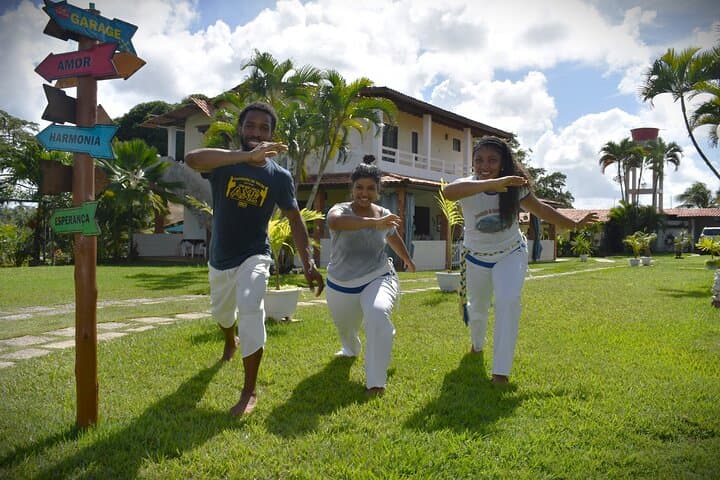
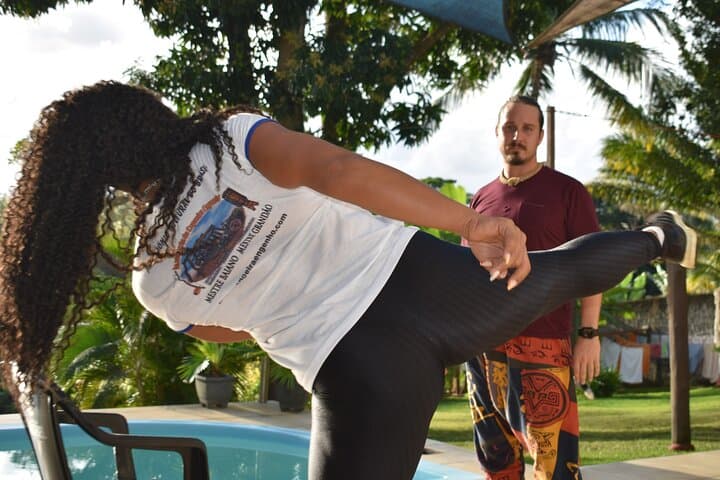
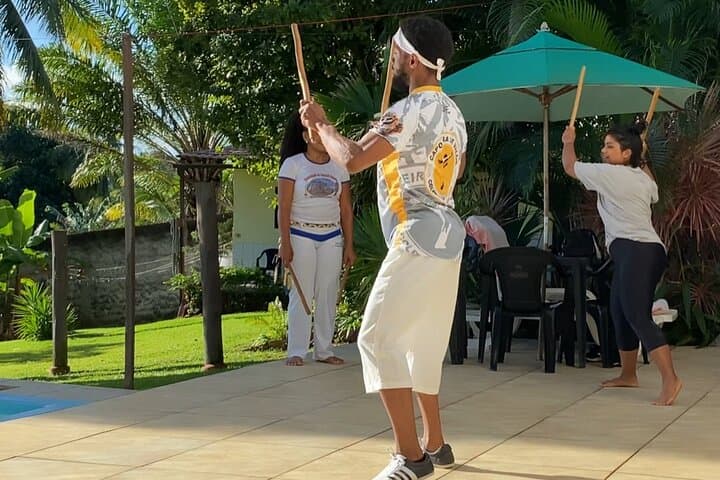
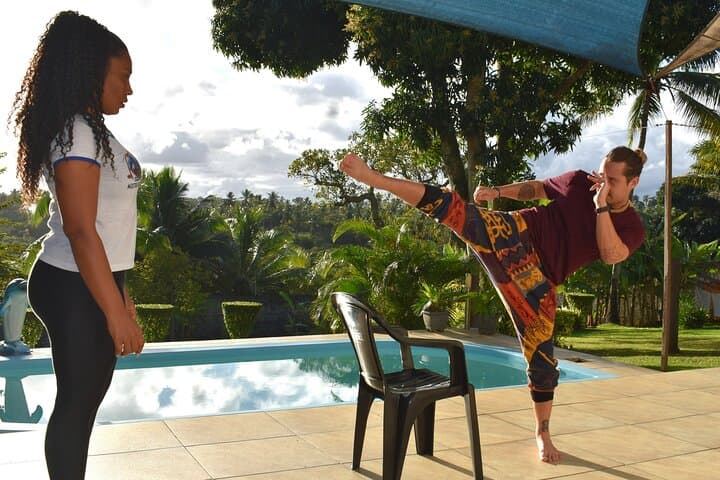
You arrive at a sun-warmed clearing where palms release salt-bright breezes that dare you forward. The camp occupies a 5,000 m² tropical plot on the edges of Salvador’s metro area; under a shade roof and on soft grass a single teacher waits with a berimbau rhythm in mind. The session begins with a deliberate warm-up and stretching—then the roda opens and capoeira’s push-and-pull takes over: kicks that arc like tides, sweeps that test your balance, and partner games that sharpen timing.
You arrive at a sun-warmed clearing where palms release salt-bright breezes that dare you forward. The camp occupies a 5,000 m² tropical plot on the edges of Salvador’s metro area; under a shade roof and on soft grass a single teacher waits with a berimbau rhythm in mind. The session begins with a deliberate warm-up and stretching—then the roda opens and capoeira’s push-and-pull takes over: kicks that arc like tides, sweeps that test your balance, and partner games that sharpen timing.
Capoeira grew in Bahia from West African roots and colonial resistance; the movement blends fight, dance and music. In Abrantes the form is lived as much as taught—expect stories about mestres, calls and responses, and an afternoon lull by the pool veranda where lunch arrives with fresh fruit juice.
Practical guidance: this is a private, two-hour session adaptable for beginners through advanced students; the teacher speaks basic English and a translator is usually available. The camp recommends a moderate fitness level—no heavy acrobatics required for beginners, but you will be on your feet and on the ground. Bring trainers with good grip, a refillable water bottle, rash guard or light layers, and a towel if you plan to stay at the pool afterward.
Timing matters: early morning or late afternoon avoids the strongest sun. Respect local etiquette—greet the teacher, listen for musical cues, and enter the roda only when invited. The experience is as much cultural exchange as workout: sweat, rhythm and history in an unmistakably Bahian setting.