THE ADVENTURE COLLECTIVE® · Independent discovery and booking for outdoor travel

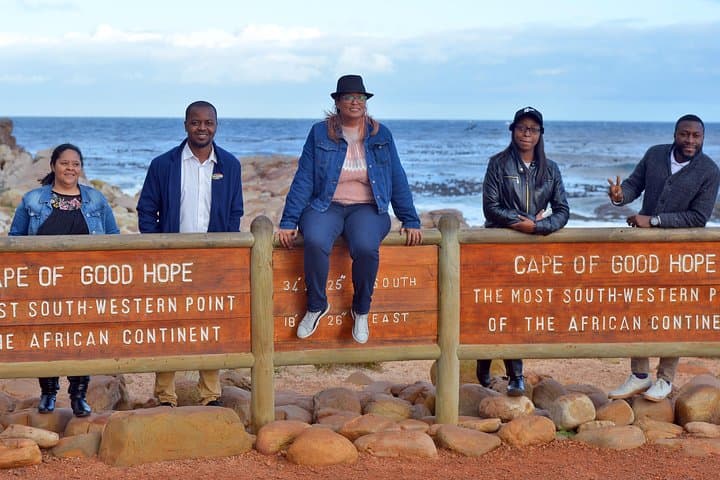
Drive one of the world’s most dramatic coastal roads, stand at the southwestern tip of Africa and meet African penguins at close quarters. This private Cape Peninsula tour from Cape Town blends cliffs, history and wildlife into a customizable full-day adventure.
Drive one of the world’s most dramatic coastal roads, stand at the southwestern tip of Africa and meet African penguins at close quarters. This private Cape Peninsula tour from Cape Town blends cliffs, history and wildlife into a customizable full-day adventure.
You slide out of the city before the commuter crush and the Atlantic rises up to meet you — a slab of blue that seems to breathe. The private vehicle threads Chapman's Peak Drive, hugging sheer drops where wind and sea have shaped the rock into sharp ribs. Your guide, voice low over the engine, points to a thin white line of foam and says: that’s where two oceans argue. It feels less like sightseeing and more like being let into a secret coastline.
Verified experiences and guided adventures in the surrounding area.
Operated by Kasi Africa Safari & Tours · Cape Town, Western Cape
You slide out of the city before the commuter crush and the Atlantic rises up to meet you — a slab of blue that seems to breathe. The private vehicle threads Chapman's Peak Drive, hugging sheer drops where wind and sea have shaped the rock into sharp ribs. Your guide, voice low over the engine, points to a thin white line of foam and says: that’s where two oceans argue. It feels less like sightseeing and more like being let into a secret coastline.
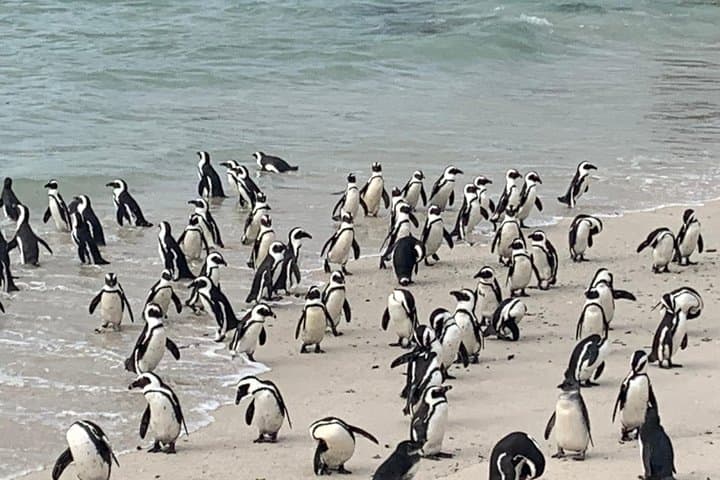
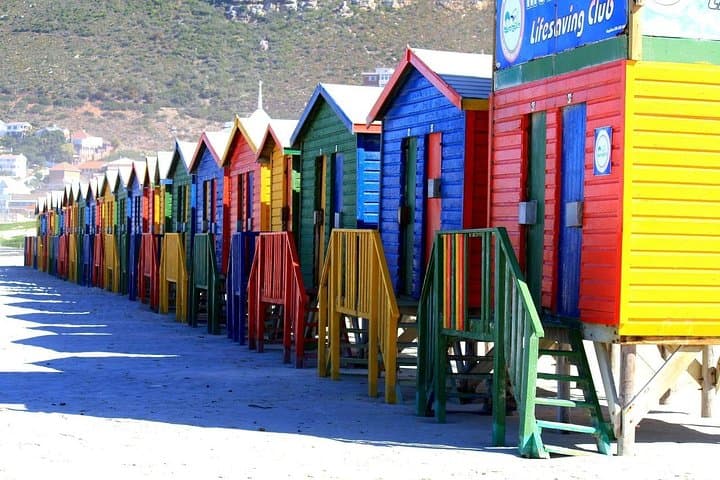
The route across the Cape Peninsula folds colonial history, naval lore and geological drama into a single day. Bo-Kaap's painted houses recall Cape Town’s Malay and slave histories; Simon’s Town carries the echo of a Royal Navy base; Cape Point is the eroded tail of Table Mountain’s granite, thrusting into the meeting zone of the Benguela and Agulhas currents. The penguin colony at Boulders Beach is a relatively recent story — a small, resilient population that found shelter in the granite boulders after years of human reshaping of the shore.
The day offers a range of terrain in miniature: cliffside viewpoints, short grassy walks around the Cape Point lighthouse, boardwalks through penguin nesting areas, and a stroll along sheltered beaches. Distances are modest — expect several short walks of 500–2,000 meters each, mostly flat but occasionally over uneven, rocky paths and boardwalk steps. Elevation changes are gentle at the beaches and can be steeper near the lighthouse and Cape Point outlooks.
Practical edges: this is a long, full-day outing (about 8–9 hours) so hydration and sun protection matter as much as curiosity. Timing changes everything — morning light softens the cliffs and keeps the penguins active; late afternoon delivers low-angle gold along Chapman's Peak. Guides tailor stops to your group, which means more photo time or a longer coffee in Hout Bay if that’s what you want. Bottled water, pickup and drop-off are provided; park entrance policies vary, so have some local currency for Cape Point SANParks fees if not included.
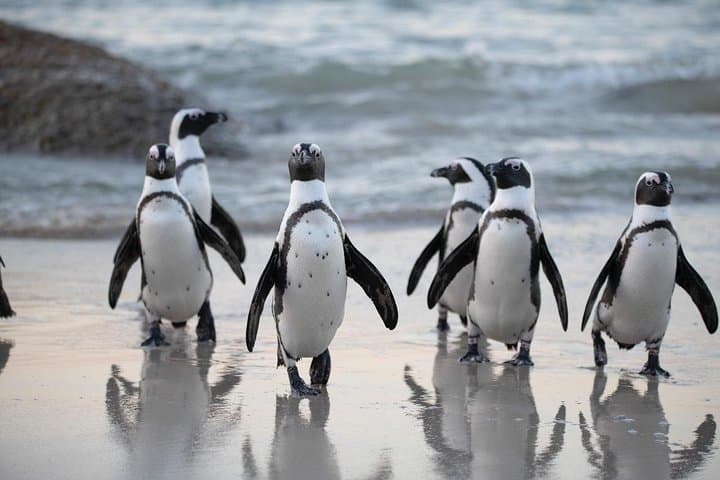
For wildlife viewing, follow your guide’s instructions: the penguins tolerate human presence when visitors stay on boardwalks and keep noise low. Baboons are opportunistic — keep bags closed and snacks stowed. Footwear should handle sand, salt-spray rock and brief gravel stretches. If you want close shutter access, bring a zoom lens and a neutral attitude: conservation rules are strict to protect the vulnerable penguin colony.
At the end of the day you’ll have a clearer sense of why the Cape is both a navigational challenge and a magnet for people seeking raw coastline — an accessible, concentrated landscape where geology, history and wildlife resolve themselves into urgent, photographable moments.
easy.
8–9 hours.
Mostly seated in a vehicle with short flat walks; suitable for all fitness levels but expect up to 2 km of walking across uneven boardwalks and rocky outlooks.
Visits include Boulders Beach viewing areas where African penguins are usually present, but wildlife sightings cannot be absolutely guaranteed.
Chapman’s Peak entry is listed as included; SANParks fees for Cape Point are sometimes additional — confirm at booking or bring local currency.
Yes — the tour offers pickup from most Cape Town hotels and selected ports and the provider coordinates specific pickup points.
The listing indicates wheelchair-accessible transportation and surfaces for many stops, but some viewpoints and boardwalks have steps — check in advance for specific access needs.
Boardwalks and viewing platforms keep visitors at a respectful distance to protect penguins and nests; your guide will enforce rules to avoid disturbance.
Swimming is generally not part of the itinerary; ocean currents are strong and beaches visited are primarily for viewing and short shore-side walks.
Simon’s Town grew as a strategic naval base under British rule, while Bo-Kaap reflects Cape Malay culture shaped during the colonial slave period.
The African penguin is endangered; stay on boardwalks, avoid feeding wildlife and support local conservation fees to help protect colonies.
Kasi Africa Safari & Tours operates guided outdoor trips and adventures with an emphasis on safety, stewardship, and memorable experiences.
You slide out of the city before the commuter crush and the Atlantic rises up to meet you — a slab of blue that seems to breathe. The private vehicle threads Chapman's Peak Drive, hugging sheer drops where wind and sea have shaped the rock into sharp ribs. Your guide, voice low over the engine, points to a thin white line of foam and says: that’s where two oceans argue. It feels less like sightseeing and more like being let into a secret coastline.
You slide out of the city before the commuter crush and the Atlantic rises up to meet you — a slab of blue that seems to breathe. The private vehicle threads Chapman's Peak Drive, hugging sheer drops where wind and sea have shaped the rock into sharp ribs. Your guide, voice low over the engine, points to a thin white line of foam and says: that’s where two oceans argue. It feels less like sightseeing and more like being let into a secret coastline.
The route across the Cape Peninsula folds colonial history, naval lore and geological drama into a single day. Bo-Kaap's painted houses recall Cape Town’s Malay and slave histories; Simon’s Town carries the echo of a Royal Navy base; Cape Point is the eroded tail of Table Mountain’s granite, thrusting into the meeting zone of the Benguela and Agulhas currents. The penguin colony at Boulders Beach is a relatively recent story — a small, resilient population that found shelter in the granite boulders after years of human reshaping of the shore.
The day offers a range of terrain in miniature: cliffside viewpoints, short grassy walks around the Cape Point lighthouse, boardwalks through penguin nesting areas, and a stroll along sheltered beaches. Distances are modest — expect several short walks of 500–2,000 meters each, mostly flat but occasionally over uneven, rocky paths and boardwalk steps. Elevation changes are gentle at the beaches and can be steeper near the lighthouse and Cape Point outlooks.
Practical edges: this is a long, full-day outing (about 8–9 hours) so hydration and sun protection matter as much as curiosity. Timing changes everything — morning light softens the cliffs and keeps the penguins active; late afternoon delivers low-angle gold along Chapman's Peak. Guides tailor stops to your group, which means more photo time or a longer coffee in Hout Bay if that’s what you want. Bottled water, pickup and drop-off are provided; park entrance policies vary, so have some local currency for Cape Point SANParks fees if not included.
For wildlife viewing, follow your guide’s instructions: the penguins tolerate human presence when visitors stay on boardwalks and keep noise low. Baboons are opportunistic — keep bags closed and snacks stowed. Footwear should handle sand, salt-spray rock and brief gravel stretches. If you want close shutter access, bring a zoom lens and a neutral attitude: conservation rules are strict to protect the vulnerable penguin colony.
At the end of the day you’ll have a clearer sense of why the Cape is both a navigational challenge and a magnet for people seeking raw coastline — an accessible, concentrated landscape where geology, history and wildlife resolve themselves into urgent, photographable moments.