THE ADVENTURE COLLECTIVE® · Independent discovery and booking for outdoor travel

A private, full‑day tour focused on the Canadian landings at Juno Beach. Visit Courseulles, the Juno Beach Centre, the Mulberry harbour at Arromanches and Longues‑sur‑Mer with a knowledgeable driver‑guide and air‑conditioned transport.
A private, full‑day tour focused on the Canadian landings at Juno Beach. Visit Courseulles, the Juno Beach Centre, the Mulberry harbour at Arromanches and Longues‑sur‑Mer with a knowledgeable driver‑guide and air‑conditioned transport.
You step out of a Mercedes V‑Class onto a wind‑cut strip of sand where the English Channel still pushes stories ashore. Courseulles’ shore light is flat and clear; gulls wheel above the pale concrete of wartime defenses that keep their mute vigil. The guide closes the door and a careful, matter‑of‑fact narration begins — dates, units, and the human cost — while the sea keeps moving on its old timetable.
Verified experiences and guided adventures in the surrounding area.
Operated by Destination Normandy - Dominique Fiquet · Bayeux, Normandy
You step out of a Mercedes V‑Class onto a wind‑cut strip of sand where the English Channel still pushes stories ashore. Courseulles’ shore light is flat and clear; gulls wheel above the pale concrete of wartime defenses that keep their mute vigil. The guide closes the door and a careful, matter‑of‑fact narration begins — dates, units, and the human cost — while the sea keeps moving on its old timetable.
The route follows the Canadian landing zone: Juno Beach and Courseulles, then the engineered Mulberry harbour at Arromanches and the Longues‑sur‑Mer battery perched on the cliff edge. Geology is simple but telling here — low chalk cliffs and mixed sand flats that shaped landing tactics and exposed equipment to tidal rage. Culture in these villages is quiet: small cafés, commemorative plaques, and the Juno Beach Centre, Canada’s principal museum on the D‑Day shoreline, which frames wartime actions alongside modern Canadian society.
Practical guidance: this is a largely road‑based private tour with short walks on uneven beaches, seawalls, and cemetery lawns — plan for 8 hours. Wear grippy shoes and a windproof layer; tides can make some shore sections damp and the wind sharp. Bring your passport or ID if required for museum entry, and be prepared to move respectfully through cemeteries and memorials. Photography is allowed in most outdoor sites, but allow moments of silence and follow your guide’s directions.
The experience is a measured blend of moving history, coastal landscape, and local remembrance — designed for visitors who want context, clarity, and a full‑day immersion in Canada’s Normandy story.
easy.
8 hours.
Suitable for most fitness levels; expect short walks of up to 20–30 minutes on sand, shingle or uneven surfaces at several stops.
This private tour runs about 8 hours and includes multiple stops along Juno Beach, Arromanches and Longues‑sur‑Mer.
Tickets to the Juno Beach Centre museum are included in the tour price as noted in the itinerary.
Yes — the itinerary notes the tour is suitable for all physical fitness levels, with short, manageable walks at most stops.
Pickup is offered from hotels in the defined area; the operator will meet you in your hotel lobby and coordinates exact pickup at booking.
Juno Beach was the primary landing sector for Canadian forces on 6 June 1944; their actions were crucial to securing the central Normandy beaches and linking the British and American sectors.
Coastal erosion and visitor pressure require respectful behavior: stay on marked paths, don’t remove artifacts, and follow museum guidance to protect fragile sites.
Destination Normandy - Dominique Fiquet operates guided outdoor trips and adventures with an emphasis on safety, stewardship, and memorable experiences.
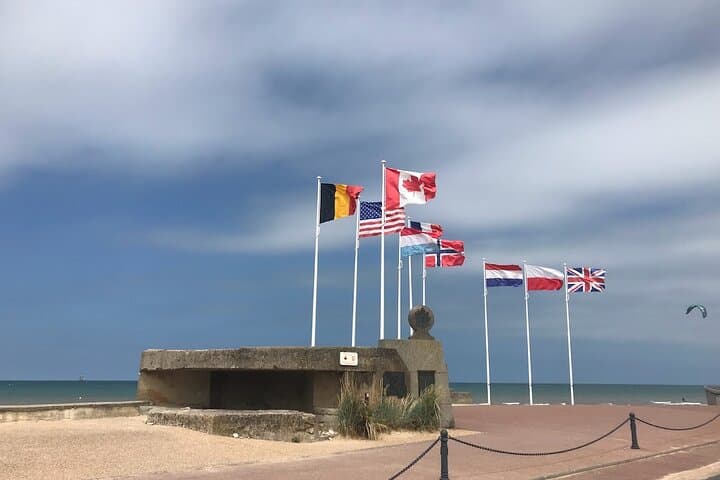
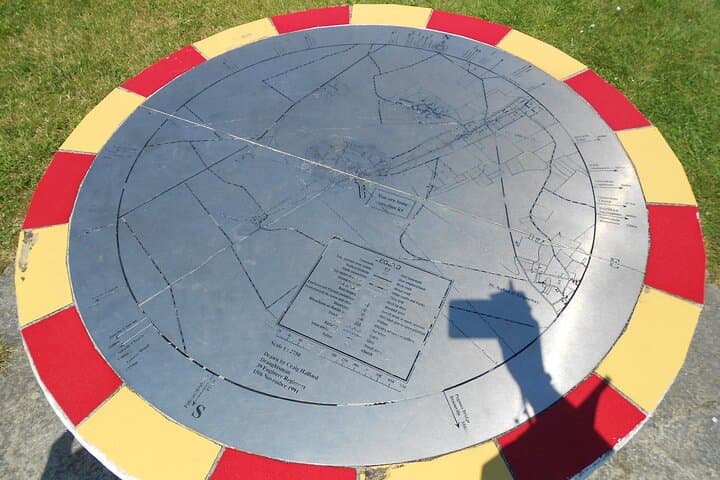
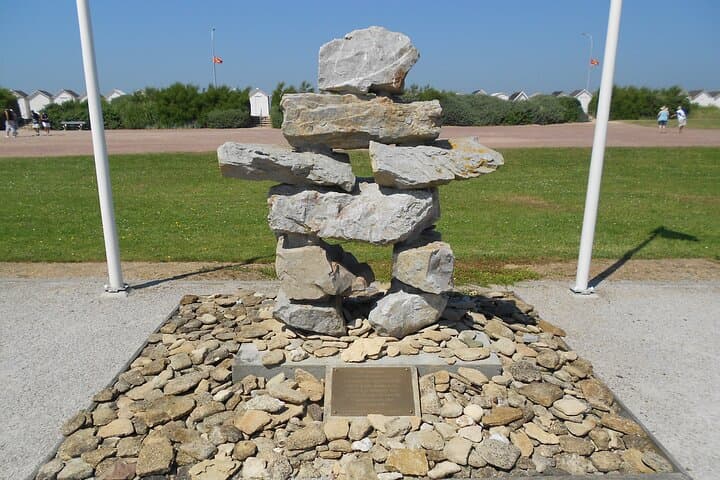
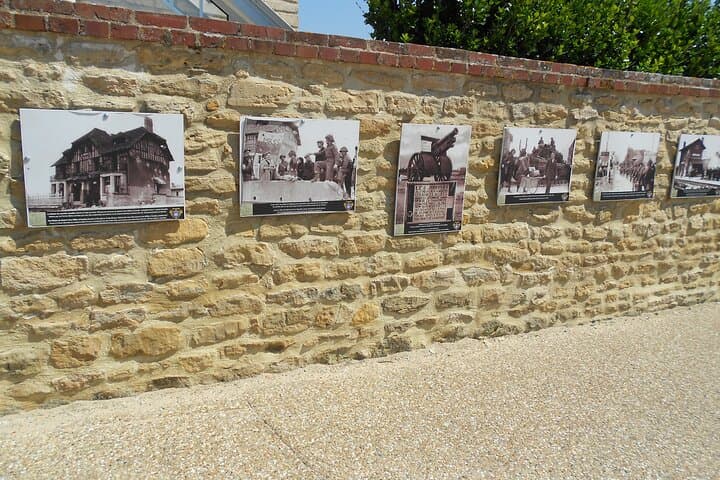
You step out of a Mercedes V‑Class onto a wind‑cut strip of sand where the English Channel still pushes stories ashore. Courseulles’ shore light is flat and clear; gulls wheel above the pale concrete of wartime defenses that keep their mute vigil. The guide closes the door and a careful, matter‑of‑fact narration begins — dates, units, and the human cost — while the sea keeps moving on its old timetable.
You step out of a Mercedes V‑Class onto a wind‑cut strip of sand where the English Channel still pushes stories ashore. Courseulles’ shore light is flat and clear; gulls wheel above the pale concrete of wartime defenses that keep their mute vigil. The guide closes the door and a careful, matter‑of‑fact narration begins — dates, units, and the human cost — while the sea keeps moving on its old timetable.
The route follows the Canadian landing zone: Juno Beach and Courseulles, then the engineered Mulberry harbour at Arromanches and the Longues‑sur‑Mer battery perched on the cliff edge. Geology is simple but telling here — low chalk cliffs and mixed sand flats that shaped landing tactics and exposed equipment to tidal rage. Culture in these villages is quiet: small cafés, commemorative plaques, and the Juno Beach Centre, Canada’s principal museum on the D‑Day shoreline, which frames wartime actions alongside modern Canadian society.
Practical guidance: this is a largely road‑based private tour with short walks on uneven beaches, seawalls, and cemetery lawns — plan for 8 hours. Wear grippy shoes and a windproof layer; tides can make some shore sections damp and the wind sharp. Bring your passport or ID if required for museum entry, and be prepared to move respectfully through cemeteries and memorials. Photography is allowed in most outdoor sites, but allow moments of silence and follow your guide’s directions.
The experience is a measured blend of moving history, coastal landscape, and local remembrance — designed for visitors who want context, clarity, and a full‑day immersion in Canada’s Normandy story.