THE ADVENTURE COLLECTIVE® · Independent discovery and booking for outdoor travel

Ride a dromedary into the dunes south of Douz on a private, one-hour trek guided by a local handler. This short Sahara experience is ideal for first-time riders and those wanting an intimate introduction to desert landscapes and Bedouin culture.
Ride a dromedary into the dunes south of Douz on a private, one-hour trek guided by a local handler. This short Sahara experience is ideal for first-time riders and those wanting an intimate introduction to desert landscapes and Bedouin culture.
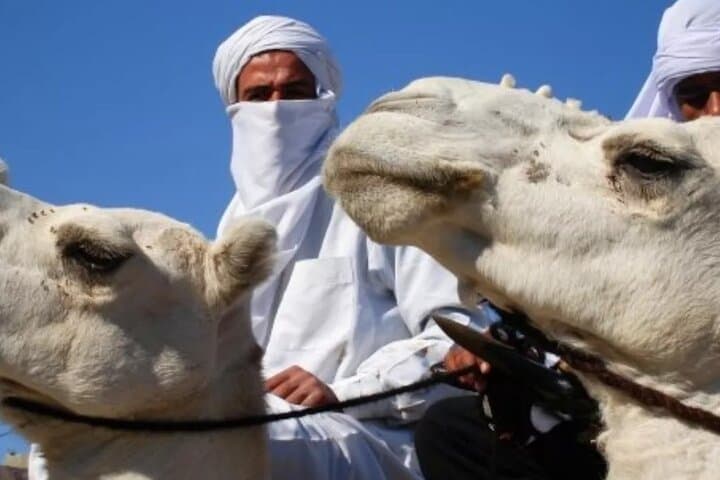
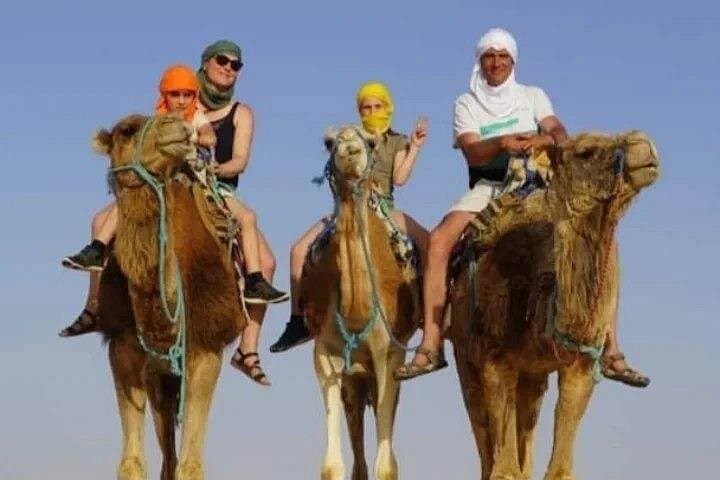
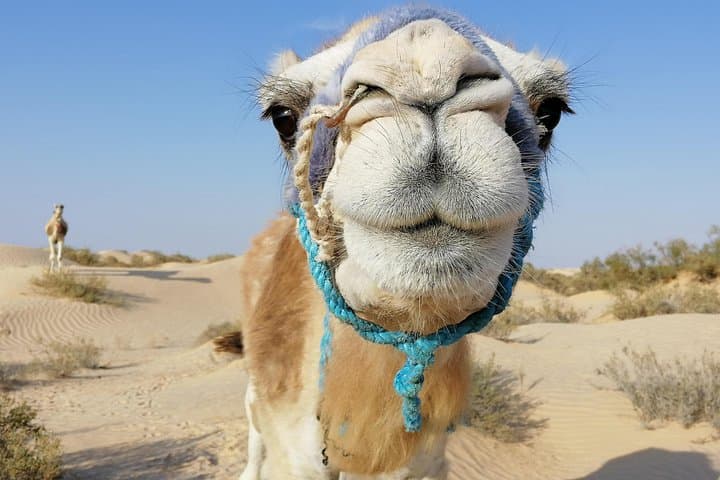
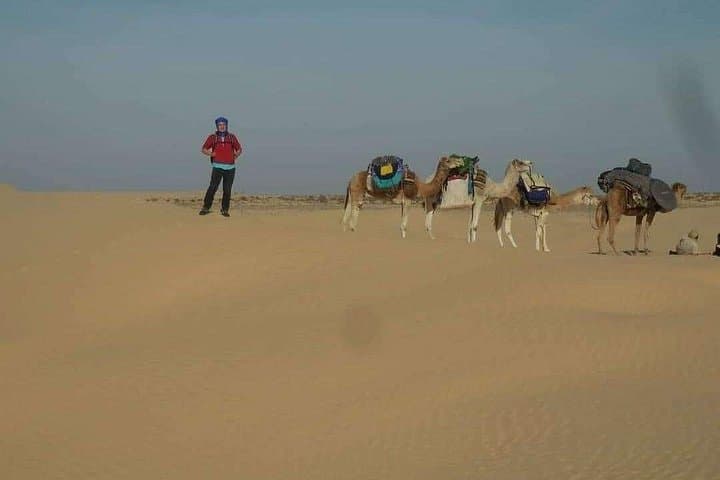
A wind-worn ridge of sand lifts at the horizon as your guide leads a single-file line of camels into the dunes south of Douz. The animals move with a steady, swaying rhythm; the desert breathes around you, a wide, quiet presence that nudges you forward.
Verified experiences and guided adventures in the surrounding area.
Operated by Djerba-Sahara · Douz, Kebili
A wind-worn ridge of sand lifts at the horizon as your guide leads a single-file line of camels into the dunes south of Douz. The animals move with a steady, swaying rhythm; the desert breathes around you, a wide, quiet presence that nudges you forward.
Douz is known locally as the Gateway to the Sahara — a market town with palm groves and a long history of nomadic trade. The dunes you cross are part of the Grand Erg Oriental, a sea of sand shaped by wind and time; beneath the ripples, ancient sediments hint at the region’s changing climate. Cultural traces of Berber and Bedouin life remain visible in music, crafts, and the seasonal Festival of the Sahara.
This private, one-hour ride starts with a short transfer from town to the camel string. Terrain is soft sand and low dune saddles; the pace is relaxed and suitable for first-time riders. Expect close-up views of dune faces and a horizon that swallows and reveals light at every step — the sun will shape the landscape more than any map can.
Practical notes: bring sun protection, a reusable water bottle, and closed-toe shoes for the approach to the camels. Follow your guide’s instructions for mounting, dismounting, and weight distribution; camel saddles are secure but different from horses. Photography is excellent at golden hour, and tipping guides is customary. The outing is short but sensory — a tidy, authentic introduction to the Sahara that pairs well with a longer desert itinerary.
easy.
1 hour.
Suitable for all fitness levels; basic mobility to mount and dismount a camel is required
The advertised activity is a private, one-hour ride including transfer time to the camel area; the actual time on the camels is roughly 45–60 minutes.
No — the ride is suitable for first-time riders; guides provide instruction and the pace is steady and slow.
Yes — the operator offers private transportation within approximately a 12 km radius of Douz to the camel starting point.
Children can usually participate but operators may set age or weight limits; mention ages during booking and follow the guide’s safety advice.
Douz evolved as a caravan hub linking oases and became known as the Gateway to the Sahara; Bedouin and Berber traditions remain visible in local music and festivals.
Dune ecosystems are fragile—stick to designated approach paths, avoid unnecessary driving on dunes, and support guides who practice low-impact tourism.
Djerba-Sahara operates guided outdoor trips and adventures with an emphasis on safety, stewardship, and memorable experiences.
A wind-worn ridge of sand lifts at the horizon as your guide leads a single-file line of camels into the dunes south of Douz. The animals move with a steady, swaying rhythm; the desert breathes around you, a wide, quiet presence that nudges you forward.
A wind-worn ridge of sand lifts at the horizon as your guide leads a single-file line of camels into the dunes south of Douz. The animals move with a steady, swaying rhythm; the desert breathes around you, a wide, quiet presence that nudges you forward.
Douz is known locally as the Gateway to the Sahara — a market town with palm groves and a long history of nomadic trade. The dunes you cross are part of the Grand Erg Oriental, a sea of sand shaped by wind and time; beneath the ripples, ancient sediments hint at the region’s changing climate. Cultural traces of Berber and Bedouin life remain visible in music, crafts, and the seasonal Festival of the Sahara.
This private, one-hour ride starts with a short transfer from town to the camel string. Terrain is soft sand and low dune saddles; the pace is relaxed and suitable for first-time riders. Expect close-up views of dune faces and a horizon that swallows and reveals light at every step — the sun will shape the landscape more than any map can.
Practical notes: bring sun protection, a reusable water bottle, and closed-toe shoes for the approach to the camels. Follow your guide’s instructions for mounting, dismounting, and weight distribution; camel saddles are secure but different from horses. Photography is excellent at golden hour, and tipping guides is customary. The outing is short but sensory — a tidy, authentic introduction to the Sahara that pairs well with a longer desert itinerary.