THE ADVENTURE COLLECTIVE® · Independent discovery and booking for outdoor travel

Spend a full day tracing Egypt’s ancient capitals: the Giza Pyramids and Sphinx, the Step Pyramid at Saqqara, and the open-air ruins of Memphis. This private tour combines focused walks with guided context, lunch, and air‑conditioned transport for an efficient introduction to pharaonic Egypt.
Spend a full day tracing Egypt’s ancient capitals: the Giza Pyramids and Sphinx, the Step Pyramid at Saqqara, and the open-air ruins of Memphis. This private tour combines focused walks with guided context, lunch, and air‑conditioned transport for an efficient introduction to pharaonic Egypt.
Morning light cuts across the Giza Plateau and the three great stones throw long, austere shadows — that is where the day begins on this private Cairo circuit. A guide meets the group and moves with purpose: the Pyramids of Khufu, Khafre and Menkaure rise from limestone bedrock like deliberate monuments, and the Sphinx stares out over the desert road as if timing the centuries.
Verified experiences and guided adventures in the surrounding area.
Operated by tours in Egypt · Giza, Giza Governorate
Morning light cuts across the Giza Plateau and the three great stones throw long, austere shadows — that is where the day begins on this private Cairo circuit. A guide meets the group and moves with purpose: the Pyramids of Khufu, Khafre and Menkaure rise from limestone bedrock like deliberate monuments, and the Sphinx stares out over the desert road as if timing the centuries.
This route threads together phases of Egypt’s history. The Step Pyramid of Djoser at Saqqara is the world’s earliest large-scale stone structure, built in the 27th century BCE; Memphis was the cultic heart of Old Kingdom power and the open-air collection of monuments there includes a fallen colossus of Ramses. Geologically the plateau is sedimentary limestone resting above the Nile floodplain, where wind and sand have scoured stone faces for millennia and given the monuments their weathered patina.
Culturally, expect bustling roadside vendors, the low hum of traffic, and local guides who translate stone reliefs into stories. Practicalities are straightforward: short stretches of walking on uneven gravel and paved paths (plan for 2–4 km of walking over the day), intermittent stairs into museum areas, and midday heat that dominates summer months.
Bring sun protection, comfortable closed shoes for loose limestone, and small local currency for site fees, tips, and photos. The tour includes lunch and air-conditioned transport, but confirm admission fees and whether interior pyramid access is desired. Start early, hydrate often, and move at the guide’s pace to get the most from a concentrated day among some of human history’s largest sculptures.
easy.
10 hours.
Suitable for travelers in average physical condition; includes multiple short walks and some uneven terrain
This listing indicates admission is not automatically included—confirm with the operator before booking and bring cash for any site tickets you plan to purchase.
Hotel pickup is offered; you will be asked to provide pickup details when booking—airport transfers require advance notice and flight information.
Interior access is limited, often sold separately, and involves tight, steep passages—check availability and physical requirements in advance.
The tour is stroller-friendly in some areas, but uneven ground and steps can be challenging for limited-mobility travelers—notify the operator when booking for accommodations.
The Giza pyramids date to the 4th Dynasty (c. 2600 BCE) while Saqqara’s Step Pyramid, built for Djoser, marks the shift to monumental stone architecture in ancient Egypt.
High visitor numbers stress fragile stone surfaces; follow ropes, avoid touching reliefs, use local guides who support preservation efforts, and minimize plastic waste.
tours in Egypt operates guided outdoor trips and adventures with an emphasis on safety, stewardship, and memorable experiences.

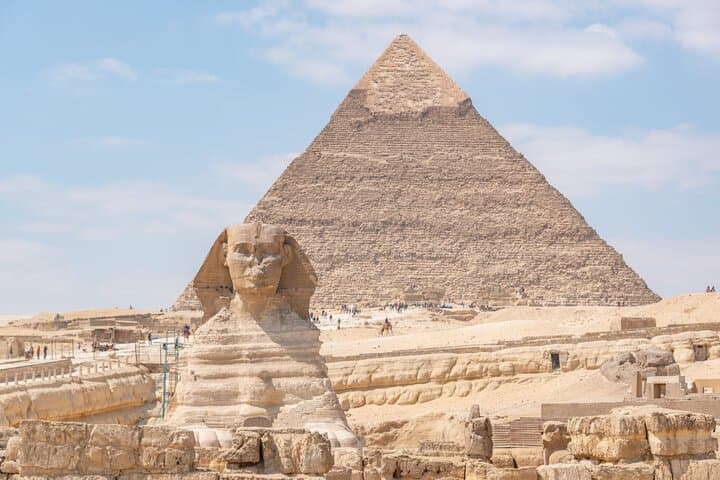
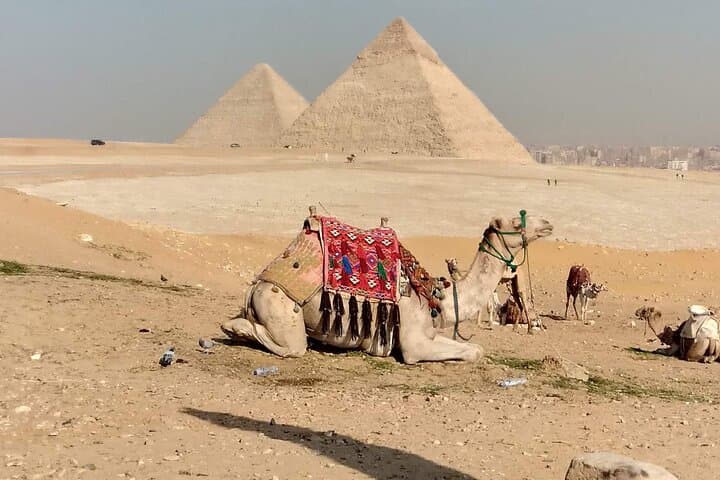
Morning light cuts across the Giza Plateau and the three great stones throw long, austere shadows — that is where the day begins on this private Cairo circuit. A guide meets the group and moves with purpose: the Pyramids of Khufu, Khafre and Menkaure rise from limestone bedrock like deliberate monuments, and the Sphinx stares out over the desert road as if timing the centuries.
Morning light cuts across the Giza Plateau and the three great stones throw long, austere shadows — that is where the day begins on this private Cairo circuit. A guide meets the group and moves with purpose: the Pyramids of Khufu, Khafre and Menkaure rise from limestone bedrock like deliberate monuments, and the Sphinx stares out over the desert road as if timing the centuries.
This route threads together phases of Egypt’s history. The Step Pyramid of Djoser at Saqqara is the world’s earliest large-scale stone structure, built in the 27th century BCE; Memphis was the cultic heart of Old Kingdom power and the open-air collection of monuments there includes a fallen colossus of Ramses. Geologically the plateau is sedimentary limestone resting above the Nile floodplain, where wind and sand have scoured stone faces for millennia and given the monuments their weathered patina.
Culturally, expect bustling roadside vendors, the low hum of traffic, and local guides who translate stone reliefs into stories. Practicalities are straightforward: short stretches of walking on uneven gravel and paved paths (plan for 2–4 km of walking over the day), intermittent stairs into museum areas, and midday heat that dominates summer months.
Bring sun protection, comfortable closed shoes for loose limestone, and small local currency for site fees, tips, and photos. The tour includes lunch and air-conditioned transport, but confirm admission fees and whether interior pyramid access is desired. Start early, hydrate often, and move at the guide’s pace to get the most from a concentrated day among some of human history’s largest sculptures.