THE ADVENTURE COLLECTIVE® · Independent discovery and booking for outdoor travel

Explore Busan with a licensed local guide by private vehicle — from the coastal Haedong Yonggungsa temple and the Blue Line Capsule to bustling Jagalchi Fish Market and Gamcheon Culture Village. This private tour balances seaside panoramas, markets, and local stories with convenient pickup and flexible pacing.
Explore Busan with a licensed local guide by private vehicle — from the coastal Haedong Yonggungsa temple and the Blue Line Capsule to bustling Jagalchi Fish Market and Gamcheon Culture Village. This private tour balances seaside panoramas, markets, and local stories with convenient pickup and flexible pacing.
You step out of an air‑conditioned van near Haeundae and the ocean immediately changes the city’s rhythm — salt on the breeze, gulls scanning the water, and distant cliffs cut by waves. A local guide opens a map that's equal parts history and route plan, and you move through Busan’s contrasts: modern glass towers, timeworn markets, and a ribbon of coast that refuses to stay calm.
Verified experiences and guided adventures in the surrounding area.
Operated by Korea Go Tours · Busan, Busan
You step out of an air‑conditioned van near Haeundae and the ocean immediately changes the city’s rhythm — salt on the breeze, gulls scanning the water, and distant cliffs cut by waves. A local guide opens a map that's equal parts history and route plan, and you move through Busan’s contrasts: modern glass towers, timeworn markets, and a ribbon of coast that refuses to stay calm.
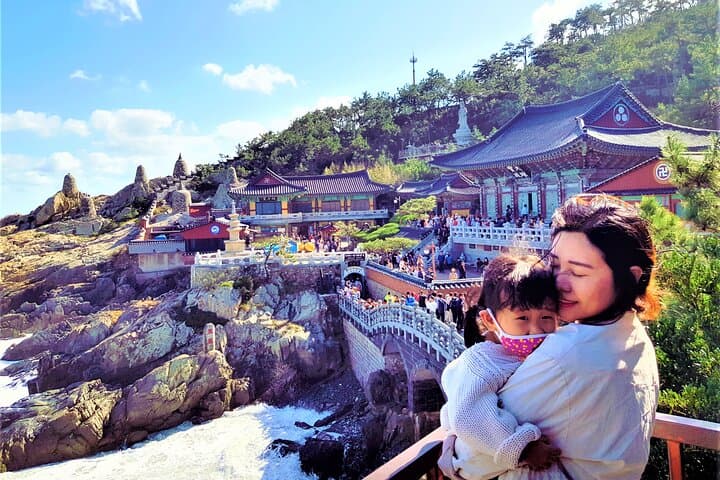
Busan’s story is coastal and civic. Once a centuries‑old fishing port and later a sanctuary for refugees during the Korean War, the city’s neighborhoods grew around harbors, markets, and temple shrines. Geology here is straightforward: hard basalt and granite shores meet the East Sea, producing dramatic headlands and sheltered coves where temples like Haedong Yonggungsa were built to face the sunrise.
Culturally the day alternates between loud and intimate — Jagalchi’s clamour of fishmongers, the meticulous steps down to Yonggungsa’s 108 stairs, and the quiet lanes of Gamcheon where mural art fills narrow alleys. The Blue Line Capsule offers a calm, panoramic counterpoint: a modern rail repurposed as a coastal observation ride.
Practical guidance: this is a private, vehicle‑led tour that still expects moderate walking — uneven market floors and a temple descent. Bring comfortable shoes, a light jacket for sea breezes, and cash for street food and small admissions. Aim for sunrise at Yonggungsa or late afternoon for softer light and fewer crowds. Accessibility is good for much of the route, but prepare for stairs and short uphill sections in cultural neighborhoods.
moderate.
4–8 hours.
Moderate fitness: comfortable walking, short stair sections, and some standing are required throughout the day.
The private tour runs approximately 4–8 hours and local guides typically adapt stops based on interests and traffic; confirm priorities when you book.
The temple sits on the coast and requires descending 108 steps to reach the seafront; upper areas are reachable but the main shoreline view involves stairs.
Meals are not included; guides can recommend or arrange stops at Jagalchi Fish Market or street‑food areas and will help accommodate dietary preferences where possible.
The capsule runs year‑round but visibility depends on weather; check with your guide for real‑time conditions and alternative viewpoints if needed.
Busan expanded rapidly after the Korean War, becoming both a major port and refuge; markets like Gukje and Jagalchi grew from that postwar commerce and community rebuilding.
Coastal habitats face pressure from development and tourism; favor sustainably sourced seafood, stay on designated paths at sensitive sites, and avoid disturbing intertidal life.
Korea Go Tours operates guided outdoor trips and adventures with an emphasis on safety, stewardship, and memorable experiences.


You step out of an air‑conditioned van near Haeundae and the ocean immediately changes the city’s rhythm — salt on the breeze, gulls scanning the water, and distant cliffs cut by waves. A local guide opens a map that's equal parts history and route plan, and you move through Busan’s contrasts: modern glass towers, timeworn markets, and a ribbon of coast that refuses to stay calm.
You step out of an air‑conditioned van near Haeundae and the ocean immediately changes the city’s rhythm — salt on the breeze, gulls scanning the water, and distant cliffs cut by waves. A local guide opens a map that's equal parts history and route plan, and you move through Busan’s contrasts: modern glass towers, timeworn markets, and a ribbon of coast that refuses to stay calm.
Busan’s story is coastal and civic. Once a centuries‑old fishing port and later a sanctuary for refugees during the Korean War, the city’s neighborhoods grew around harbors, markets, and temple shrines. Geology here is straightforward: hard basalt and granite shores meet the East Sea, producing dramatic headlands and sheltered coves where temples like Haedong Yonggungsa were built to face the sunrise.
Culturally the day alternates between loud and intimate — Jagalchi’s clamour of fishmongers, the meticulous steps down to Yonggungsa’s 108 stairs, and the quiet lanes of Gamcheon where mural art fills narrow alleys. The Blue Line Capsule offers a calm, panoramic counterpoint: a modern rail repurposed as a coastal observation ride.
Practical guidance: this is a private, vehicle‑led tour that still expects moderate walking — uneven market floors and a temple descent. Bring comfortable shoes, a light jacket for sea breezes, and cash for street food and small admissions. Aim for sunrise at Yonggungsa or late afternoon for softer light and fewer crowds. Accessibility is good for much of the route, but prepare for stairs and short uphill sections in cultural neighborhoods.