THE ADVENTURE COLLECTIVE® · Independent discovery and booking for outdoor travel

Walk the Great White Way with an industry pro and hear the backstage stories behind Broadway’s most iconic theatres. This private, two-hour walking tour blends cultural history with practical tips for navigating Times Square on foot.
Walk the Great White Way with an industry pro and hear the backstage stories behind Broadway’s most iconic theatres. This private, two-hour walking tour blends cultural history with practical tips for navigating Times Square on foot.
The tour opens on 44th Street beneath the marquee glow of the Majestic Theatre, where the city’s electric pulse seems to nudge you forward.
Verified experiences and guided adventures in the surrounding area.
Operated by Top Dog Tours Inc. · New York, NY
The tour opens on 44th Street beneath the marquee glow of the Majestic Theatre, where the city’s electric pulse seems to nudge you forward.
Your guide folds the map of Broadway’s past into stories — vaudeville hustles, the birth of the American musical and the mid-century surge that put marble lobbies and neon signs on the cultural map. The pavements themselves sit atop Manhattan schist and glacially trimmed bedrock, a hard, ancient stage that supports a century of sets and crowds.
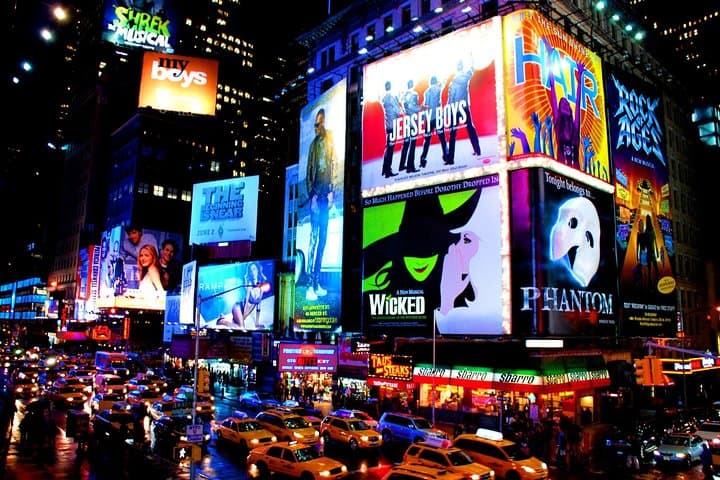
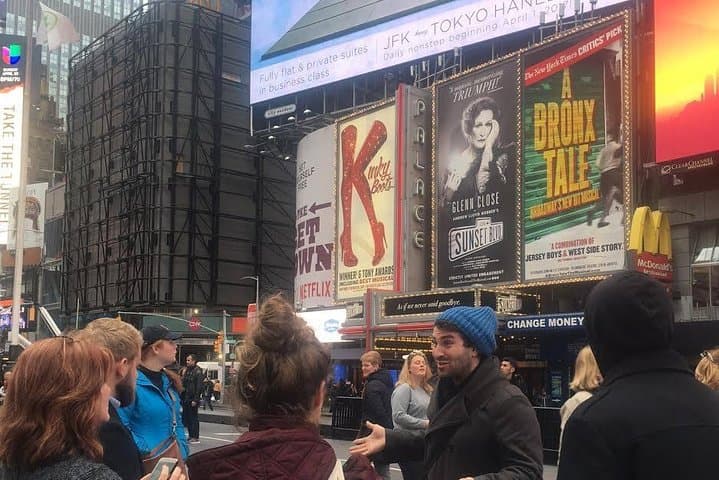
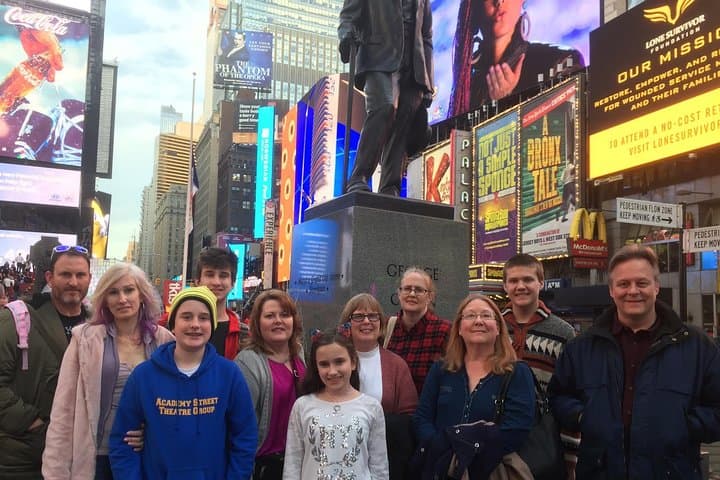
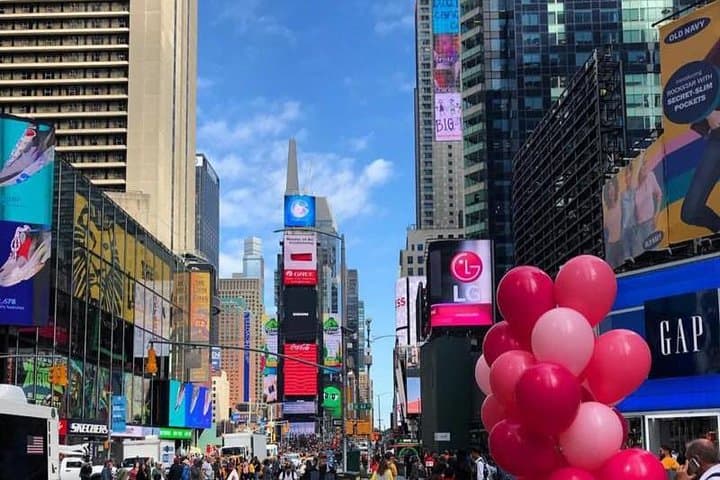
You’ll pass ornate façades and modern glass, hear backstage gossip about staging tricks, and see theatres where composers, choreographers and actors rewrote what live performance could be. Times Square’s billboards dare you to look up; alleyways and former playhouses whisper the business-side grit behind the glamour.
Practical notes arrive as naturally as cues: this is a two-hour, mostly-flat walking tour of roughly 1.5–2 miles with frequent stops for stories and photos. Comfortable shoes matter — sidewalks are uneven, and restroom access is limited. The route is wheelchair- and stroller-accessible where street access allows, but backstage access is never guaranteed. Tours run in all weather, so an umbrella or light rain jacket is wise.
For travelers who want context, ask about the industry’s labor history and how digital streaming has changed audience habits; guides often tailor anecdotes to the group’s interests. End at the Gershwin Theatre with a clearer sense of how Broadway evolved — a living neighborhood where history, commerce and art keep stepping onto the same stage.
easy.
2 hours.
Light fitness; ability to stand and walk 1.5–2 miles with occasional stops
The tour starts in front of the Majestic Theatre (245 W 44th St) and ends at the Gershwin Theatre (222 W 51st St).
Children under 18 must be accompanied by an adult 21+. The route is generally wheelchair- and stroller-accessible, but backstage access and some interiors are not guaranteed.
Backstage and lobby access are not guaranteed; the tour focuses on external architecture, history, and stories rather than guaranteed behind-the-scenes entry.
Tours operate in rain or snow; guests should bring appropriate outerwear. If canceled for dangerous weather, you’ll be offered an alternate date or full refund.
Broadway evolved from 19th-century downtown theatres and vaudeville circuits into the centralized midtown district by the early 20th century, driven by subway expansion and commercial development.
High foot traffic stresses sidewalks and local businesses—choose reusable water bottles, minimize single-use plastics, and support official theatre programs and local ticketing outlets.
Top Dog Tours Inc. operates guided outdoor trips and adventures with an emphasis on safety, stewardship, and memorable experiences.
The tour opens on 44th Street beneath the marquee glow of the Majestic Theatre, where the city’s electric pulse seems to nudge you forward.
The tour opens on 44th Street beneath the marquee glow of the Majestic Theatre, where the city’s electric pulse seems to nudge you forward.
Your guide folds the map of Broadway’s past into stories — vaudeville hustles, the birth of the American musical and the mid-century surge that put marble lobbies and neon signs on the cultural map. The pavements themselves sit atop Manhattan schist and glacially trimmed bedrock, a hard, ancient stage that supports a century of sets and crowds.
You’ll pass ornate façades and modern glass, hear backstage gossip about staging tricks, and see theatres where composers, choreographers and actors rewrote what live performance could be. Times Square’s billboards dare you to look up; alleyways and former playhouses whisper the business-side grit behind the glamour.
Practical notes arrive as naturally as cues: this is a two-hour, mostly-flat walking tour of roughly 1.5–2 miles with frequent stops for stories and photos. Comfortable shoes matter — sidewalks are uneven, and restroom access is limited. The route is wheelchair- and stroller-accessible where street access allows, but backstage access is never guaranteed. Tours run in all weather, so an umbrella or light rain jacket is wise.
For travelers who want context, ask about the industry’s labor history and how digital streaming has changed audience habits; guides often tailor anecdotes to the group’s interests. End at the Gershwin Theatre with a clearer sense of how Broadway evolved — a living neighborhood where history, commerce and art keep stepping onto the same stage.