THE ADVENTURE COLLECTIVE® · Independent discovery and booking for outdoor travel

Skip the lines and let an expert guide turn ancient artifacts into living stories on this private British Museum tour. Tailored routes cover Rosetta Stone, Parthenon marbles and Egyptian mummies while avoiding the busiest exhibits.
Skip the lines and let an expert guide turn ancient artifacts into living stories on this private British Museum tour. Tailored routes cover Rosetta Stone, Parthenon marbles and Egyptian mummies while avoiding the busiest exhibits.
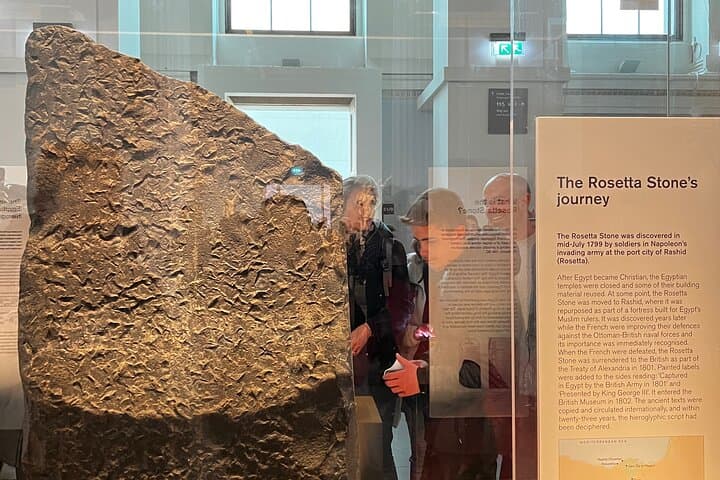
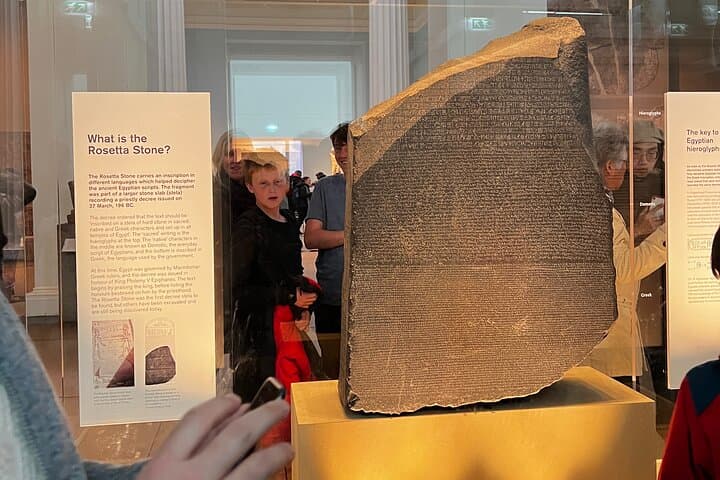
You step through the museum’s stone threshold and the city’s noise narrows to the hush of glass and marble; sunlight pools across the Great Court and your guide begins to trace stories older than nations. A private tour here transforms display cases into stages—Rosetta Stone’s chipped surface becomes a key, mummies unfurl timelines of ritual and daily life, and Greek marble gains the patina of centuries of hands and weather.
Verified experiences and guided adventures in the surrounding area.
Operated by The Expat Tours · London, England
You step through the museum’s stone threshold and the city’s noise narrows to the hush of glass and marble; sunlight pools across the Great Court and your guide begins to trace stories older than nations. A private tour here transforms display cases into stages—Rosetta Stone’s chipped surface becomes a key, mummies unfurl timelines of ritual and daily life, and Greek marble gains the patina of centuries of hands and weather.
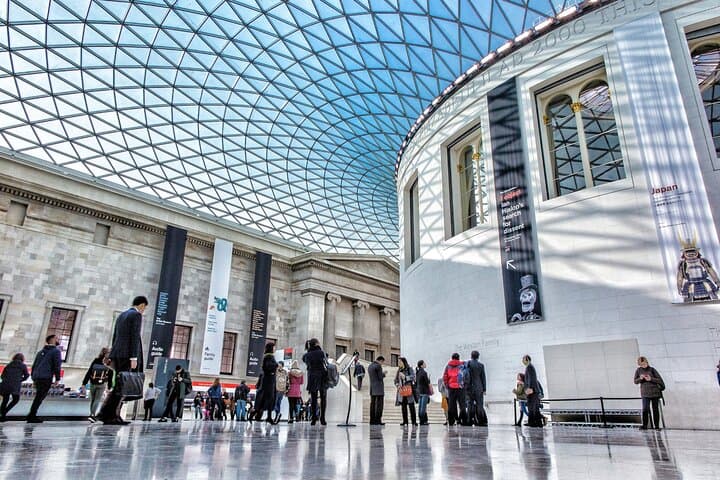
The British Museum opened to the public in 1759 from Sir Hans Sloane’s collection and has grown into one of the world’s most comprehensive cultural repositories. Its neoclassical façade conceals layers of empire, archaeology and modern debates over provenance that shape how you read objects as much as the labels do. Architecturally, the 2000 Great Court roof by Foster + Partners brightens the original 19th‑century reading room into a navigational hub.
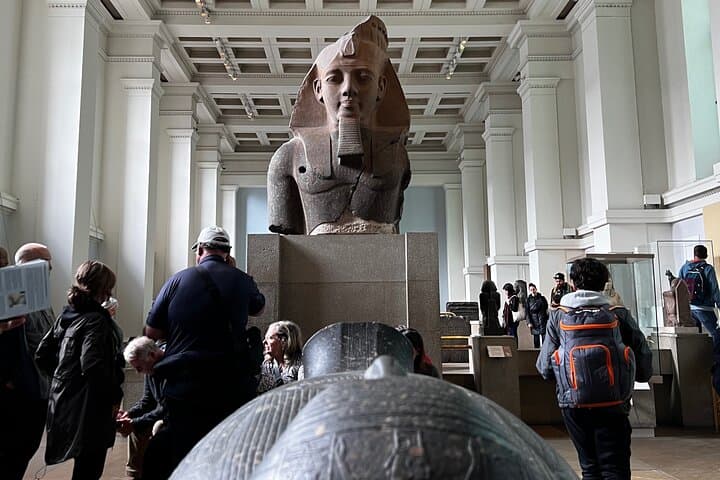
On a private tour you’ll move efficiently between highlights—Rosetta Stone, Parthenon sculptures, Egyptian galleries, and the Benin Bronzes—while also pausing at lesser‑seen rooms your guide selects to match your interests.
Practical guide: tours run about 2–2.5 hours and are suitable for most fitness levels; expect light walking on hard floors and some standing. Book mornings or weekday slots to avoid peak crowds, bring a compact bag (security checks are standard), and check whether a special exhibition requires a separate ticket. Public transport access is excellent (Tottenham Court Road, Holborn, Russell Square). If you want a deeper focus—art, archaeology, or cultural restitution—request that theme in advance so the guide can tailor the route.
easy.
2–2.5 hours.
Suitable for most visitors who can stand and walk intermittently for up to two hours; minimal mobility challenges can be accommodated with notice.
General admission to the British Museum is free and your private guide fee covers the guided service; confirm whether any special exhibitions on the day require separate paid tickets.
Yes—most public galleries and the Great Court are wheelchair accessible; notify the operator of any mobility needs so the route and pacing can be adjusted.
Non‑flash photography is typically allowed in permanent collections, but tripods, selfie sticks and flash are often prohibited—follow signage and guide instructions.
Yes—private tours are designed to focus on themes (archaeology, ancient Egypt, classical art, provenance debates); request your preference at booking so the guide can prepare.
Founded from Sir Hans Sloane’s 18th‑century collection, the museum opened in 1759 and expanded through colonial‑era acquisitions and 19th‑century galleries.
The museum runs conservation labs and loan programs while engaging in provenance research and international discussions around repatriation and ethical collecting.
The Expat Tours operates guided outdoor trips and adventures with an emphasis on safety, stewardship, and memorable experiences.
You step through the museum’s stone threshold and the city’s noise narrows to the hush of glass and marble; sunlight pools across the Great Court and your guide begins to trace stories older than nations. A private tour here transforms display cases into stages—Rosetta Stone’s chipped surface becomes a key, mummies unfurl timelines of ritual and daily life, and Greek marble gains the patina of centuries of hands and weather.
You step through the museum’s stone threshold and the city’s noise narrows to the hush of glass and marble; sunlight pools across the Great Court and your guide begins to trace stories older than nations. A private tour here transforms display cases into stages—Rosetta Stone’s chipped surface becomes a key, mummies unfurl timelines of ritual and daily life, and Greek marble gains the patina of centuries of hands and weather.
The British Museum opened to the public in 1759 from Sir Hans Sloane’s collection and has grown into one of the world’s most comprehensive cultural repositories. Its neoclassical façade conceals layers of empire, archaeology and modern debates over provenance that shape how you read objects as much as the labels do. Architecturally, the 2000 Great Court roof by Foster + Partners brightens the original 19th‑century reading room into a navigational hub.
On a private tour you’ll move efficiently between highlights—Rosetta Stone, Parthenon sculptures, Egyptian galleries, and the Benin Bronzes—while also pausing at lesser‑seen rooms your guide selects to match your interests.
Practical guide: tours run about 2–2.5 hours and are suitable for most fitness levels; expect light walking on hard floors and some standing. Book mornings or weekday slots to avoid peak crowds, bring a compact bag (security checks are standard), and check whether a special exhibition requires a separate ticket. Public transport access is excellent (Tottenham Court Road, Holborn, Russell Square). If you want a deeper focus—art, archaeology, or cultural restitution—request that theme in advance so the guide can tailor the route.