THE ADVENTURE COLLECTIVE® · Independent discovery and booking for outdoor travel

Skip the large-group shuffle and explore the British Museum on a private, two-hour guided route that covers Rosetta Stone, Parthenon marbles, Moai and more. Ideal for families or focused visitors who want expert context without the crowds.
Skip the large-group shuffle and explore the British Museum on a private, two-hour guided route that covers Rosetta Stone, Parthenon marbles, Moai and more. Ideal for families or focused visitors who want expert context without the crowds.
You step through the north entrance on Montague Place and the museum opens like a vast archive of human ambition—stone, metal and carved bone humming with quiet authority. In two hours a private guide threads a direct route through crowded galleries: the Rosetta Stone’s chipped letters, the Parthenon marbles’ weathered contours, the impassive gaze of a Moai, and the carved wings of an Assyrian lamassu.
Verified experiences and guided adventures in the surrounding area.
Operated by DS Tours · London, England
You step through the north entrance on Montague Place and the museum opens like a vast archive of human ambition—stone, metal and carved bone humming with quiet authority. In two hours a private guide threads a direct route through crowded galleries: the Rosetta Stone’s chipped letters, the Parthenon marbles’ weathered contours, the impassive gaze of a Moai, and the carved wings of an Assyrian lamassu.
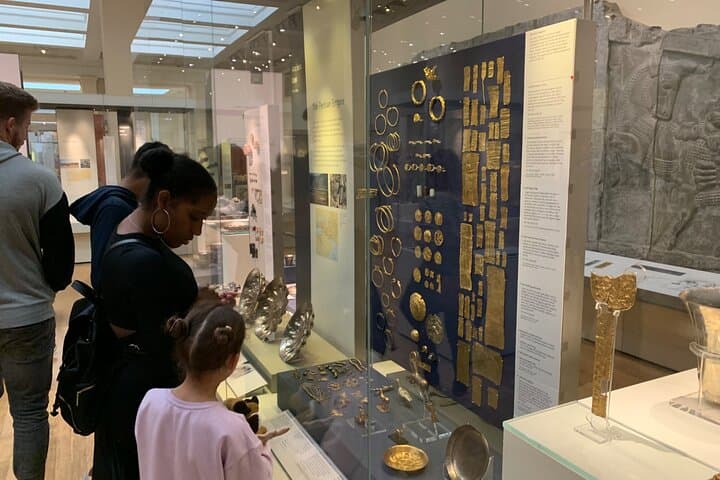
The British Museum, founded in 1753, was one of the first public national museums; its collections reflect centuries of antiquarian collecting and imperial-era acquisitions. The building itself—Victorian rooms, the modern glass Great Court—charts London’s architectural shifts as much as the objects chart civilizations. Expect sharp shifts in scale and material: limestone friezes, ivory chessmen, Egyptian granite.
Culturally, the museum is both classroom and conversation; guides will address provenance and context, and can tailor the tour for families, specialists or first-time visitors. Practicalities are straightforward: meet at Montague Pl, north entrance; tickets are sent by text the day before; the pace is relaxed but requires standing and short walks between galleries.
Plan to arrive 10–15 minutes early for security checks, keep large bags at coat check, and ask your guide for quieter rooms if you prefer less traffic. Photography rules vary by object—follow signage. This private format removes crowd constraints and lets your group spend longer at the artifacts that matter most, all within a compact, expertly guided two-hour experience.
easy.
2 hours.
Suitable for all fitness levels; requires standing and walking on level indoor surfaces for up to two hours.
Meet at the British Museum’s north entrance on Montague Place; guides confirm the exact meeting point in your booking message.
Yes—tickets are provided via text the day before the tour and are valid as mobile or paper tickets.
Yes—the British Museum and this tour are wheelchair accessible; notify the operator of any special requirements when booking.
Yes—this private tour is customizable for families, specific cultures or artifact types; communicate preferences ahead of time.
Established in 1753, the British Museum was created from the collection of Sir Hans Sloane and was among the first public national museums, shaping modern museology.
The museum prioritizes artifact preservation through climate-controlled galleries and restricted handling; visitors help by following signage, not touching displays, and minimizing flash photography.
DS Tours operates guided outdoor trips and adventures with an emphasis on safety, stewardship, and memorable experiences.
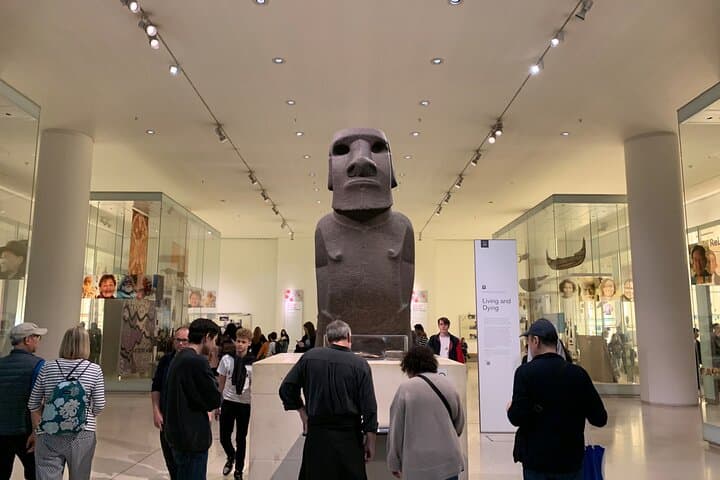
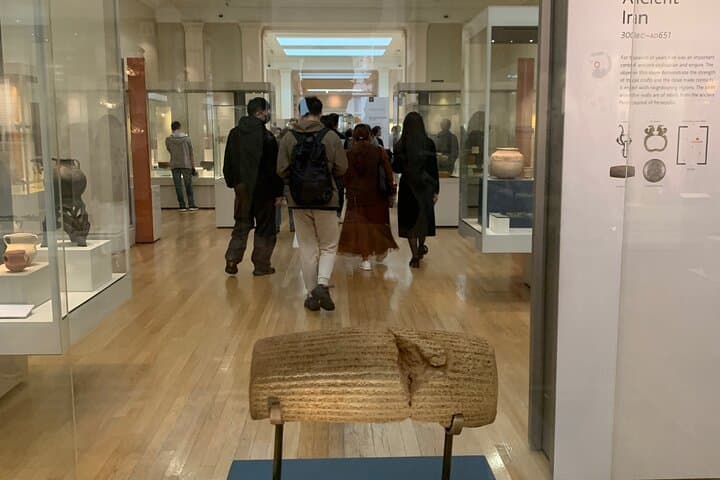
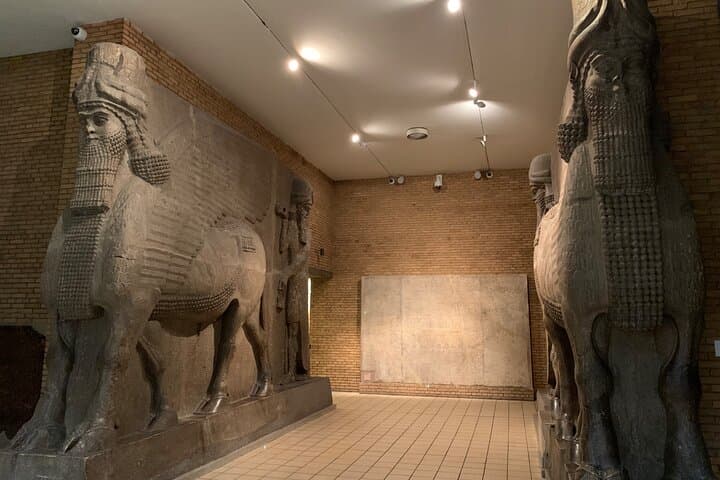
You step through the north entrance on Montague Place and the museum opens like a vast archive of human ambition—stone, metal and carved bone humming with quiet authority. In two hours a private guide threads a direct route through crowded galleries: the Rosetta Stone’s chipped letters, the Parthenon marbles’ weathered contours, the impassive gaze of a Moai, and the carved wings of an Assyrian lamassu.
You step through the north entrance on Montague Place and the museum opens like a vast archive of human ambition—stone, metal and carved bone humming with quiet authority. In two hours a private guide threads a direct route through crowded galleries: the Rosetta Stone’s chipped letters, the Parthenon marbles’ weathered contours, the impassive gaze of a Moai, and the carved wings of an Assyrian lamassu.
The British Museum, founded in 1753, was one of the first public national museums; its collections reflect centuries of antiquarian collecting and imperial-era acquisitions. The building itself—Victorian rooms, the modern glass Great Court—charts London’s architectural shifts as much as the objects chart civilizations. Expect sharp shifts in scale and material: limestone friezes, ivory chessmen, Egyptian granite.
Culturally, the museum is both classroom and conversation; guides will address provenance and context, and can tailor the tour for families, specialists or first-time visitors. Practicalities are straightforward: meet at Montague Pl, north entrance; tickets are sent by text the day before; the pace is relaxed but requires standing and short walks between galleries.
Plan to arrive 10–15 minutes early for security checks, keep large bags at coat check, and ask your guide for quieter rooms if you prefer less traffic. Photography rules vary by object—follow signage. This private format removes crowd constraints and lets your group spend longer at the artifacts that matter most, all within a compact, expertly guided two-hour experience.