THE ADVENTURE COLLECTIVE® · Independent discovery and booking for outdoor travel

Cover two of London’s cultural heavyweights in a focused half‑day with an expert guide. See the Rosetta Stone and Parthenon marbles, then cross to Trafalgar Square to study masterworks by Turner, Van Gogh, and Raphael.
Cover two of London’s cultural heavyweights in a focused half‑day with an expert guide. See the Rosetta Stone and Parthenon marbles, then cross to Trafalgar Square to study masterworks by Turner, Van Gogh, and Raphael.
A damp London morning clears as your guide waits beneath the bronze lions of Trafalgar Square, map folded like a promise. The first half of the day moves through Bloomsbury’s stone-faced streets into the British Museum’s cavernous Great Court, where the Rosetta Stone and the Parthenon marbles sit under a diffuse roof of light. Objects collected from across empires peer back at you; the rooms feel like conversation partners, each artifact nudging a question.
Verified experiences and guided adventures in the surrounding area.
Operated by Travel Curious · London, Greater London
A damp London morning clears as your guide waits beneath the bronze lions of Trafalgar Square, map folded like a promise. The first half of the day moves through Bloomsbury’s stone-faced streets into the British Museum’s cavernous Great Court, where the Rosetta Stone and the Parthenon marbles sit under a diffuse roof of light. Objects collected from across empires peer back at you; the rooms feel like conversation partners, each artifact nudging a question.
The walk to the National Gallery shifts the rhythm — from artifacts of empire to oil and canvas. Trafalgar’s traffic hum recedes as you enter the gallery, where Turner’s skies and Van Gogh’s brushwork pull focus. Both institutions are products of Britain’s 18th–19th century public‑museum movement, created to educate a growing city and preserve works for public use.
Expect steady walking across stone floors, a mix of dim galleries and bright atria, and guided storytelling that links provenance, technique, and the sometimes scandalous histories behind acquisitions. Practicalities matter: reserved-entry windows speed queues, but crowds still swell around signature pieces. Wear supportive shoes, carry a water bottle, and plan for security screening at both venues.
This private half‑day is good for first-time visitors who want curated highlights with contextual depth and for repeat visitors seeking new interpretive angles. End at the National Gallery with local recommendations — a nearby café, a quiet square, or a detour to a specialist museum if you want to extend the afternoon.
moderate.
4 hours.
Able to walk steadily for up to four hours with brief standing periods; comfortable on stairs and uneven indoor flooring.
Yes — the tour description notes reserved entrance times to both the British Museum and the National Gallery are included.
Both venues are wheelchair accessible and the operator notes accessibility; notify the guide of needs when booking to coordinate routes and assistance.
Expect approximately four hours of walking around galleries and between sites; there are places to sit but minimal long breaks unless requested.
Yes — private format allows the guide to emphasize areas like Egyptian antiquities, Renaissance painting, or conservation stories based on your preference.
The British Museum (est. 1753) and the National Gallery (opened 1824) reflect Britain’s 18th–19th century drive to create public cultural institutions for education and civic pride.
Both institutions actively conserve fragile works and manage visitor flow around sensitive objects; follow signage and the guide’s instructions to minimize impact.
Travel Curious operates guided outdoor trips and adventures with an emphasis on safety, stewardship, and memorable experiences.
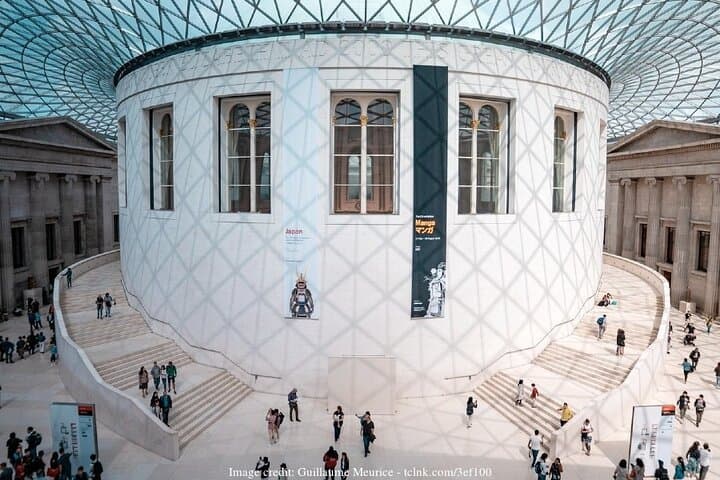
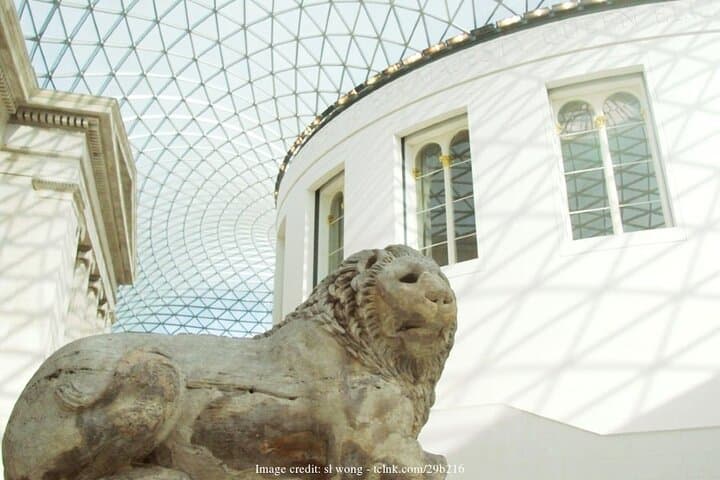
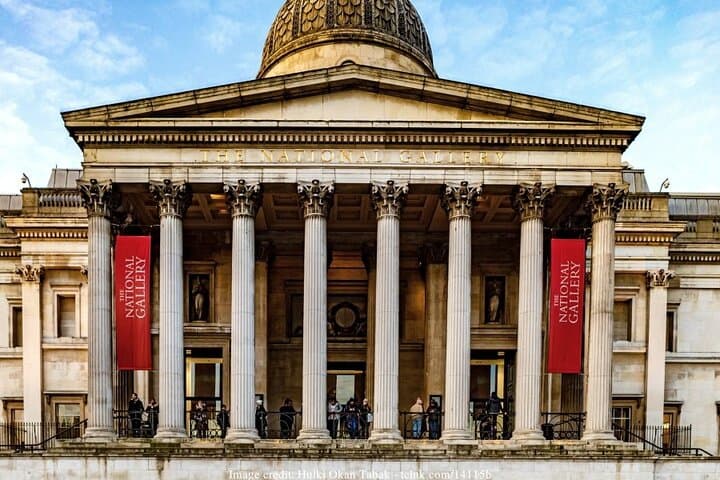
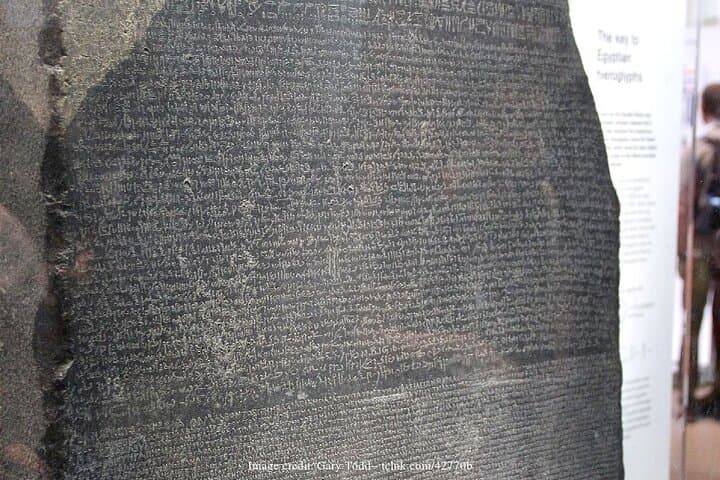
A damp London morning clears as your guide waits beneath the bronze lions of Trafalgar Square, map folded like a promise. The first half of the day moves through Bloomsbury’s stone-faced streets into the British Museum’s cavernous Great Court, where the Rosetta Stone and the Parthenon marbles sit under a diffuse roof of light. Objects collected from across empires peer back at you; the rooms feel like conversation partners, each artifact nudging a question.
A damp London morning clears as your guide waits beneath the bronze lions of Trafalgar Square, map folded like a promise. The first half of the day moves through Bloomsbury’s stone-faced streets into the British Museum’s cavernous Great Court, where the Rosetta Stone and the Parthenon marbles sit under a diffuse roof of light. Objects collected from across empires peer back at you; the rooms feel like conversation partners, each artifact nudging a question.
The walk to the National Gallery shifts the rhythm — from artifacts of empire to oil and canvas. Trafalgar’s traffic hum recedes as you enter the gallery, where Turner’s skies and Van Gogh’s brushwork pull focus. Both institutions are products of Britain’s 18th–19th century public‑museum movement, created to educate a growing city and preserve works for public use.
Expect steady walking across stone floors, a mix of dim galleries and bright atria, and guided storytelling that links provenance, technique, and the sometimes scandalous histories behind acquisitions. Practicalities matter: reserved-entry windows speed queues, but crowds still swell around signature pieces. Wear supportive shoes, carry a water bottle, and plan for security screening at both venues.
This private half‑day is good for first-time visitors who want curated highlights with contextual depth and for repeat visitors seeking new interpretive angles. End at the National Gallery with local recommendations — a nearby café, a quiet square, or a detour to a specialist museum if you want to extend the afternoon.