THE ADVENTURE COLLECTIVE® · Independent discovery and booking for outdoor travel

Move through two millennia of human craft with a private 2.5‑hour highlights tour of the British Museum. See the Rosetta Stone, Elgin Marbles and Sutton Hoo with a guide who tailors the route to your interests.
Move through two millennia of human craft with a private 2.5‑hour highlights tour of the British Museum. See the Rosetta Stone, Elgin Marbles and Sutton Hoo with a guide who tailors the route to your interests.
Stepping through the British Museum’s neoclassical façade, a guide threads a route through the Great Court’s glass canopy and into rooms where stone and metal hold centuries of human argument. The soundscape is hushed footsteps and the whisper of groups gathering at the Rosetta Stone, then moving on past marble friezes that still seem to carry the cool salt of the Aegean.
Verified experiences and guided adventures in the surrounding area.
Operated by The Great Weekender Experiences · London, England
Stepping through the British Museum’s neoclassical façade, a guide threads a route through the Great Court’s glass canopy and into rooms where stone and metal hold centuries of human argument. The soundscape is hushed footsteps and the whisper of groups gathering at the Rosetta Stone, then moving on past marble friezes that still seem to carry the cool salt of the Aegean.
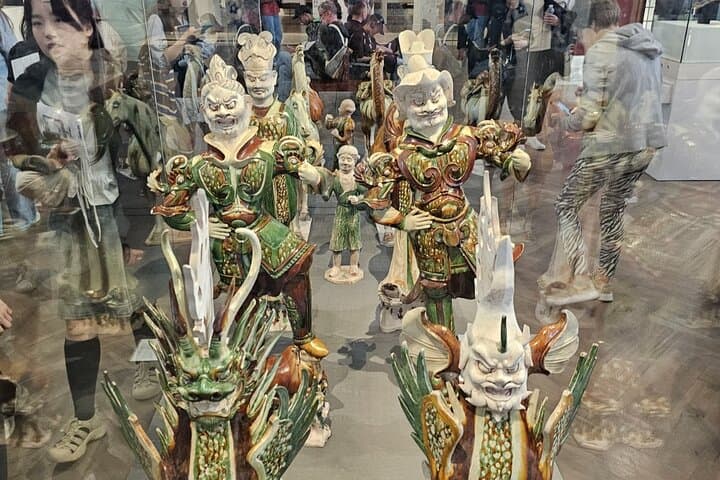
Founded in 1753 from Sir Hans Sloane’s collection, the museum charts human networks across empire, craft and ritual. Geology and materiality are everywhere: the Elgin Marbles’ marble planes, carved limestone reliefs of Assyrian palaces, and the iron and precious-metal fittings of the Sutton Hoo ship burial. Cultural layers—acquisition histories, repatriation debates, museum conservation—sit alongside the objects themselves, making the visit as much about stories of display as the artefacts.
A private, 2.5‑hour highlights tour lets a guide tailor stops: Rosetta Stone, Greek sculpture, Sutton Hoo treasures and select ethnographic rooms. Expect timed entry, security screening, and indoor walking on stone floors; use the Great Court as a staging point.
Practical tips: arrive with a booked time to avoid queues, wear comfortable shoes for concrete and marble floors, keep a small bag for security checks, and flag any accessibility needs when booking. Guides can adapt content for families, specialist interests, or shorter attention spans. For photographers, still images are generally allowed but check signage and avoid flash. This private format delivers focused context and efficient movement through one of the world’s largest public collections.
easy.
2–3 hours.
Suitable for most fitness levels; requires standing and short walks between galleries.
The tour is approximately 2.5 hours (150 minutes), focusing on major highlights but adjustable to your interests.
Timed entry to the museum is included with the private tour as part of the booking.
Yes—museum entrances, the Great Court and galleries are wheelchair accessible; notify the operator of any requirements when booking.
Yes—infants and small children in strollers are allowed; tours can be adapted for family groups and shorter attention spans.
Established in 1753 from Sir Hans Sloane’s collection, the British Museum was the first national public museum and now holds over eight million objects.
The museum maintains an active conservation department to stabilize and study artefacts; visitors support preservation by following handling and photography rules.
The Great Weekender Experiences operates guided outdoor trips and adventures with an emphasis on safety, stewardship, and memorable experiences.
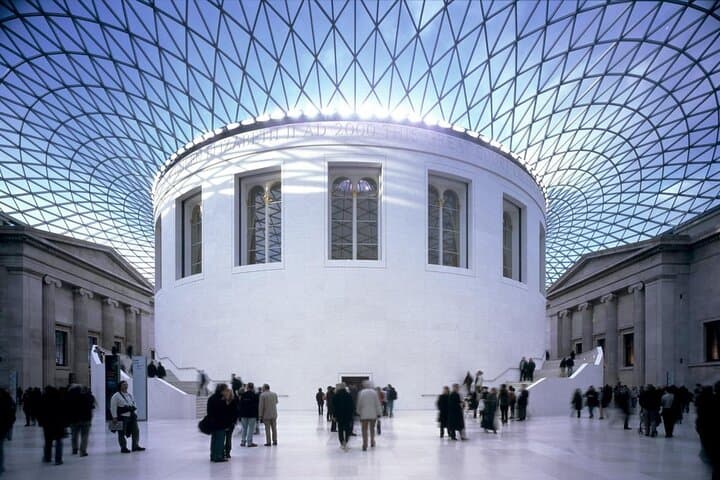
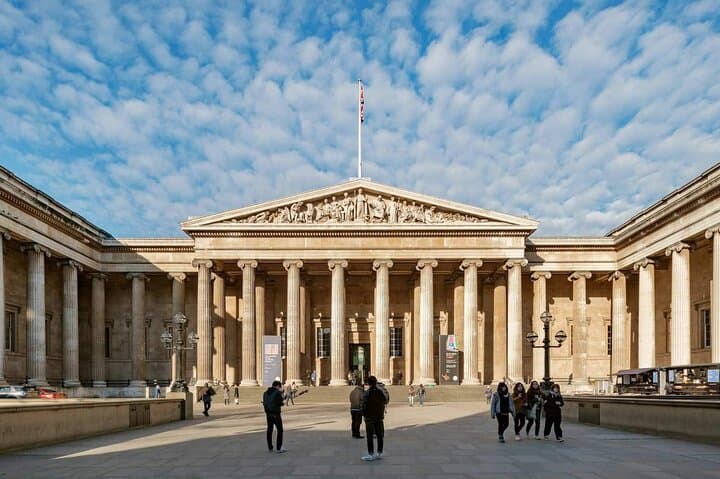
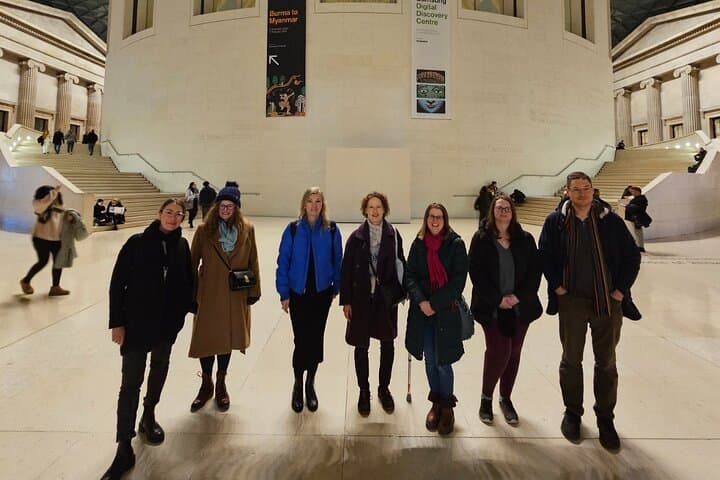
Stepping through the British Museum’s neoclassical façade, a guide threads a route through the Great Court’s glass canopy and into rooms where stone and metal hold centuries of human argument. The soundscape is hushed footsteps and the whisper of groups gathering at the Rosetta Stone, then moving on past marble friezes that still seem to carry the cool salt of the Aegean.
Stepping through the British Museum’s neoclassical façade, a guide threads a route through the Great Court’s glass canopy and into rooms where stone and metal hold centuries of human argument. The soundscape is hushed footsteps and the whisper of groups gathering at the Rosetta Stone, then moving on past marble friezes that still seem to carry the cool salt of the Aegean.
Founded in 1753 from Sir Hans Sloane’s collection, the museum charts human networks across empire, craft and ritual. Geology and materiality are everywhere: the Elgin Marbles’ marble planes, carved limestone reliefs of Assyrian palaces, and the iron and precious-metal fittings of the Sutton Hoo ship burial. Cultural layers—acquisition histories, repatriation debates, museum conservation—sit alongside the objects themselves, making the visit as much about stories of display as the artefacts.
A private, 2.5‑hour highlights tour lets a guide tailor stops: Rosetta Stone, Greek sculpture, Sutton Hoo treasures and select ethnographic rooms. Expect timed entry, security screening, and indoor walking on stone floors; use the Great Court as a staging point.
Practical tips: arrive with a booked time to avoid queues, wear comfortable shoes for concrete and marble floors, keep a small bag for security checks, and flag any accessibility needs when booking. Guides can adapt content for families, specialist interests, or shorter attention spans. For photographers, still images are generally allowed but check signage and avoid flash. This private format delivers focused context and efficient movement through one of the world’s largest public collections.